
Toninia
Toninia
Toninia is not a plant disease or pathogen. It is a genus of crustose lichens belonging to the family Ramalinaceae, found across diverse ecosystems.
What the section contains
Toninia
The organism is a symbiotic complex formed by a fungus and a photosynthetic partner (alga or cyanobacteria) living together in a specific structure.
In the context of agricultural science, Toninia does not parasitize crops, nor does it impact plant physiology through infection or colonization.
The genus is characterized by its specific morphology and preference for mineral substrates, such as limestone or rocky soil surfaces.
Unlike pathogenic fungi that cause rot or wilting, lichens are ecologically distinct and exist independently of the host's vitality.
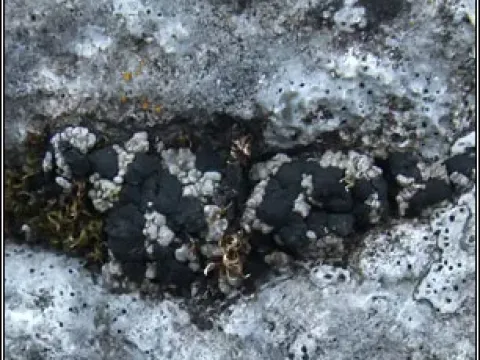
Toninia lichens appear as thin, granular, or squamulose crusts on substrates. They are typically gray, brown, or greenish-gray in color.
The most visible features are the apothecia, which are small dark disk-shaped structures embedded in or slightly rising above the surface of the thallus.
The thallus attaches firmly to the substrate, making the lichen appear as a natural part of the rock or soil crust structure.
They are rarely found on living tree trunks, preferring the stability of mineral surfaces over the dynamic environment of plant bark.
Presence on the soil surface near a field does not correlate with symptoms of plant disease, such as lesions, chlorosis, or vascular damage.
The growth of Toninia is largely determined by environmental conditions, requiring high light intensity and stable, often calcareous, substrates.
As lichens, they are extremely sensitive to air quality. High levels of sulfur dioxide or atmospheric pollution often lead to their disappearance.
They require long periods of environmental stability to grow, as they have a very slow rate of development and colonization.
Water uptake occurs primarily through precipitation and ambient humidity, allowing them to thrive in open, arid, or semi-arid conditions.
They generally colonize undisturbed areas, where they are protected from mechanical cultivation and intense chemical applications.
Toninia poses no economic threat to agricultural production. It does not compete for nutrients or water with cultivated crops.
The genus produces no toxins that could inhibit crop growth, making it completely harmless from an agronomic perspective.
In fact, their presence can indicate a balanced, albeit less intensively managed, ecological state of a land parcel.
There is no risk of crop loss, yield reduction, or quality degradation associated with the presence of these lichens near agricultural zones.
Misidentifying these organisms as fungal pathogens leads to unnecessary economic costs related to the purchase and use of ineffective fungicides.
No control measures are needed for Toninia, as it is a beneficial part of the ecosystem that does not affect farm productivity.
In scenarios where their presence on infrastructure surfaces is unwanted, mechanical cleaning is the most effective and eco-friendly method.
Preventative maintenance for structures, such as painting or improving drainage, is sufficient to discourage lichen colonization on non-soil surfaces.
Agricultural fields do not require any treatment against lichens, as normal soil cultivation naturally prevents their development on open land.
Farmers are encouraged to recognize these organisms as non-pathogenic, helping to avoid the unnecessary and potentially harmful use of chemicals.