
Tomentellopsis
Tomentellopsis
The disease is caused by fungi of the genus Tomentellopsis, which are members of the Basidiomycota phylum. These fungi are typically soil-dwelling organisms that feed on decomposing organic matter but can become opportunistic plant pathogens.
What the section contains
Tomentellopsis
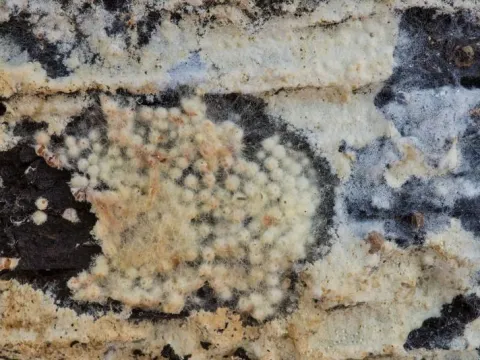
The fungus develops a thin, felt-like or cobwebby mycelium that wraps around the roots and the lower stem of the host plant. The fruit bodies often have a crust-like structure adhering to the plant tissue.
The life cycle of the pathogen is closely linked to soil moisture and the presence of organic debris. The mycelium can survive in the soil for extended periods, waiting for suitable environmental conditions to flourish.
Spore dissemination is primarily driven by air currents and water droplets. Additionally, mycelial fragments can be easily transported via soil movement, agricultural machinery, and contaminated equipment.
Correct identification often requires detailed microscopic analysis of hyphal structures and basidia. As a genus, it shares morphological characteristics with other corticioid fungi, making field identification complex.
A primary symptom is the appearance of a felt-like mycelial mat on the plant's root collar or lower stem. The color of this mat varies from grayish-white to light brown as the fungus matures.
Affected plants often show signs of chlorosis and wilting. This occurs because the fungal mycelium damages the root cortex and impairs the plant's ability to absorb water and essential nutrients.
In advanced stages, the root system shows signs of darkening and decay. The affected roots become brittle and lose their ability to support the plant, which can easily be pulled out of the soil.
Infection often appears in distinct patches within a field, particularly in areas with poor drainage or high humidity. Leaves may start to yellow and die back starting from the lower parts of the plant.
If left unchecked, the mycelium can spread to cover a significant portion of the stem base, leading to structural weakness and increased susceptibility to secondary infections by other soil-borne pathogens.
Excessive soil moisture is the primary driver for the spread of Tomentellopsis. Waterlogged conditions favor the rapid growth of the mycelium and the germination of fungal spores.
A temperature range of 15–20 degrees Celsius is optimal for the vegetative growth of this fungus. These conditions are commonly found during rainy, moderate seasons, which often correspond to spikes in disease prevalence.
High levels of undecomposed organic matter in the soil serve as a nutrient reservoir for the fungus. Minimum tillage practices that leave excessive residues on the soil surface can increase the risk of infection.
Soil compaction and poor aeration compromise the plant’s health and immune system. When the root environment lacks sufficient oxygen, plants become significantly more vulnerable to pathogen attacks.
Soil acidity can also play a role in the aggressiveness of the fungus. Maintaining proper pH levels through liming can help create an environment less favorable for the pathogen's rapid colonization.
The main impact of the disease is a reduction in crop stand density. This loss of plant population directly leads to lower yields and uneven crop development throughout the field.
Affected plants suffer from nutrient deficiency and moisture stress, which stunts their growth. The resulting grain or produce is often lower in quality and weight, impacting overall marketability.
Because the fungus is a soil-borne pathogen, it creates persistent infection hotspots. This significantly limits crop rotation options, as sensitive crops cannot be safely grown in the affected area for years.
Secondary infections often colonize the damaged root systems, further accelerating the decay and potential death of the plant. This makes the disease harder to manage once established.
The need for additional fungicide treatments and potential field decontamination adds to the total cost of production, reducing the overall profitability of the farming operation.
Crop rotation is a fundamental cultural control measure. Avoid planting highly susceptible hosts in fields with a history of root rot or where high inoculum levels are suspected.
Deep plowing or moldboard plowing helps bury organic residues, accelerating their decomposition and reducing the survival rates of the fungus in the upper soil layers.
Improved drainage and irrigation management are essential to prevent the waterlogged conditions that favor fungal development. Proper water control significantly minimizes the risk of infection.
Biological control using Trichoderma species can be effective in suppressing the growth of the pathogen. These beneficial microbes compete with the fungus for resources and space in the rhizosphere.
Seed treatments with systemic fungicides provide crucial protection during the early stages of plant development, helping seedlings establish a healthy root system before being exposed to pathogens.