
Toninia caeruleonigricans
Toninia caeruleonigricans
Description
Symptoms
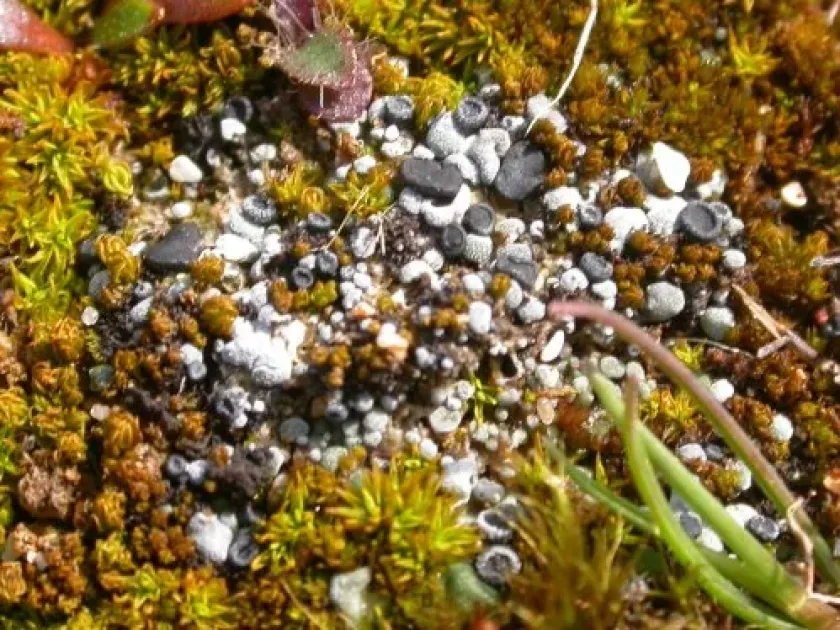
Toninia caeruleonigricans is a crustose lichen known for forming granular or cracked crusts on the surface of the soil.
The thallus appears as a dark grey, bluish-black, or brownish layer, which often blends in with the surrounding soil particles.
The fruiting bodies, known as apothecia, are typically small, black, and embedded in the crust, often appearing as tiny spots.
This lichen is most commonly observed in open, undisturbed environments where there is minimal competition from higher plants.
The presence of this organism can give the soil surface a darkened, charcoal-like appearance in areas where colonization is dense.
Pathogen
It is critical to clarify that Toninia caeruleonigricans is not a plant disease or a pathogen of agricultural crops.
This organism is a lichen, a symbiotic association between a fungus and algae, which functions as an independent primary producer.
It does not possess the biological capacity to infect crop tissues or disrupt the physiological processes of vascular plants.
As a non-parasitic organism, it does not cause any infectious diseases and should not be confused with fungal pathogens like rusts or blights.
Its biological cycle is entirely separate from the life cycles of commercial crop varieties, meaning it poses no risk to plant health.
Conditions for development
The growth of this lichen depends heavily on the availability of well-lit, exposed soil surfaces with low plant cover density.
It prefers specific environmental conditions, often thriving on alkaline, calcareous, or saline soils found in steppe regions.
The lichen requires a stable substrate to colonize, which explains why it is rarely found in areas subjected to frequent tillage.
It is well-adapted to environments with low nutrient levels, as it derives its energy from photosynthesis rather than from soil resources.
Moderate moisture levels are beneficial for its growth, although it possesses significant tolerance to periods of intense aridity.
Why it matters
There is no agricultural harm associated with the presence of Toninia caeruleonigricans on farmland or horticultural plots.
The lichen does not compete for water, minerals, or sunlight with crops and does not release phytotoxic compounds.
While some farmers may view it as an aesthetic nuisance, its impact on soil fertility or crop yield is practically non-existent.
Its presence is merely an ecological indicator of soil stability and a lack of frequent physical disturbance in the area.
No economic loss occurs as a result of this lichen growing on the soil, and it does not affect the marketability of produce.
Protection
Since this lichen is not a pathogen or a pest, no chemical control methods or specialized plant protection products are required.
Standard field management practices are sufficient to manage its population if it becomes undesirable for appearance reasons.
Tillage, including plowing and cultivation, is the most effective way to eliminate crustose lichen colonies from the topsoil.
Encouraging vigorous crop growth through fertilization and correct seeding density will naturally shade out the lichen.
- Regular mechanical cultivation of soil.
- Increasing crop density to prevent ground exposure.
- Soil conditioning and organic matter application.
- General field maintenance and weed management.
Discussion
No discussions yet — be the first.