
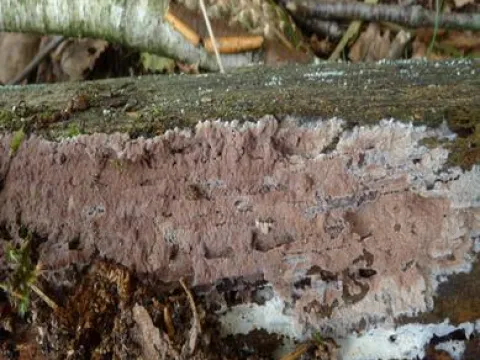
Tomentella radiosa
Tomentella radiosa
The disease is caused by the fungus Tomentella radiosa, a member of the Basidiomycota phylum. It primarily exists as a soil-borne fungus that acts as a saprotroph, but can become a pathogen under favorable conditions.
What the section contains
Tomentella radiosa
The fungus develops thin, velvety, or web-like structures on the soil surface and plant bases. Its mycelium is characterized by a distinct, radially spreading pattern of hyphae.
It actively colonizes plant tissues, particularly roots and the root collar, utilizing enzymes to break down organic structures, which often leads to significant tissue degradation.
The life cycle of this pathogen is closely linked to the availability of organic debris in the soil, which serves as a primary substrate for its population buildup.
Spore production and dispersal are key to its spread. Basidiospores are easily carried by air currents or splashing water, facilitating the colonization of new host plants in the surrounding area.
The most noticeable sign of Tomentella radiosa is the appearance of a thin, felt-like mycelial mat on the soil surface surrounding the base of the plant.
Upon close inspection, one can see the characteristic radial threads of the mycelium, which typically range in color from light brown to earthy ochre.
Affected tissues, especially the root collar, begin to darken and lose their structural integrity, eventually turning soft as the fungus breaks down the plant cells.
As the root system is damaged, the plant exhibits symptoms of physiological drought, including chlorosis (yellowing of leaves), wilting, and stunted development.
In humid conditions, the mycelial growth can intensify, sometimes forming a ring around the stem, which effectively girdles the plant and leads to rapid decline or death.
High humidity and moisture are the primary drivers of this disease. The pathogen thrives in environments where soil moisture levels remain consistently high for extended periods.
Shaded areas with poor light penetration often experience reduced evaporation rates, creating the perfect damp microclimate for Tomentella radiosa to flourish.
The presence of un-decomposed woody organic matter, such as old mulch, wood chips, or decaying roots, provides an abundant food source for the fungus.
Heavy, poorly aerated soils that suffer from waterlogging are highly susceptible, as the lack of oxygen reduces the plant's natural resistance to fungal infections.
Moderate temperatures, typical of cool, damp springs or autumns, are ideal for the rapid vegetative expansion of the mycelium across the soil surface.
The main damage is the destruction of the root cortex, which severely impairs the plant's ability to take up water and essential nutrients from the soil.
Plants weakened by the pathogen become highly vulnerable to secondary stressors, including drought, temperature fluctuations, and secondary bacterial infections.
In nurseries and greenhouse settings, the fungus can lead to significant mortality rates, causing substantial economic losses in plant production and inventory.
For perennial crops, the infection often leads to chronic decline, where the plant gradually loses vigor and productivity over several growing seasons.
Because the fungus is highly adaptive and persistent in the soil, an infestation can be difficult to eradicate once it becomes established in a planting bed.
Proper water management is the most effective preventative measure. Improving drainage and ensuring the soil surface dries out between waterings significantly hinders fungal growth.
Good sanitation practices, such as removing old woody debris and leaf litter from the base of plants, reduce the availability of substrates for the fungus.
Regular cultivation of the topsoil around the root zone helps improve aeration, which effectively discourages the growth of surface-dwelling mycelial mats.
- Application of biological control agents containing Trichoderma species to antagonize the pathogen.
- Physical removal and destruction of heavily infested plants to prevent further spread of the inoculum.
- Use of registered fungicides when environmental conditions favor severe outbreaks and plant losses.
Adjusting soil pH to be less favorable for the fungus and avoiding over-mulching with woody materials are essential long-term strategies for disease management.