
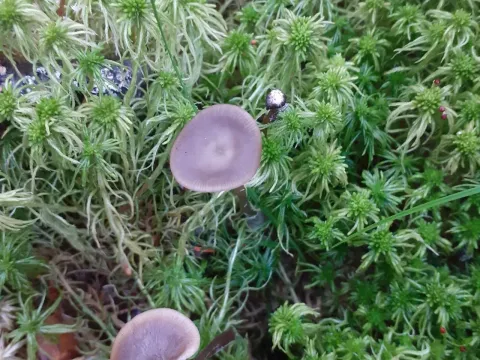
Tephrocybe palustris
Tephrocybe palustris
The causal agent of this condition is the fungus Tephrocybe palustris, which belongs to the Lyophyllaceae family. It is a specialized fungus commonly associated with marshy habitats and peatland ecosystems.
What the section contains
Tephrocybe palustris
The fungus operates primarily through a mycelial network that permeates decaying organic matter and living tissues of sphagnum mosses. This niche allows it to thrive in nutrient-poor but moist environments.
While often acting as a saprotroph, under specific stress conditions for the host plant, it exhibits parasitic behavior, leading to the decline of moss populations in agricultural or natural settings.
The life cycle involves vegetative growth during periods of stability and rapid development of sporocarps (fruiting bodies) whenever moisture levels in the environment peak.
Its biological resilience to acidity makes it a challenging factor in commercial cranberry and sphagnum moss production, where maintaining an acidic environment is essential.
The most distinctive sign of an infection is the emergence of small, grey-to-brown mushrooms on the surface of moss mats. These fruiting bodies are often visible in groups.
In areas affected by the fungus, the sphagnum moss exhibits yellowing or browning of the tips. Over time, the affected moss tissue loses its structure and starts to decompose.
Patches of dead moss become soft and waterlogged, often emitting a distinct odor of decay due to the breakdown of cellulose by the fungal enzymes.
Fine white or grey mycelial threads can often be found creeping along the stems of the moss if the top layer is gently pulled back or inspected under magnification.
The sudden appearance of fruiting bodies following heavy rainfall or prolonged damp weather is a clear diagnostic indicator of the presence of this fungus in the substrate.
High relative humidity and stagnant water are the primary environmental drivers for the development of Tephrocybe palustris. Poor drainage in the planting area creates the perfect habitat.
Temperatures ranging from 12°C to 18°C are considered optimal for the mycelial expansion and subsequent production of mushrooms in this fungal species.
Acidic substrates, particularly those with a pH below 5.0, encourage the growth of this fungus, making it prevalent in areas where ericaceous plants are cultivated.
Lack of airflow within dense moss colonies creates a humid microclimate that allows the fungus to spread rapidly from one moss cluster to another.
Improper irrigation techniques, where water is allowed to puddle on the moss surface rather than draining through the soil, significantly increase infection rates.
The primary harm caused by this fungus is the destruction of the sphagnum layer, which acts as a protective buffer for the roots of sensitive berry-producing crops.
The loss of the moss layer exposes the soil to direct sunlight and wind, leading to faster evaporation and moisture stress for the surrounding plants.
Economic damage is observed in agricultural settings where moss is managed for commercial use or soil moisture retention, requiring remediation costs.
Large patches of dead moss provide an open niche for invasive weeds to colonize the field, increasing the need for manual weeding and maintenance labor.
In severe cases, the degradation of the moss layer can affect the overall health of the soil microbiome, potentially impacting the nutrient uptake efficiency of primary crops.
The most effective strategy for managing this fungus is to improve the drainage of the field to prevent stagnant water from accumulating on the moss surface.
Manual removal and destruction of visible fruiting bodies before they release their spores can significantly limit the spread of the disease to uninfected areas.
When necessary, the application of fungicide treatments suitable for moss-based systems can help suppress mycelial activity during high-risk seasons.
Ensuring proper spacing and air circulation within the planting area helps to lower humidity levels and discourages the establishment of the fungus.
Introducing biological control agents, such as beneficial fungi that compete for the same ecological niche, can provide a sustainable way to suppress the development of Tephrocybe palustris.