
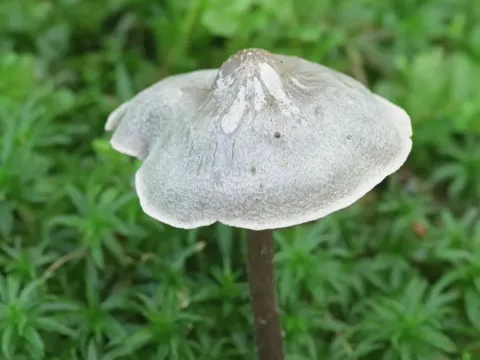
Tephrocybe rancida
Tephrocybe rancida
Tephrocybe rancida is recognized by its distinct appearance, typical of the Lyophyllaceae family. The cap ranges from 2 to 6 cm, exhibiting dark gray to brownish shades.
What the section contains
Tephrocybe rancida
The gills are spaced out and adnate, showing a pale gray coloration. A key diagnostic feature is the strong, rancid odor that the fungus releases, especially when the tissue is crushed.
The stipe is cylindrical, fibrous, and hollow within, matching the color of the cap. The spore print is characteristically white, aiding in field identification.
It is important to note that this fungus is not a plant pathogen; it is a saprotroph that plays a beneficial role in forest soil ecosystems by breaking down organic matter.
Due to the similarity of this species with other small gray mushrooms, microscopic analysis of spores and tissue structures is often required for definitive identification.
The organism Tephrocybe rancida acts as a primary decomposer. It does not cause diseases in crops, as it does not infect living plant tissues.
The fungus functions by utilizing enzymes to degrade complex organic molecules found in leaf litter, such as cellulose and lignin, recycling nutrients back into the soil.
Its mycelial network is extensive, colonizing the upper layers of forest soil where it competes with other microorganisms for nutrient resources.
Within agricultural systems, this fungus is rarely encountered because its ecological niche is strictly tied to woodland environments rather than disturbed soils.
Mycological research highlights the importance of such species in the natural carbon cycle, where they facilitate the decomposition of forest biomass.
Tephrocybe rancida typically fruits during the autumn season, thriving under cool and consistently moist conditions.
The species prefers shady environments with a thick layer of leaf litter, which provides both protection and the necessary substrate for mycelial growth.
An optimal temperature range of 10–15 degrees Celsius is conducive to the development of the fungal fruiting bodies. Drought conditions severely inhibit its propagation.
Acidic soil conditions, commonly found in mixed or coniferous forests, are ideal for this fungus. It cannot thrive in the alkaline or highly fertilized soils typical of commercial farming.
Human activities that drastically change soil moisture or remove organic litter layers are detrimental to the local populations of this species.