
Terana
Terana
Terana (lat. Terana, most notably Terana caerulea) is a genus of fungi belonging to the corticioid basidiomycetes group. In agronomy, it is often classified as a saprotrophic wood-decay fungus.
What the section contains
Terana
Biologically, this organism primarily affects dead wood, but under certain conditions, it can show opportunistic activity on weakened woody plants in orchards and shelterbelts.
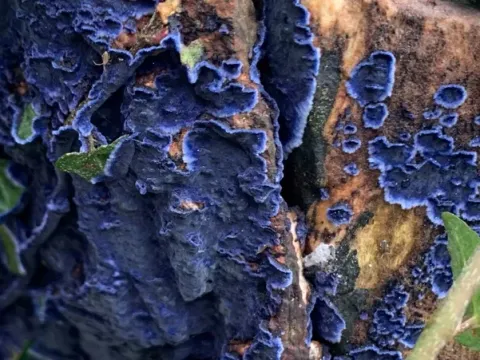
The pathogen belongs to the Phanerochaetaceae family. It is characterized by the intense blue color of its fruit bodies, making it easily identifiable among other xylotrophic fungi.
The fungal mycelium penetrates deep into the bark and sapwood structure, breaking down lignin and cellulose. This process significantly alters the physical and mechanical properties of the infected plant's wood.
Reproduction occurs through spores, which are carried by air currents and settle on damaged bark areas or wood cuts.
The main visual sign of infection is the appearance of bright blue, velvety crusts on the surface of tree trunks or large branches. The fruit bodies have a flat, effused form.
In the early stages of colonization, the bark may look healthy, but closer inspection reveals a change in the color of the underlying tissues.
In areas where mycelium accumulates, bark peeling and gradual tissue necrosis are observed. This occurs because the fungus actively consumes organic nutrients from the cambium layer.
With prolonged infection, the tree shows reduced growth intensity and premature yellowing of leaves, as the fungus obstructs normal sap flow.
In final stages, cracks appear in the wood, eventually filled with bluish mycelium, which indicates deep destruction of internal plant structures.
Terana requires high humidity conditions to develop. The fungus is particularly active during periods of prolonged rainfall or in dense plantings with poor ventilation.
The temperature optimum for spore dispersal and mycelial growth ranges from +15 to +25 degrees Celsius, matching the spring-to-autumn season.
The presence of mechanical bark damage, such as frost cracks, sunburn, or improper pruning cuts, is a critical factor for the onset of infection.
Shading of trunk sections and lack of sunlight promote moisture retention, creating an ideal microenvironment for fungal colonization.
High planting density, which restricts air circulation, significantly increases the risk of mass infestation within the orchard.
The main harm lies in weakening the immune system of woody plants. Infected trees become vulnerable to secondary pests and pathogens.
The fungus causes structural changes in the wood, which can lead to reduced strength of supporting branches and breakage during strong winds.
In fruit growing, the presence of this pathogen leads to premature aging of trees and decreased yield, as the plant's resources are diverted to fighting the infection.
In young trees, the fungus can cause girdling necrosis, leading to the complete death of the sapling within several growing seasons.
Economic damage includes the cost of implementing sanitation measures and the potential loss of productive tree units in orchards.
The primary measure is regular sanitary pruning. Removing dead and damaged branches eliminates the fungus's food source.
All pruning cuts should be treated with disinfecting solutions, such as wound paint containing fungicides or copper sulfate.
It is necessary to maintain proper agricultural practices: timely whitewashing of trunks and the application of balanced fertilizers to improve tree resilience.
If infection sites are detected, the affected bark areas should be carefully scraped down to healthy wood and treated with fungicides.
- Ensure optimal planting density for canopy ventilation.
- Timely treatment of wounds and bark damage.
- Disinfection of pruning tools after working on infected trees.
- Proper disposal of infected wood debris by burning.
- Regular monitoring of bark condition during spring and autumn.