
Tephromela
Tephromela
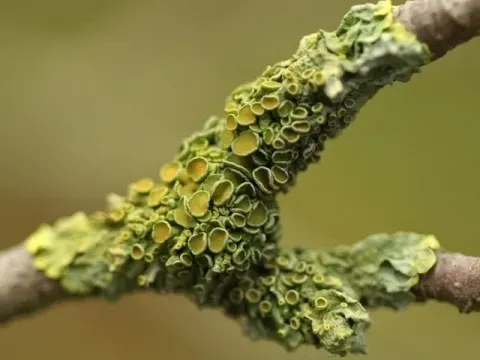
Tephromela is a genus of crustose lichens frequently observed on the trunks and branches of both wild and cultivated trees. They manifest as thin, hardened, grayish or brownish patches tightly adhered to the bark surface.
What the section contains
Tephromela
A key visual characteristic is the presence of apothecia — small, dark, disk-like reproductive structures. These often appear as black or dark brown spots with a distinct margin, giving the surface a wart-like appearance.
The lichen does not infiltrate the living layers of the tree. Its presence is strictly superficial, often mimicking the natural color and texture of aging bark, making it sometimes difficult to spot immediately.
Unlike necrotic fungal diseases, Tephromela does not cause rotting, structural damage, or sap flow issues. The bark underneath remains intact and healthy regardless of the lichen coverage.
Over time, these colonies can expand to cover significant portions of the stem, often signaling that the bark is old and not shedding rapidly enough to prevent colonization.
Tephromela is not a plant pathogen; it is a symbiotic organism comprised of a fungus and an alga. In agricultural terms, it is classified as an epiphyte, living on the tree without consuming its nutrients.
The organism reproduces through spores dispersed by wind and rain. Once a spore lands on a suitable, stable bark surface, it develops into a new thallus if environmental conditions remain favorable.
There is no parasitic relationship involved; the tree acts merely as a physical anchor for the lichen. The lichen produces its own energy through photosynthesis performed by its algal component.
From a biological standpoint, labeling Tephromela as a disease is a misnomer, as it lacks the typical characteristics of plant pathogenesis, such as toxin production or host tissue destruction.
In modern orchard management, the presence of Tephromela is often seen as a secondary ecological phenomenon rather than a primary threat to the vitality of the tree.
The primary environmental driver for Tephromela colonization is sustained humidity. Trees in orchards with poor air circulation or proximity to forests are more prone to epiphytic growth.
Lichen distribution is highly influenced by air quality. Tephromela species generally prefer cleaner environments, as they are sensitive to high concentrations of atmospheric pollutants.
Bark texture plays a crucial role; older trees with deeply fissured, exfoliating bark provide the best niches for spore germination and long-term establishment of the lichen.
Stable light exposure on the trunk facilitates the photosynthetic activities of the lichen, making south-facing or well-lit sections of the tree frequent targets for colonization.
Periods of prolonged rain or fog provide the necessary moisture for the lichen to reactivate its metabolic processes, allowing it to spread across the bark surface.
The potential harm caused by Tephromela is largely indirect. Its dense coverage can create micro-habitats that harbor overwintering pests, such as mites, aphids, or scale insects.
While typically harmless, extreme cases of coverage may theoretically impact bark gas exchange, though this is rarely the limiting factor for tree health in managed plantations.
The aesthetic impact is significant in professional orchards, as lichens can be interpreted as a sign of poor maintenance, reducing the overall appearance of the orchard.
The existence of lichen can often serve as an indicator that the tree's growth rate has slowed down, which might be a symptom of underlying issues like nutritional deficiency or stress.
Under certain conditions, persistent moisture retention by the lichen mat could potentially favor the development of actual pathogenic fungi, if those pathogens are already present in the environment.
The most effective strategy for managing Tephromela is physical removal during the dormant season. Using a stiff brush or a specialized tool to scrape away old bark helps remove the lichen substrate.
Preventative trunk painting with a lime wash or a lime-sulfur mixture helps create an alkaline environment that is inhospitable for lichen growth on the bark surface.
Standard horticultural practices, such as proper pruning and thinning of the canopy, improve airflow and light penetration, effectively creating a drier environment that discourages colonization.
Ensuring the tree remains vigorous through balanced nutrition and proper irrigation promotes faster bark regeneration, naturally shedding old layers before they become heavily colonized.
Regular orchard inspections allow for early detection, enabling growers to perform minor manual cleaning before the lichen can establish an extensive colony on the scaffold branches.