
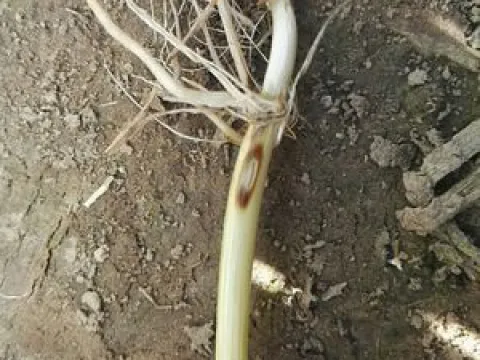
Eyespot
Tapesia
Eyespot is a fungal disease caused primarily by the pathogens Tapesia yallundae and Tapesia acuformis (anamorphs: Pseudocercosporella herpotrichoides).
What the section contains
Eyespot
The fungus survives on crop residues in the soil as mycelium, which allows it to persist in the field for several growing seasons under appropriate conditions.
Infection begins with the production of conidia that are splashed by raindrops onto the leaf sheaths and stems of young cereal plants during cool, moist weather.
The pathogen is highly specialized, targeting the stem bases of small grain cereals, where it colonizes and slowly destroys the internal structure of the plant.
Biological development of the fungus is characterized by slow growth, making it a persistent and dangerous threat to winter-sown cereals.
The diagnostic symptom of eyespot is the appearance of oval-shaped spots on the leaf sheaths at the base of the plant, often featuring a light-colored center with a dark margin.
As the infection progresses, these spots resemble an "eye," giving the disease its common name, and eventually spreading to the stem tissue itself.
Severe infection leads to the softening of the stem base, which becomes weak and prone to twisting, resulting in lodging of the cereal crop.
A gray, fuzzy mycelial growth may be found inside the hollow stem, indicating significant internal damage caused by the fungus.
Visible signs of the disease in the field often include premature ripening, stunted growth, and the appearance of white heads before the rest of the crop matures.
The development of eyespot is highly dependent on humidity, as the fungus requires a moist environment for the germination of spores and initial colonization.
Cooler temperatures, ranging from 5 to 15 degrees Celsius, provide the optimal metabolic environment for the fungus to thrive and spread efficiently.
Dense crop canopies contribute to the disease by trapping moisture at the base of the plants, creating a favorable microclimate for the pathogen.
Frequent rainfall events promote the splash-dispersal of spores from soil residues onto healthy plant tissues, increasing the infection rate.
Delayed or repetitive winter cropping in the same field significantly increases the inoculum pressure, exacerbating the spread of eyespot across the farm.
The primary economic impact of eyespot is stem breakage and subsequent lodging, which complicates harvesting operations and causes massive yield losses.
By interfering with the vascular system of the cereal plant, the fungus restricts the flow of water and nutrients, leading to shriveled grain and reduced test weight.
Yield losses attributed to eyespot can range significantly, often exceeding 20 percent in high-pressure years with favorable conditions for the disease.
Quality reduction is a major concern, as the weakened plant produces poor-quality grain that fails to meet market standards for milling or malting.
In addition to direct losses, lodging provides an entry point for secondary infections and pests, further compromising the stability of the crop.
Integrated pest management strategies begin with sound crop rotation, which is the most effective way to reduce the amount of inoculum in the soil.
Proper tillage practices help bury infested residues, accelerating the decomposition process and reducing the long-term survival of the fungal mycelium.
Selecting tolerant or resistant cereal varieties is a fundamental practice to minimize the damage caused by eyespot in high-risk areas.
Chemical control involves the strategic application of fungicides, specifically targeting the early spring growth stages when the disease is most active.
- Longer crop rotation cycles.
- Resistant variety selection.
- Systemic fungicide application.
- Residue management.