
Eyespot of cereals
Phaeosphaeria herpotrichoides
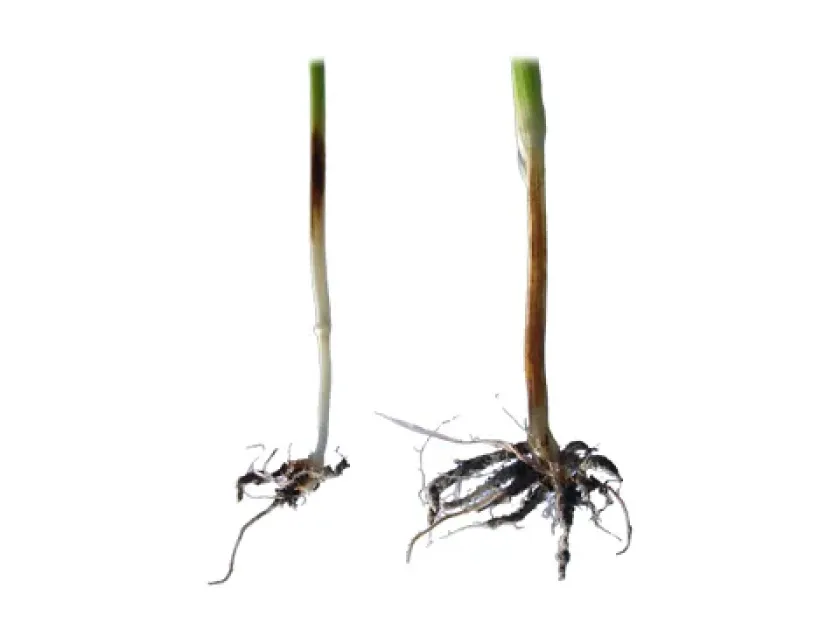
Description
Symptoms
Initial symptoms are visible as oval-shaped spots on the lower leaf sheaths, which are often light brown with a dark margin at the beginning of the infection.
As the disease progresses, these lesions develop a pale, straw-colored center, giving them the appearance of an "eye," which is why it is commonly referred to as eyespot.
If the infection reaches the stem, it causes a weakening of the tissue, resulting in premature lodging of the cereal crops in a random or tangled pattern.
Plants affected by severe eyespot often produce shriveled grain or "whiteheads," where the ear fails to fill properly due to restricted nutrient uptake.
Microscopic examination of the affected base often reveals a greyish-white fungal mat, confirming the presence of the pathogen within the stem tissues.
Pathogen
The disease is caused by the fungi Oculimacula yallundae and Oculimacula acuformis (formerly Pseudocercosporella herpotrichoides), which primarily attack winter cereals.
The pathogen survives in the soil and on crop debris, such as stubble and straw, where it produces mycelia that serve as the main source of primary infection.
Infection spreads through conidia, which are splashed from infected debris onto the stem bases of healthy plants by rain droplets during cool, wet weather.
Once it colonizes the leaf sheaths, the fungus penetrates deeper into the stem tissues, causing the characteristic lesions that eventually weaken the stalk's structural integrity.
The fungus is highly adapted to cool environments, allowing it to colonize the base of winter crops effectively throughout the autumn and early spring months.
Conditions for development
Eyespot development is highly favored by cool and moist conditions, with temperatures ranging from 5°C to 15°C being optimal for fungal activity.
Long, wet autumns combined with mild winters provide an extended window for the pathogen to infect seedlings, increasing the disease severity by spring.
High plant density and lush canopy growth create a humid microclimate at the base of the crop, which is ideal for the rapid spread of fungal spores.
Frequent rainfall events act as the primary vector for spreading conidia from the soil surface to the stems of healthy plants in the crop stand.
Continuous cropping of cereals, especially in fields with heavy residue cover, provides a constant reservoir for the fungus to persist and re-infect.
Why it matters
The primary economic impact of eyespot is significant yield loss caused by reduced nutrient transport and lodging of the crop before harvest.
Lodged crops are extremely difficult to harvest, leading to substantial mechanical losses and increased fuel consumption during harvesting operations.
Severe infestations lead to a decrease in grain weight and quality, as the compromised stems cannot provide sufficient water and nutrients to the developing ear.
Reduced grain quality, such as lower protein content or poor milling characteristics, often results in lower market value for the harvested produce.
Farmers face additional costs due to the necessity of fungicide applications, which are required to prevent widespread damage in high-risk seasons.
Protection
Crop rotation remains the most effective cultural practice, with a gap of at least 2 to 3 years between susceptible cereal crops to break the disease cycle.
Deep plowing or mechanical incorporation of crop residues into the soil helps accelerate decomposition, thereby reducing the amount of available inoculum.
Managing planting dates and avoiding excessively high seeding rates helps reduce canopy humidity and lowers the risk of early infection.
Systemic fungicides, particularly those applied at the stem elongation stage, are essential for managing the disease when thresholds are exceeded.
- Use resistant or tolerant cereal cultivars.
- Ensure proper nutrient management to avoid excessive canopy density.
- Implement integrated pest management (IPM) strategies.
- Monitor fields for early signs of lesions in early spring.
Discussion
No discussions yet — be the first.