
Exserohilum rostratum
Exserohilum rostratum
Description
Symptoms
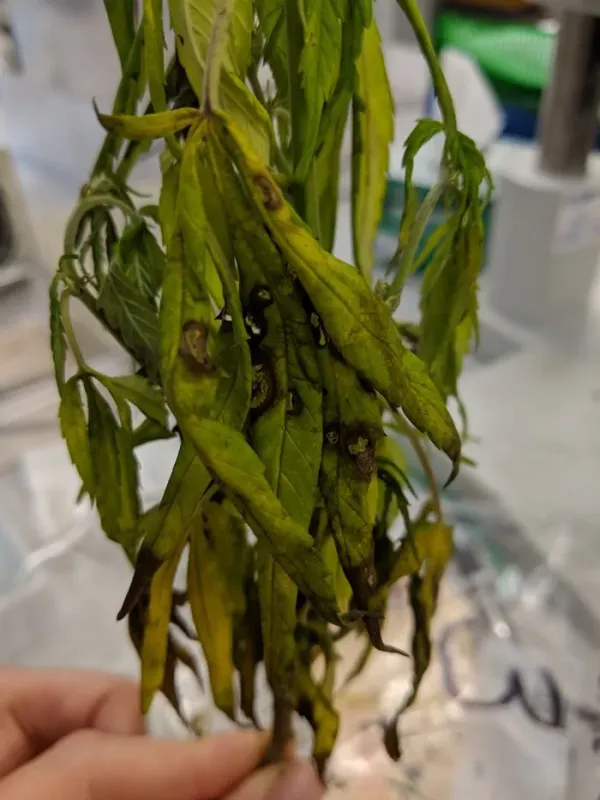
Early symptoms usually present as small, chlorotic flecks on leaves that rapidly expand into elongated, spindle-shaped, or elliptical necrotic lesions.
The lesions are often characterized by a dark center surrounded by a distinct yellow chlorotic halo, reflecting the fungal toxins' spread in the leaf tissue.
In humid conditions, a dense, velvety black mass of spores and conidiophores is clearly visible on the surface of the infected areas.
In severe infections, the lesions coalesce, causing large portions of the foliage to wither and die, which significantly compromises the plant's health.
Seedling blight, root rot, and stalk necrosis are also common symptoms when the pathogen infects the crop at an early growth stage.
Pathogen
The fungus Exserohilum rostratum (teleomorph: Setosphaeria rostrata) is a notorious plant pathogen responsible for leaf spot and blighting in a wide range of crops.
The pathogen is classified as an ascomycete fungus that reproduces through large, multi-septate conidia capable of long-distance dispersal via wind and rain splashes.
It colonizes plant tissues by secreting enzymes and toxins, which break down cell structures, eventually leading to localized necrosis and subsequent plant decline.
The fungus survives in soil and infected plant debris for several seasons, making it a persistent threat in continuous cropping systems.
High genetic diversity within the species allows it to adapt to various environmental conditions and overcome some standard cultural control practices.
Conditions for development
Development and disease spread are heavily favored by high relative humidity levels, typically exceeding 80%, and warm temperatures.
Optimal growth of the fungus occurs between 22°C and 30°C, making mid-season outbreaks particularly common during warm, wet weather spells.
Poor ventilation in dense crop canopies keeps the leaf surface wet for extended periods, providing a perfect environment for spore germination and infection.
Over-fertilization, particularly with nitrogen, promotes lush, soft foliage that is more susceptible to rapid fungal colonization.
Weed hosts in or near the field act as secondary reservoirs, allowing the pathogen to persist and spread to the main crop throughout the season.
Why it matters
The primary impact of the disease is a drastic reduction in photosynthetic capacity, which directly translates into lower yield and biomass production.
In cereal crops, the pathogen can infect grains directly, reducing overall grain quality, weight, and market value for growers.
Severe stalk infection can lead to lodging, making mechanical harvesting difficult and causing significant yield losses in the field.
Infected seeds often show reduced germination rates, leading to poor crop establishment and the need for costly replanting efforts.
Economic consequences also include increased expenses for fungicide applications, which are often necessary to contain the disease during outbreaks.
Protection
Cultural management through crop rotation is the most effective preventative measure to break the pathogen's life cycle in the field.
Sanitation practices, such as deep plowing to bury infected crop residues, significantly reduce the amount of inoculum present for the following season.
Selecting and planting resistant or tolerant crop varieties is recommended to maintain productivity even in the presence of the pathogen.
- Treat seeds with effective fungicides to ensure healthy seedling emergence.
- Monitor fields regularly and apply foliar fungicides upon the first sign of symptoms.
- Control weeds that serve as alternative hosts for Exserohilum rostratum.
- Manage plant density to optimize airflow and prevent prolonged leaf wetness.
An integrated approach combining resistant cultivars, balanced nutrition, and precise fungicide timing is essential for sustainable crop production.
Discussion
No discussions yet — be the first.