
Suillaceae
Suillaceae
The Suillaceae family is not a plant disease; it represents a group of basidiomycete fungi within the order Boletales.
What the section contains
Suillaceae
These fungi are well-known as obligate mycorrhizal symbionts that form essential partnerships with the root systems of coniferous trees.
The fungal mycelium establishes a direct interface with the plant roots, creating an ectomycorrhizal network.
Through this symbiosis, the fungi absorb water and essential soil minerals and transfer them to the host tree.
In exchange, the host plant provides the fungi with photosynthetic sugars, which are vital for the development of fungal fruiting bodies.
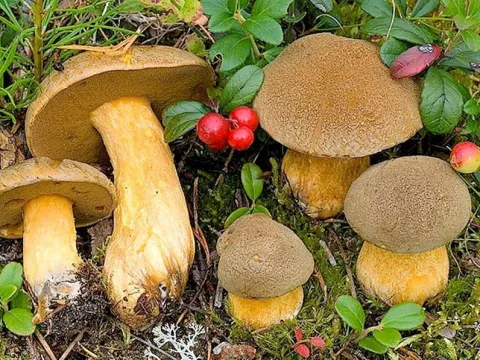
The most distinctive characteristic of this family is the slimy or viscid texture of the pileus (cap) skin.
They feature a tubular hymenophore, which consists of small pores rather than lamellae or gills.
A partial veil is often present in young specimens, leaving behind a persistent or evanescent ring on the stipe as the mushroom matures.
Flesh consistency is typically soft, and the coloration of the cap ranges from pale yellow to deep chestnut brown.
- Viscid cap surface.
- Tubular pore-bearing surface.
- Presence of a ring on the stipe in most species.
Suillaceae fungi are almost exclusively found in association with coniferous forests, particularly in pine and larch stands.
They thrive in environments with moderate temperatures and require consistent soil moisture to initiate the production of fruiting bodies.
These fungi favor well-drained, sandy, or acidic soils, which are common in many boreal and temperate forest ecosystems.
They are frequently observed on forest edges and clearings where the soil warms up quickly under sunlight.
The season for their development typically aligns with periods of high precipitation during the summer and autumn months.
Suillaceae are not plant pathogens and do not cause any harm to trees or cultivated crops.
They play a positive role in forest productivity by enhancing the nutrient and water uptake efficiency of the host trees.
There are no economic losses associated with these fungi; rather, they are beneficial for the overall health of the ecosystem.
They do not cause decay or tissue necrosis, which distinguishes them from parasitic fungi that negatively affect plants.
The presence of these fungi indicates a healthy symbiotic environment capable of supporting robust tree growth.
No control measures are needed because these fungi are not agents of plant disease or forest infestation.
If management is required in specific horticultural settings, soil drainage improvement will naturally limit their expansion.
The use of chemical fungicides is strongly discouraged as it would disrupt the beneficial mycorrhizal network.
Conservation of the soil biological balance is the best approach to maintaining the vitality of forest and nursery plantings.
These organisms should be regarded as valuable components of forest biodiversity rather than threats to vegetation.