
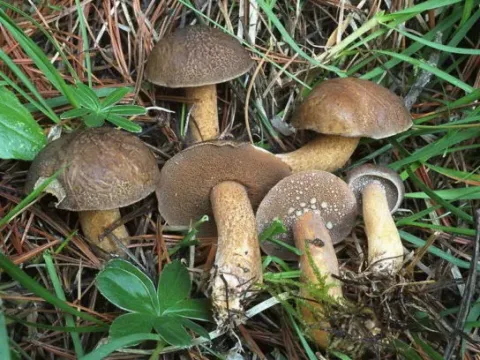
Suillus plorans
Suillus plorans
Suillus plorans, commonly known as the weeping bolete, is a basidiomycete fungus belonging to the Suillaceae family. It is not a plant pathogen, but rather a vital mycorrhizal partner.
What the section contains
Suillus plorans
The fungus forms an obligate symbiotic relationship with the root systems of various coniferous trees, particularly species of the genus Pinus (cedar/pine).
In this association, the fungal mycelium colonizes the tree roots, creating a network that facilitates the exchange of nutrients and water between the soil and the host plant.
The relationship is mutualistic: the fungus gains carbohydrates from the tree, while the tree receives improved access to minerals and hydration from the fungal network.
From an agricultural and forestry perspective, this fungus is a beneficial organism that contributes to the robustness and vitality of coniferous plantations.
The most visible sign of the fungus is the formation of its fruiting bodies, typically appearing in the vicinity of host trees during the growing season.
The cap is brownish-orange, and the fungus is known as the "weeping" bolete because it produces droplets of liquid on the stem and pores during its early developmental stage.
There are no symptoms of disease on the host plants; instead, trees associated with this fungus generally show healthy foliage and vigorous shoot growth.
In the soil, white or cream-colored hyphal strands (mycelium) can be observed closely associated with the tree roots, confirming the existence of the mycorrhizal complex.
No necrotic lesions, wilting, or tissue decay occur as a result of the colonization, as the relationship is strictly supportive rather than destructive.
Suillus plorans thrives in acidic forest soils, typically where there is an accumulation of coniferous litter and moderate moisture levels.
The fungus requires specific microclimatic conditions, preferring cool, damp periods for the active development of its fruiting bodies.
Adequate soil organic matter is necessary for the mycelium to expand and effectively interface with the roots of the coniferous host.
Excessive sunlight or soil compaction can disrupt the fungal environment, potentially reducing the frequency of fruiting body appearance.
Balanced ecological conditions within the forest floor are essential for maintaining the stability of the mycorrhizal symbiosis.
There is no harm associated with Suillus plorans; it does not infect or damage trees in any capacity.
Its presence is considered an indicator of a healthy forest ecosystem, as it aids in the efficient nutrient cycling of the soil.
The fungus does not cause diseases like rot, rust, or wilt, and it does not compete with the tree for essential nutrients in a harmful way.
On the contrary, its role in forestry is positive, as it facilitates faster seedling establishment and resilience against environmental stresses.
Therefore, it is categorized as a beneficial forest organism rather than a pest or disease agent.
No control measures are necessary, as this fungus is a beneficial component of the forest flora and poses no threat to crops or forestry resources.
To preserve the beneficial mycorrhizal network in nurseries or plantations, it is advisable to minimize the use of broad-spectrum fungicides.
Maintaining the natural structure of the forest floor and protecting the root zones from mechanical damage are the best practices for conservation.
Agrotechnical efforts should focus on protecting the trees from genuine threats, such as pests or bacterial infections, rather than targeting symbiotic fungi.
Encouraging the presence of Suillus plorans can actually be a management goal to improve the long-term health of coniferous stands.