
Suillus collinitus
Suillus collinitus
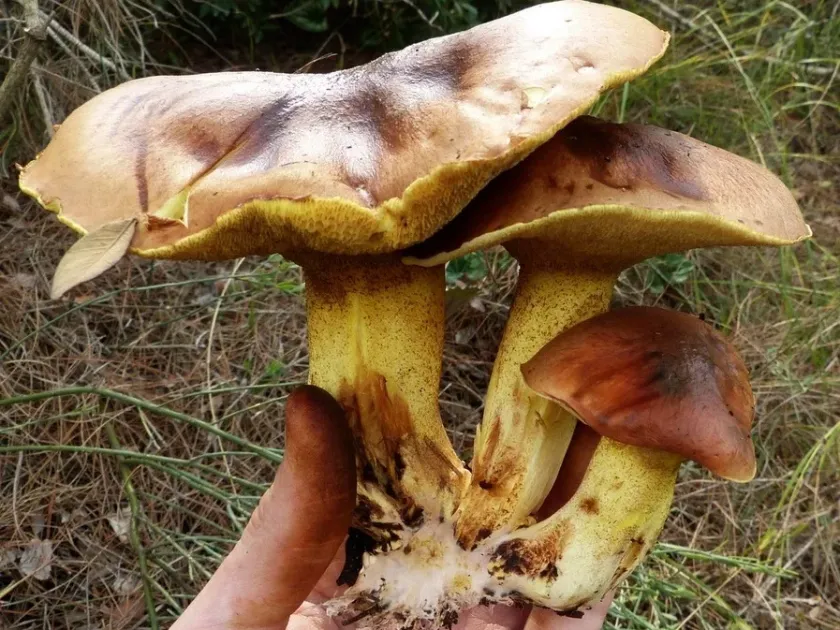
Description
Pathogen
Suillus collinitus (known as the yellow-veiled bolete) is not a plant pathogen. It is a common basidiomycete fungus that functions exclusively as an ectomycorrhizal partner for coniferous trees, particularly pines.
In biological terms, this fungus enters into a mutualistic symbiosis rather than a parasitic relationship. It provides the tree with minerals and water, while the tree supplies the fungus with carbohydrates.
There are no scientific reports or agricultural classifications that define this species as a plant disease. It does not produce toxins or induce physiological disorders in its host.
Mycelium of Suillus collinitus develops around the root tips, forming a mantle that serves as a protective barrier against some soil-borne pathogens, effectively aiding the host.
Therefore, it is accurate to classify this fungus as a beneficial organism in forestry and ecological studies, rather than a harmful agricultural object.
Conditions for development
The fungus thrives in coniferous forests, showing a specific preference for sites with calcareous soils. It often colonizes areas where pine trees provide the necessary host environment.
Optimal development of fruit bodies occurs during periods of moderate temperatures and consistent soil moisture, typically following autumn or summer rain cycles.
It requires a well-aerated forest floor with organic matter. The presence of leaf litter and stable humidity levels are crucial for the mycelial networks to expand effectively.
Exposure to sunlight at the edges of pine plantations is a common feature where this species is observed, indicating a high dependency on the tree's photosynthetic efficiency.
Dissemination is facilitated by spores that disperse through wind and fauna, ensuring the fungus establishes itself in new habitats suitable for pine tree growth.
Why it matters
Suillus collinitus causes no damage to crops or forest stands. It is entirely free of pathogenic activity and poses no threat to plant vitality or timber quality.
Conversely, its presence is a sign of a balanced ecosystem. It improves soil structure and nutrient availability, which are vital for the vigorous growth of pine trees.
There is no evidence of this fungus attacking diseased or healthy trees. Its role in the ecosystem is strictly defined by nutrient exchange and symbiotic structural support.
No economic harm is attributed to this species in forestry management. It is often encouraged as a part of natural reforestation efforts.
Treating this fungus as a problem would be incorrect as it is a fundamental part of the biological heritage of coniferous forest health.
Protection
No protection or control measures are required for Suillus collinitus. It should not be the target of any fungicide applications or eradication programs.
Management should focus on mitigating actual threats to tree health, such as root rot or insect infestations, rather than disrupting beneficial soil fungi.
Preventive maintenance involves minimizing soil compaction and chemical pollution, which helps preserve the integrity of the mycorrhizal network.
If chemical treatments are necessary for other purposes, practitioners should be aware of the collateral impact on beneficial fungi like the Suillus species.
The conservation of these mushrooms is recommended as part of sustainable forest management practices to ensure the long-term vitality of pine stands.
Discussion
No discussions yet — be the first.