
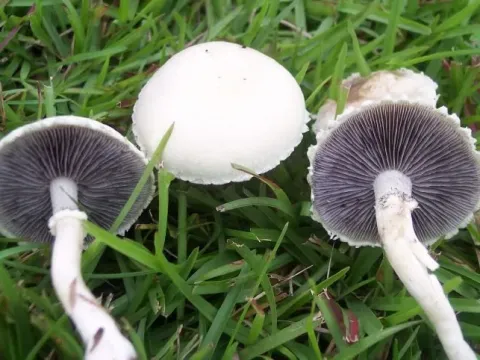
Stropharia melasperma
Stropharia melasperma
Stropharia melasperma is a fungus of the Strophariaceae family, known primarily as a saprotrophic organism that thrives on decaying organic matter rather than a plant pathogen.
What the section contains
Stropharia melasperma
Unlike obligate pathogens, this fungus does not attack the living tissues of crops but instead plays an ecological role in decomposing straw, plant debris, and humus.
The mycelium of the fungus is widespread in soils rich in organic content, effectively breaking down cellulose and lignin present in field residues after harvest.
From an agronomic perspective, it acts as a decomposer that participates in nutrient cycling, but its rapid proliferation can indicate an imbalance in soil microbiology.
While not inherently harmful to living crops, the dominance of Stropharia melasperma can reflect excessive moisture or poor aeration within the soil profile.
The most visible signs of this fungus are its fruiting bodies, which emerge from the soil surface during periods of high humidity and moderate temperatures.
The caps of the fungi are initially pale or creamy, gradually darkening as the spores mature and develop a deep, distinctively black color in the gills.
A white or yellowish network of mycelial threads is often visible beneath the soil surface, especially around decaying crop residues like wheat straw or corn stalks.
Affected areas may emit a characteristic mushroom odor, particularly noticeable when the soil is damp and the air is still.
In some cases, the soil surface in the vicinity of the growth may appear slightly matted due to the dense web of white fungal hyphae penetrating the organic layer.
The development of Stropharia melasperma requires stable environmental conditions, specifically high soil moisture and temperatures between +15°C and +22°C.
Large amounts of undecomposed crop residues on or near the surface provide the perfect substrate for the rapid expansion of the fungal mycelium.
Compacted soil with poor drainage creates a favorable microclimate, as low oxygen levels can inhibit beneficial bacteria while favoring certain saprotrophic fungi.
Increased soil acidity can also be a significant factor in promoting the growth of this species, as many saprotrophs tolerate acidic environments better than others.
Excessive accumulation of organic matter due to reduced tillage practices often leads to higher incidences of this fungus in the agricultural field.
The primary concern regarding this fungus is its competitive role in nutrient uptake, as it actively consumes available nitrogen during the process of organic breakdown.
Although it does not infect plants, the rapid mineralisation of organic matter by the fungus may disrupt the standard humus formation process in the soil.
Dense mycelial mats can physically impede root aeration, making it more difficult for plant roots to access sufficient oxygen in saturated soil conditions.
Its presence can signal that the soil is experiencing poor residue management, which could lead to secondary issues like soil-borne pest attraction.
The fungal activity may temporarily alter the rhizosphere chemistry, which is sometimes unfavorable for the initial development of young seedling roots.
Effective management begins with proper tillage practices, such as deep plowing, which buries organic debris and limits the access of surface-dwelling fungi to their substrate.
Crop rotation and the use of residue decomposers can accelerate the breakdown of straw by beneficial microbes, thereby outcompeting the saprotrophic fungus.
Adjusting soil pH through liming can create an environment less conducive to fungal growth and more suitable for beneficial soil microbiota.
Improving soil aeration and drainage is crucial to prevent the prolonged high-moisture conditions that Stropharia melasperma requires for its proliferation.
- Use of nitrogen fertilizers to balance the C/N ratio during organic decomposition.
- Physical removal of fruiting bodies to prevent large-scale spore dispersal.
- Regular field monitoring to detect changes in soil fungal activity.