
Stropharia thrausta
Stropharia thrausta
Description
Symptoms
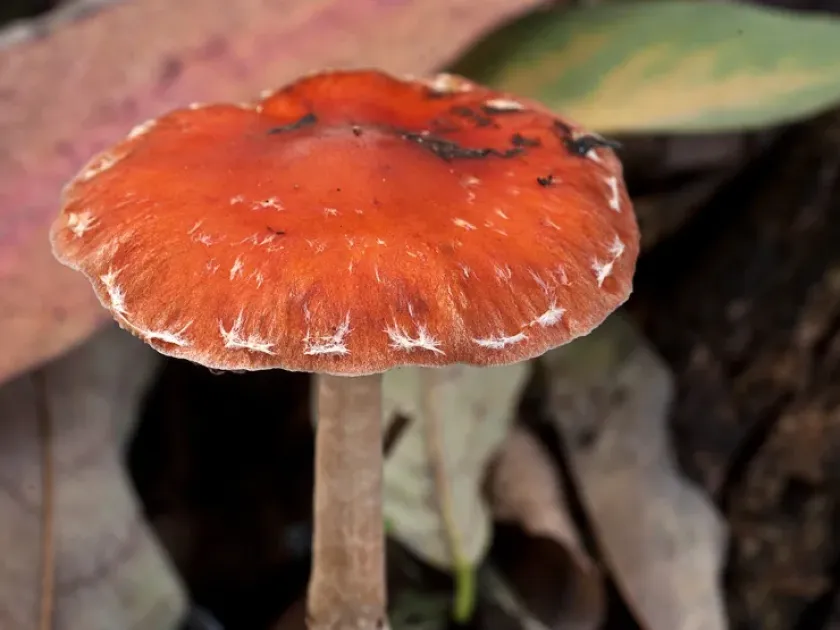
The fruiting bodies of Stropharia thrausta are characterized by a bright red to brick-red cap, which is covered in small, whitish scales.
The stem is typically slender and fibrous, often featuring a ring or remnants of a veil near the upper part.
The gills are initially pale but darken to a purplish-brown or dark grey color as the spores mature and are released.
These mushrooms typically grow in clusters or singly on decaying wood or rich, damp organic forest floor litter.
Identification is aided by the striking contrast between the vibrant cap color and the light, scattered scales on its surface.
Pathogen
Stropharia thrausta is a basidiomycete fungus that acts primarily as a saprotroph in woodland ecosystems.
It utilizes specific enzymatic pathways to break down lignin and cellulose components found in dead woody debris.
The fungal mycelium penetrates the structural tissues of wood, causing them to break down into organic matter.
Biologically, it is a key decomposer that facilitates the recycling of nutrients back into the soil environment.
Its growth cycle is closely linked to the availability of decaying organic matter and the moisture content of the substrate.
Conditions for development
The development of this fungus is highly dependent on high moisture levels and moderate temperature conditions.
It prefers shaded areas within forests where the ground or woody debris remains damp for extended periods.
Active growth and the production of fruiting bodies occur most frequently during the damp periods of late summer and autumn.
Spore dispersal is primarily achieved through wind currents, allowing the species to spread to new suitable habitats.
Environmental stability regarding humidity and temperature is crucial for the successful expansion of the fungal colony.
Why it matters
While not a parasite of healthy trees, Stropharia thrausta can cause economic damage by accelerating the decay of timber in storage.
The degradation of wood structure reduces its mechanical strength and commercial value, especially in damp storage conditions.
In landscaping, the appearance of these fungi on wood-based mulch can be considered an aesthetic issue for gardens.
Rapid colonization of woody debris can lead to structural instability of logs and piles if left untreated for long periods.
The presence of saprotrophic activity is a biological indicator of significant organic decay within the storage site or forest floor.
Protection
Effective control primarily involves keeping wood and timber dry to prevent the growth of fungal mycelia.
Proper ventilation in storage areas is essential to ensure that moisture does not accumulate on wooden products.
Clearing forest areas of excessive deadwood and logging residues can help limit the availability of substrates for the fungus.
When necessary, the application of appropriate wood preservatives or fungicides can protect commercial timber from fungal degradation.
Regular inspections of wood storage facilities are recommended to detect and manage potential fungal outbreaks early.
Discussion
No discussions yet — be the first.