
Strophariaceae mushrooms
Strophariaceae
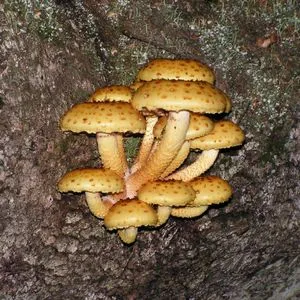
Description
Symptoms
The most prominent sign of infestation is the appearance of clusters of fungal fruiting bodies (mushrooms) on trunks, stumps, or near the base of the tree.
Wood colonized by these fungi undergoes significant changes, becoming soft, spongy, and light in color, which is a textbook characteristic of white rot infection.
Affected trees often show symptoms of decline, such as chlorosis (yellowing of leaves), stunted shoot growth, and premature leaf drop due to impaired water transport.
Bark surfaces may exhibit necrosis, cracks, or exudation in the areas where the fungus is actively developing beneath the surface.
- Clusters of fungal fruiting bodies on bark.
- Soft, bleached appearance of internal wood.
- Reduced crown density and leaf vigor.
- Presence of mycelial mats under the bark.
Pathogen
The family Strophariaceae consists of a diverse group of basidiomycetous fungi. While primarily saprotrophic, certain species, particularly within the genera Hypholoma and Stropharia, can act as facultative parasites on trees.
These fungi are well-known wood decay organisms that primarily cause white rot by breaking down lignin and cellulose components in woody tissues.
Transmission occurs through airborne basidiospores that settle on wounds, cracks in the bark, or pruning sites, where they begin to colonize the exposed wood.
The pathogenic development involves the penetration of mycelium into the xylem and phloem, where the fungi secrete extracellular enzymes that degrade the structural integrity of the plant cells.
These pathogens predominantly attack trees that have been weakened by environmental stressors, mechanical damage, or previous infestations, acting as opportunistic invaders.
Conditions for development
High humidity and poor air circulation within the orchard are primary drivers for the development and spread of Strophariaceae mushrooms.
The optimal temperature range for the growth of these fungi is generally between 15°C and 25°C, especially when combined with frequent rainfall or damp weather.
Orchards with dense planting patterns, lack of pruning, and accumulated organic debris provide an ideal substrate and microclimate for spores to germinate.
Trees stressed by waterlogged soil conditions or nutrient deficiencies are significantly more susceptible to successful colonization by these fungal pathogens.
Decaying stumps and old root systems serve as permanent reservoirs of infection, facilitating the continued presence of these fungi in the garden environment.
Why it matters
The primary damage is the internal degradation of the trunk and root structure, which severely compromises the structural stability of the tree.
As the wood loses its mechanical strength, the risk of limb breakage or full tree failure increases, posing a danger to the surrounding plantation and infrastructure.
By disrupting the vascular system of the tree, the fungi prevent the transport of water and nutrients, eventually leading to branch dieback or total tree death.
Infection spreads rapidly between neighboring trees if they are in close proximity or if pruning tools are not disinfected between individual plants.
The economic impact involves not only the loss of potential fruit yield but also the high costs associated with removing dead or hazardous trees.
Protection
Sanitation is the cornerstone of control; regular removal of dead branches, stumps, and diseased wood is essential to minimize the inoculum pressure in the orchard.
All pruning must be performed using clean, sharp tools, and any resulting wounds should be promptly treated with pruning sealants or fungicides.
Whitewashing the lower trunks of trees with lime-based mixtures can provide a protective barrier against spores and help maintain a less favorable environment for fungi.
Managing the orchard density to ensure sufficient airflow and light penetration helps keep the bark dry, thereby discouraging fungal spore germination.
Early identification of fruiting bodies followed by targeted application of copper-based or other systemic fungicides can help mitigate the spread of the infection.
Discussion
No discussions yet — be the first.