
Stropharia ochrocyanea
Stropharia ochrocyanea
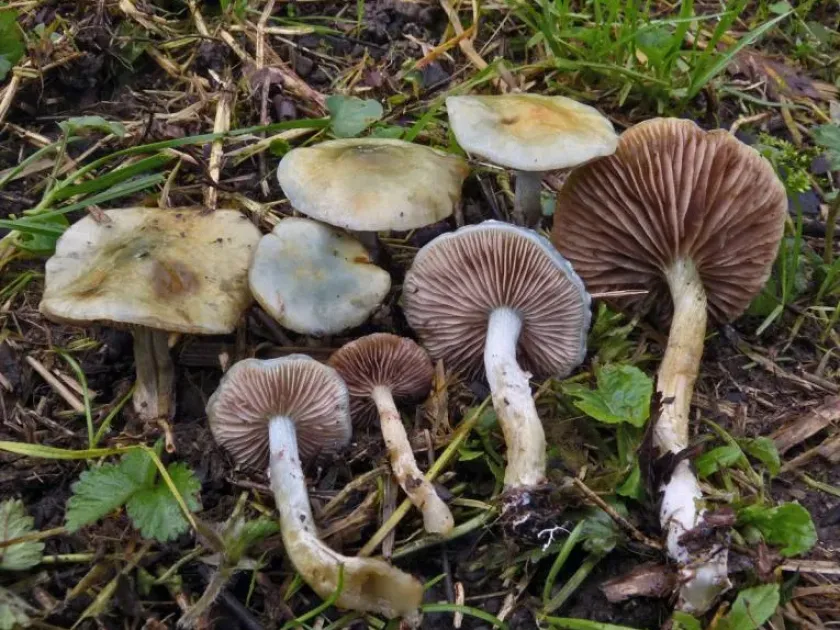
Description
Pathogen
Stropharia ochrocyanea is a species of mushroom belonging to the Strophariaceae family. It is a saprotrophic fungus that thrives on decaying organic material and does not function as a plant pathogen.
In agronomy, this organism is not a threat to living crops. It lacks the biological mechanisms to penetrate living plant tissues or induce any form of plant disease, making it harmless to agricultural productivity.
The fungus is primarily involved in the decomposition of cellulose and lignin found in dead wood, fallen leaves, and other organic forest litter. It plays an essential ecological role in nutrient cycling within its native habitat.
It does not produce toxins that could harm soil-dwelling beneficial organisms or cultivated plants. Its presence is indicative of high levels of available organic matter and moderate soil moisture.
Taxonomically, it is identified by its specific cap color and spore print. As a non-pathogen, it remains outside the scope of chemical plant protection products and disease management protocols.
Conditions for development
The development of Stropharia ochrocyanea is highly dependent on environmental humidity. It requires consistent moisture levels to sustain active mycelium growth and subsequent sporocarp formation.
Optimal temperatures for the fungus range between 15°C and 22°C. These temperatures allow the organism to efficiently break down organic substances while maintaining reproductive vitality.
The species prefers substrates rich in decaying wood or well-humified soil. It is frequently found in shaded, humid areas where natural accumulation of plant debris occurs, such as forest edges.
Soil pH levels generally range from slightly acidic to neutral for this fungus. Excessive soil compaction or lack of aeration can inhibit the spread of the mycelial network in natural settings.
Dispersal is primarily facilitated by wind-borne spores, which settle in suitable environments when moisture and organic food sources are readily available for colonization.
Why it matters
This fungus is not harmful to crops. Since it is not a parasite of living plants, it poses zero economic risk to field, vegetable, or fruit crops, and no control measures are required.
In specialized environments, such as commercial mushroom farms, it may appear as a weed species, competing with desired mushroom crops for resources within the growing substrate.
In open agriculture, the fungus does not damage crop development, nor does it interfere with the physiological health of plants. It is not listed as a quarantine object or a harmful pathogen in any agricultural region.
Its presence is purely saprotrophic, meaning it assists in breaking down crop residues left in the field, which can actually be beneficial for soil fertility over the long term.
There are no documented cases of Stropharia ochrocyanea causing economic losses, and therefore, it is considered a part of the healthy natural microflora in agricultural landscapes.
Discussion
No discussions yet — be the first.