
Stromatoseptoria
Stromatoseptoria
Stromatoseptoria is a genus of fungi belonging to the order Capnodiales, responsible for significant foliage diseases in various crops. These pathogens were previously often categorized within the broader Septoria complex but have been reclassified due to detailed taxonomic analysis.
What the section contains
Stromatoseptoria
The disease is caused by pycnidial fungi that reproduce through the formation of asexual spores known as conidia. These spores are housed within fruiting bodies called pycnidia, which serve as the primary source of inoculum during the growing season.
The fungus overwinters in infected crop residue, soil, or seeds as mycelium. Once environmental conditions become favorable in the spring, the pycnidia release spores that are disseminated to the foliage of host plants by rain splashes and wind currents.
The pathogen is highly adaptable and possesses a sophisticated mechanism for infecting host tissues. It primarily targets the leaves, where it colonizes the intercellular spaces, gradually absorbing nutrients from the plant host.
The biological cycle is tightly synchronized with the growth stages of the host plant. By producing multiple generations of spores during a single season, the pathogen can cause rapid disease progression under conducive conditions.
The initial symptoms typically appear as small chlorotic spots on the lower leaves. As the disease progresses, these lesions expand and develop a brownish or dark necrotic center, often surrounded by a yellow halo.
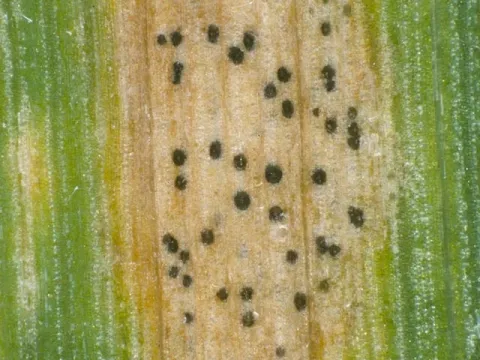
A hallmark of Stromatoseptoria is the presence of pycnidia—small, dark, dot-like structures embedded within the necrotic tissue. These are usually visible to the naked eye and are essential for accurate field diagnosis.
As the infection spreads to the upper canopy, the leaves may wither and die prematurely. This loss of photosynthetic area severely hinders the plant’s ability to produce energy, impacting overall development and health.
Stems may also show signs of infection, appearing as dark, elongated lesions that can weaken the structural integrity of the plant. In extreme cases, this leads to lodging, especially during windy or rainy weather.
Under high humidity, a thin, grayish fungal growth might be observed on the leaf surface. The symptoms are most pronounced after the flowering stage, coinciding with the grain-filling period of the cereal crops.
The development of Stromatoseptoria is favored by high humidity and moderate temperatures, typically ranging from 18°C to 25°C. Rainfall events are crucial as they facilitate the spread of spores from the lower canopy to the upper leaves.
Dense planting patterns promote an ideal microclimate for the disease, characterized by reduced airflow and prolonged leaf wetness. This environment allows the fungus to remain active and reproduce continuously throughout the growing season.
The presence of previous season's crop residue is a primary factor in disease outbreaks. If residues are left on the soil surface, they provide a constant reservoir for the fungus to jump onto emerging seedlings in the spring.
Improper fertilization, particularly high nitrogen application, can encourage lush, succulent growth. Such plant tissues have thinner cell walls and are more susceptible to the penetration of fungal hyphae, increasing the overall disease pressure.
Extended periods of cloud cover, morning dews, and high air humidity act as catalysts for the rapid spread of the pathogen. These conditions allow the disease to move upward through the plant tiers, affecting the flag leaf and head.
The primary economic impact of Stromatoseptoria is the significant reduction in grain yield caused by the premature destruction of the foliage. The reduction in photosynthetic capacity leads to smaller, shriveled kernels.
When the flag leaf is heavily infected, the grain filling process is drastically curtailed. This results in reduced 1,000-kernel weight and lower test weight, negatively affecting the commercial grade and quality of the harvest.
Beyond quantity, the infection can impact the nutritional and processing quality of the grain. High levels of disease reduce the efficiency of nutrient transport, leaving the plant susceptible to secondary stress factors.
In cases of severe epidemics, crop yield losses can range significantly, sometimes exceeding 30-40% in highly susceptible varieties. This makes the disease a major concern for intensive agriculture systems.
The cost of managing the disease, including fungicide applications, adds to the economic burden on farmers. Furthermore, infected plants show decreased resistance to abiotic stresses such as drought or heat waves.
Integrated Pest Management (IPM) is essential for controlling Stromatoseptoria. The use of resistant or tolerant cultivars serves as the foundation for sustainable disease management in most agricultural regions.
Cultural practices, such as crop rotation and deep plowing to bury infested residues, are vital for breaking the disease cycle. Eliminating volunteer plants and weeds is also necessary to remove alternative hosts for the pathogen.
Chemical control involving systemic fungicides is the most common approach to curb disease outbreaks. Applications should be timed based on scouting results and weather forecasts, particularly during critical crop growth stages.
It is important to rotate fungicide modes of action to prevent the development of resistance within the fungal population. Monitoring for the first signs of disease allows for preemptive treatments that are more effective than curative ones.
- Selection of varieties with documented field resistance.
- Balanced NPK fertilization to improve plant health.
- Regular field monitoring for early pycnidia detection.
- Application of fungicides (e.g., strobilurins and triazoles).