
Stropharia caerulea
Stropharia caerulea
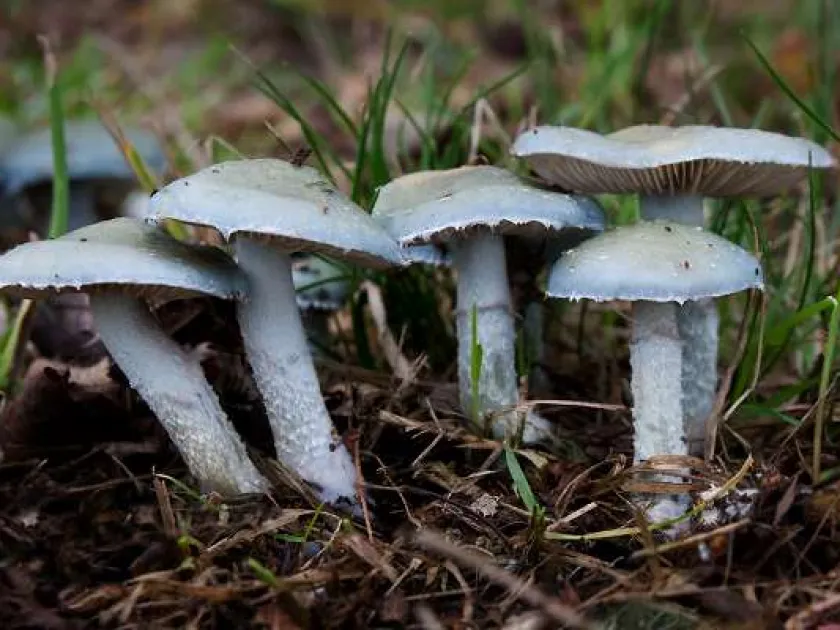
Description
Pathogen
Stropharia caerulea, commonly known as the blue roundhead, is a basidiomycete fungus belonging to the family Strophariaceae. It is important to clarify that this organism is not a plant pathogen.
The fungus is categorized as a saprotroph, meaning it derives its nutrients from dead or decaying organic matter. It plays a significant ecological role in the decomposition of plant material in forests and gardens.
Its mycelium extends through the soil or decaying wood, breaking down complex organic compounds like cellulose and lignin. It lacks the biological machinery to infect or damage healthy, living plant tissues.
Morphologically, it is identified by its striking blue-green cap, which is often coated in a layer of slime. This mucus helps protect the fruiting body from dehydration in humid environments.
For agronomists, identifying this fungus is a signal of high organic content and moisture in the soil, rather than a sign of disease outbreak among crops.
Conditions for development
The growth of Stropharia caerulea is strictly dependent on high moisture levels. It thrives in shaded, damp areas where soil remains wet for extended periods.
The fungus colonizes substrates rich in organic waste, such as wood chips, bark, leaf litter, and compost. It is frequently observed in garden beds that have been heavily mulched with fresh, non-decomposed materials.
The optimal temperature range for the development of its fruiting bodies is between 12 and 20 degrees Celsius. They are most commonly encountered during wet summer and autumn months.
Agricultural practices that promote soil waterlogging or create stagnant microclimates within plant rows contribute to the colonization of this fungus.
Lack of proper aeration and the presence of dense, thick layers of mulch create an ideal, sheltered environment for the fungal mycelium to flourish.
Why it matters
Stropharia caerulea does not pose a direct threat to agricultural or horticultural crops. It is not responsible for any type of plant rot, wilt, or leaf disease.
The primary concern regarding this fungus is its rapid consumption of mulch. By decomposing organic material quickly, the fungus can deplete the protective layer intended for soil moisture retention.
In some cases, the fungal activity might temporarily affect the nitrogen balance in the soil as microorganisms work to break down woody substrates, though this rarely impacts overall crop health.
For home gardeners, the presence of the mushrooms may be considered an aesthetic nuisance. As the mushroom is inedible, it is recommended to keep children and pets away from areas where it grows.
The fungus is a natural recycler of organic compounds and generally poses no risk to the structural integrity or fertility of the garden soil.
Protection
Since the blue roundhead is not a plant disease, the use of chemical fungicides is entirely unnecessary and potentially harmful to beneficial soil microbiota.
The most effective management strategy involves modifying environmental conditions. Improving soil drainage and preventing water accumulation is the first step.
Gardeners should use only fully decomposed compost as mulch. Fresh wood chips or sawdust should be composted separately before being applied to the soil surface to prevent fungal outbreaks.
Mechanical removal of fruiting bodies is a simple way to manage the aesthetic issue. Regular cultivation and raking help improve soil aeration, leading to a drier surface that discourages fungal growth.
Ensuring that planting areas are well-ventilated and receive adequate sunlight will significantly reduce humidity, making the environment less favorable for the fungus to persist.
Discussion
No discussions yet — be the first.