
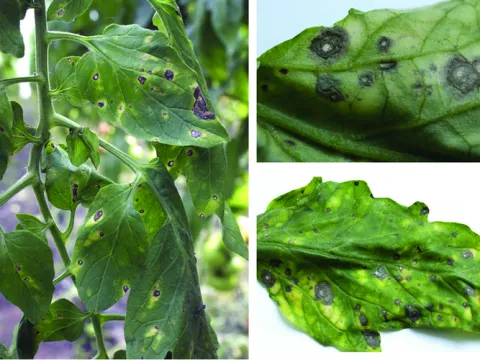
Stemphylium leaf spot
Stemphylium solani
The causal agent of this disease is the fungus Stemphylium solani, an anamorphic fungus that belongs to the order Pleosporales. It is a persistent soil-borne and seed-borne pathogen that poses a significant threat to various nightshade plants.
What the section contains
Stemphylium leaf spot
The fungus survives during unfavorable conditions as mycelium or conidia on infected crop debris, in soil, or on alternative weed hosts. Its ability to persist in the field for extended periods makes it a challenging pathogen to eradicate completely.
The disease cycle begins when conidia are dispersed by wind, splashing rain, or contact with contaminated tools. Once they land on healthy tomato leaves, they germinate and penetrate the tissue through stomata or directly through the epidermis.
As the mycelium colonizes the leaf tissue, it secretes toxins that cause localized cell death, leading to the formation of characteristic spots. The pathogen has high reproductive potential, producing numerous conidia in short intervals under conducive conditions.
Different strains of Stemphylium solani may vary in aggressiveness, necessitating the use of resistant varieties as a fundamental component of integrated disease management in modern agriculture.
Early symptoms appear as small, dark brown to black circular spots on the lower, older leaves of the plant. As the disease progresses, these spots often expand, becoming angular or oval, delimited by the leaf veins.
The center of the lesions typically turns light tan or grayish-white, while the surrounding margins remain dark brown. A distinctive feature is the development of a yellow chlorotic halo around each spot, giving the foliage a mottled appearance.
Under high humidity, a dark, olive-black velvety growth may appear on the lesions, which consists of the fungus's conidiophores and conidia. This indicates active sporulation and high potential for further spread within the field.
Severe infection leads to widespread necrosis and early senescence of the leaves. As the disease climbs to the upper canopy, the plant loses significant photosynthetic capacity, eventually leading to premature defoliation.
It is important to note that unlike early blight (Alternaria solani), Stemphylium solani very rarely affects the fruits themselves, focusing primarily on the leaf system, which is a key diagnostic characteristic for farmers.
The development of Stemphylium leaf spot is highly favored by warm temperatures, typically ranging from 20°C to 27°C (68–80°F). These temperatures promote rapid fungal growth and high metabolic activity of the pathogen.
High relative humidity and leaf wetness duration are essential for infection. Frequent rainfall, heavy morning dews, or the use of overhead irrigation create the perfect environment for the fungus to establish itself.
In greenhouses, poor ventilation and stagnant air increase the risk of disease outbreaks significantly. The combination of high humidity and moderate temperatures can lead to rapid spread through the entire crop within a few weeks.
Plants that are stressed due to nutrient deficiencies, improper watering, or poor soil structure are more susceptible to the initial infection. High plant density further promotes the disease by limiting airflow between plants.
The pathogen is also easily spread through the movement of contaminated farm equipment or workers moving through a wet crop. Therefore, hygiene and sanitation are crucial factors in controlling the disease's advancement.
The primary economic impact of the disease is a significant reduction in fruit yield due to severe defoliation. Without a healthy leaf canopy, the plant cannot synthesize enough carbohydrates to support fruit development.
Fruits on infected plants are often undersized, reach maturity slower, and may have reduced nutritional value. This loss of quality directly translates into lower market prices and financial losses for the grower.
Premature leaf drop exposes the fruits to sunscald, which further reduces the harvestable yield. In cases of early-season outbreaks, the impact can be devastating, sometimes requiring the complete removal of the crop.
The presence of the fungus in the soil complicates long-term field management, forcing growers to invest in fungicides or longer rotations. This increases the total cost of production and impacts the overall sustainability of the farming operation.
Furthermore, because the pathogen is hard to eliminate once established, it remains a persistent threat that requires constant vigilance. Neglecting the disease can turn a productive field into a reservoir of inoculum for future seasons.
Management of Stemphylium leaf spot focuses on cultural practices, starting with a strict crop rotation that avoids planting solanaceous crops in the same field for at least 3 years. Prompt removal of crop debris is essential to reduce the primary inoculum load.
Selecting resistant or tolerant tomato varieties is the most effective way to prevent yield loss. Growers should also ensure that all seed stock is certified and treated to prevent the introduction of the pathogen into new areas.
In protected cultivation, controlling humidity and ensuring good airflow is paramount. Transitioning to drip irrigation systems helps keep the foliage dry, which significantly inhibits the germination of fungal spores.
Fungicide applications are recommended when conditions are favorable for disease development or upon the first signs of spots. Both contact fungicides (like copper-based) and systemic fungicides are commonly employed to protect the crop.
- Use drip irrigation to prevent wetting the foliage.
- Space plants adequately to improve airflow and drying.
- Remove and destroy severely infected leaves or entire plants.
- Apply fungicides preventively or at the first sign of symptoms.
- Monitor the field regularly during periods of high humidity.