
Stenotaphrum rust
Puccinia stenotaphricola
Description
Symptoms
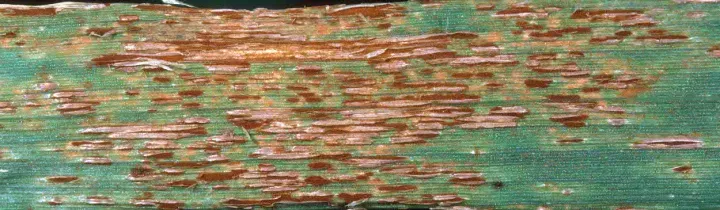
The first noticeable symptoms of rust are small chlorotic spots on the leaves and leaf sheaths. Over time, these spots develop into characteristic pustules that exhibit a rusty-brown or yellowish hue.
As the disease progresses, the leaf surface becomes covered in a powdery layer of spores. This powder is easily detached and can be transported by wind or human activity within the lawn area.
Infected leaves eventually turn yellow, curl, and wither prematurely. The grass canopy loses its aesthetic appeal, resulting in a patchy and thinning appearance that is detrimental to turf quality.
Severe infections lead to the deformation of shoots and a significant reduction in overall growth rates. The destruction of leaf tissue due to pustule formation impairs the plant's photosynthetic capability.
- Appearance of yellow spots on leaves.
- Formation of rusty-brown pustules.
- Powdery spore layer on foliage.
- Yellowing and premature leaf senescence.
- Reduced turf density and vigor.
Pathogen
The causative agent of this disease is a specialized fungal parasite, Puccinia stenotaphricola, which belongs to the Basidiomycota division. It is a highly specific pathogen that primarily infects plants of the Stenotaphrum genus, commonly used as turfgrass in landscaping.
The life cycle of the fungus involves the production of distinct spore stages on the surface of leaves and stems. The pathogen generates urediniospores and teliospores, which serve as the primary sources of infection throughout the growing season.
This fungus is an obligate parasite, meaning it depends entirely on living plant tissues for its nutrient supply. The fungal mycelium penetrates the epidermal tissue, systematically damaging plant cells from within.
The biology of this pathogen is adapted to the climatic conditions of tropical and subtropical regions where Stenotaphrum is grown. It exhibits high dispersal rates in the presence of free moisture.
Spore dispersal occurs predominantly through air currents over significant distances. Upon landing on susceptible leaves, the spores germinate rapidly under favorable moisture conditions, initiating a new infection cycle.
Conditions for development
The most favorable conditions for the development of Puccinia stenotaphricola involve a combination of moderate temperatures (20–25 degrees Celsius) and high relative humidity.
Excessive irrigation, particularly in the evening, maintains moisture on the leaf surface, creating an ideal environment for spore germination. Prolonged dew and fog also significantly accelerate the infection rate.
Poor lighting and inadequate aeration within the canopy contribute to high humidity levels. Dense, overgrown Stenotaphrum patches are significantly more susceptible to epidemic-level outbreaks.
Plants weakened by nutrient deficiencies or environmental stress are highly vulnerable. Unbalanced nitrogen fertilization can lead to excessive, soft tissue growth that is easily colonized by fungal hyphae.
Debris and thatch remaining on the site serve as reservoirs for the fungus. These plant remnants allow the pathogen to survive during unfavorable periods and re-infect the turf when conditions improve.
Why it matters
Stenotaphrum rust causes severe damage to the aesthetic quality of lawns. Infected areas become unsightly, which is particularly problematic for sports fields and high-end residential landscaping.
Physiologically, the disease exhausts the plant's energy reserves stored in the rhizomes. Infected grass struggles to recover after mowing, leading to thinning and eventual decline of the turf stand.
The resistance of the lawn to other stressors, such as drought, foot traffic, and insect attacks, is significantly diminished. This cumulative stress often necessitates complete replacement of the turf.
Economic losses arise from the costs of fungicide applications, increased maintenance efforts, and potential devaluation of the property due to poor aesthetic standards.
Active infection centers can spread rapidly across a lawn. If left unmanaged, the disease can transition from a minor issue to a widespread epidemic affecting the entire area.
Protection
Preventative measures are the primary defense, focusing on reducing moisture in the lower canopy. Proper irrigation scheduling, ideally in the early morning, is essential to minimize leaf wetness duration.
Regular aeration and scarification help remove thatch and debris where the fungus overwinters. Improving air circulation within the turf stand helps lower the humidity levels required for spore activity.
Avoid over-applying nitrogen fertilizers, which encourage soft, susceptible tissue growth. Use balanced fertilization programs that prioritize potassium and phosphorus to enhance plant health.
In cases of severe outbreaks, systemic fungicides should be applied. Products based on triazoles or strobilurins are effective in suppressing fungal development within the plant tissues.
When establishing new lawns, choose Stenotaphrum cultivars known for higher resistance to rust diseases. Maintaining overall turf health through integrated management strategies is the best way to prevent outbreaks.
Discussion
No discussions yet — be the first.