
Stentor
Stentoridae
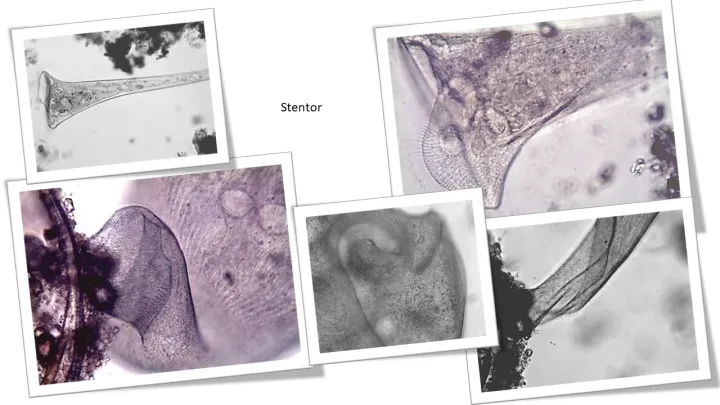
Description
Pathogen
Stentoridae, commonly known as Stentors, are large, trumpet-shaped ciliated protozoa. While they do not act as direct plant pathogens, they are frequently encountered in hydroponic and aquaponic systems where they can reach problematic population densities.
These organisms belong to the class Heterotrichea. Their biology is characterized by a contractile body and a holdfast mechanism, which allows them to anchor themselves firmly to plant roots or system conduits.
As filter feeders, they consume bacteria and organic particulate matter. In professional hydroponic setups, their presence is considered a biological indicator of poor water quality or excessive organic load.
They are not considered infectious agents in the traditional sense, but they belong to the complex micro-community that can develop in nutrient-rich solutions.
Their life cycle includes both a free-swimming stage and a sedentary stage, which makes them highly adaptable to various conditions within a cultivation system.
Conditions for development
Stentor populations thrive in nutrient solutions with a high accumulation of dissolved organic carbon, often caused by root exudates or decomposing plant debris.
Low dissolved oxygen (hypoxia) is the primary environmental trigger for their expansion. In well-aerated systems, Stentors struggle to establish large, stable colonies.
Temperatures ranging from 18°C to 25°C provide an ideal environment for their metabolism, mirroring the conditions preferred by most greenhouse vegetable crops.
Stagnant zones within the irrigation system, such as dead ends in piping or poorly circulated reservoir corners, serve as nurseries for these microorganisms.
The introduction of untreated reservoir or well water is a common pathway for initial contamination, allowing them to seed the system and colonize root zones.
Why it matters
The primary harm caused by Stentors is physical. They form dense, slime-like colonies on the root surface, creating a mechanical barrier that impedes nutrient and water uptake.
By covering the root surface, they create an anaerobic micro-environment that stresses the plant and inhibits vital gas exchange, leading to root tissue softening.
Their feeding activity and presence can signal underlying water issues, such as the accumulation of waste products that are toxic to the plant in high concentrations.
Plants affected by significant Stentor colonization exhibit stunted growth, chlorosis, and reduced yield due to the continuous stress on their subterranean parts.
In large-scale commercial operations, severe infestation can necessitate a complete shutdown and sanitization of the system, resulting in substantial financial losses.
Protection
The most effective strategy is the integration of UV-C water sterilization, which is lethal to these ciliates as they circulate through the nutrient solution.
Maintaining high levels of dissolved oxygen through active aeration is essential to prevent these protozoa from colonizing the root environment effectively.
Rigorous filtration of the nutrient solution removes the organic matter that serves as the food source for Stentor colonies, keeping their numbers naturally suppressed.
Regular sanitation of irrigation equipment, including tanks and pipes, helps to disrupt the life cycle of these organisms and prevents biofilm buildup.
- Implementation of UV-C filtration systems;
- Maintaining dissolved oxygen above 6-7 ppm;
- Routine flushing of irrigation lines;
- Effective filtration of organic debris.
Discussion
No discussions yet — be the first.