
Sonchus yellow net virus
Sonchus yellow
The causal agent of this disease is the Sonchus yellow net virus (SYNV), which belongs to the Rhabdoviridae family and the Nucleorhabdovirus genus.
What the section contains
Sonchus yellow net virus
This virus is a nucleorhabdovirus, characterized by its ability to replicate within the nuclei of host plant cells, causing significant physiological disruptions.
The viral particles exhibit a distinct bacilliform morphology, a hallmark feature used by pathologists to identify this group of plant pathogens under microscopic observation.
Common sowthistle (Sonchus) species serve as the primary long-term reservoirs for the virus, allowing it to survive between growing seasons in the field.
Transmission occurs primarily through biological vectors, specifically aphid species, which acquire the virus from infected host plants and inoculate healthy ones during feeding.
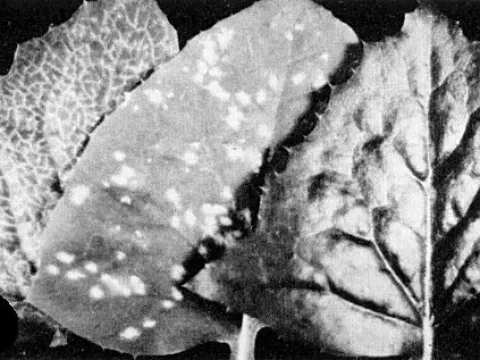
The characteristic symptom of the disease is vein yellowing, which eventually evolves into a distinct net-like chlorotic pattern across the leaf surface.
In susceptible crops like lettuce, the yellowing of tissues along the vein network creates a stark contrast against the natural green color of the leaves.
Infected plants frequently exhibit stunted growth, reduced leaf size, and a loss of overall vigor, which negatively impacts the plant's health and development.
In more advanced stages, the foliage may show signs of curling, distortion, or early senescence, significantly reducing the visual quality and marketability of the crop.
While symptom severity may fluctuate based on the plant's growth stage and environmental stress, the persistent yellow netting of the veins is a key diagnostic feature.
The spread of the virus is closely linked to the activity and density of aphid populations, which flourish in warm, dry weather conditions typical of the growing season.
The presence of wild host plants, particularly sowthistle, surrounding cultivated fields acts as a catalyst for outbreaks by providing a continuous source of inoculum.
Winged aphids, migrating from infested weed patches into lettuce fields, are the primary drivers of localized epidemics that can quickly escalate.
Environmental stress, such as water deficit or nutrient imbalance, may exacerbate symptom expression, making infected plants more susceptible to further physiological decay.
The disease usually spreads in a patchy distribution pattern, often originating at the edges of fields where vectors first arrive from surrounding areas.
Sonchus yellow net virus poses a major threat to the commercial quality of leafy vegetables like lettuce, rendering produce unacceptable for consumer markets.
Severe infections result in reduced biomass production, directly leading to lower harvest yields and decreased economic returns for the grower.
The metabolic cost of viral infection suppresses photosynthetic activity, leading to a weaker plant that struggles to reach maturity or full harvest potential.
Management costs increase significantly due to the necessity of constant monitoring and the application of insecticides to control the insect vector populations.
The persistence of the virus in wild populations requires long-term management strategies, as the threat remains a permanent challenge in regions where sowthistle grows.
Effective management focuses on eliminating weed reservoirs, especially sowthistle and other Asteraceae species, from the vicinity of cultivated areas to remove the virus source.
Controlling aphid vectors through the judicious use of registered insecticides is crucial to preventing the transmission of the virus into healthy crops.
Implementing cultural practices such as crop rotation and maintaining clean field borders helps reduce the overall risk of viral incidence in the field.
Physical barriers, such as the use of protective netting in greenhouse environments, provide a high level of protection by preventing aphid entry.
- Regular monitoring of aphid populations;
- Strict weed management at field borders;
- Deployment of physical barriers;
- Use of healthy planting material.