
Sooty milk cap
Lactarius fuliginosus
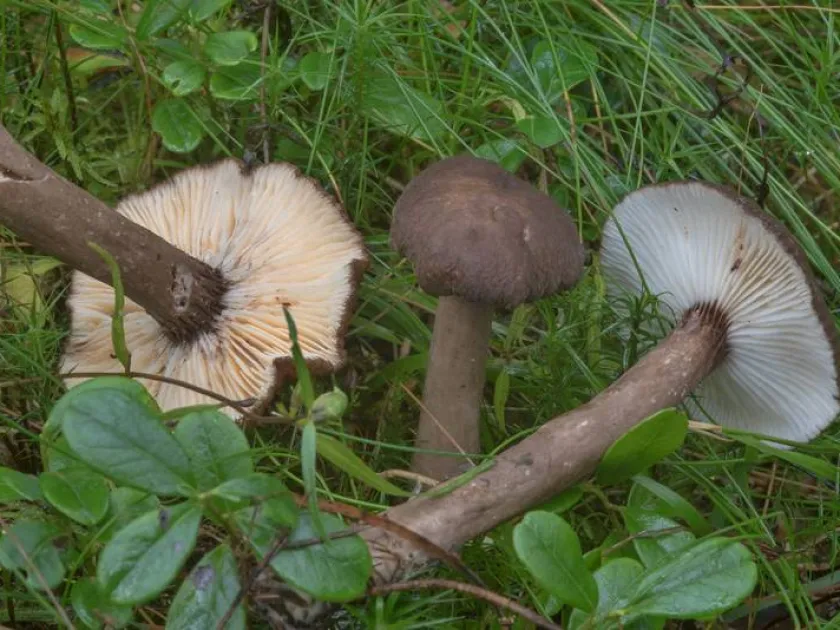
Description
Pathogen
The sooty milk cap (Lactarius fuliginosus) is not a plant pathogen and does not cause any diseases in crops or forest trees. It is a macrofungus species belonging to the family Russulaceae, naturally occurring in temperate forest ecosystems.
This fungus is an obligate mycorrhizal symbiont. Its mycelium interacts specifically with the roots of certain tree species, primarily beech (Fagus), which is essential for the health and nutrient absorption of these trees in natural habitats.
The species does not possess any phytopathogenic traits. It does not infect plant tissues, nor does it cause rot, necrosis, or systemic plant illnesses. It maintains a mutually beneficial relationship with its host trees.
The morphology of the fruit body features a distinctively velvety, soot-colored cap and white latex that turns pinkish upon exposure to oxygen. This is a primary diagnostic characteristic for species identification in the field.
In forestry and agriculture, Lactarius fuliginosus is regarded as a beneficial organism. It contributes to soil health and tree vigor by enhancing mineral uptake, effectively serving the sustainability of woodland areas.
Conditions for development
The development of the sooty milk cap is strictly dependent on the presence of its host trees. It is predominantly found in beech-dominated forest environments where the soil and root conditions favor mycorrhizal network expansion.
Environmental moisture levels play a critical role in the emergence of fruit bodies. Adequate precipitation during the summer and early autumn months is essential for the mycelium to transition into its reproductive phase.
Rich forest soil with high organic content is the preferred substrate. The presence of leaf litter helps maintain the stable soil temperature and humidity levels required for the long-term survival of the fungal colonies.
The optimal temperature range for the activity of Lactarius fuliginosus falls within mild summer conditions. Prolonged heat or drought can inhibit fruit body formation, although the underlying mycelium may remain dormant.
Anthropogenic landscape changes, such as clearing or heavy soil compaction, can adversely affect local populations of this fungus, highlighting the importance of conserving natural forest habitats for biodiversity.
Discussion
No discussions yet — be the first.