
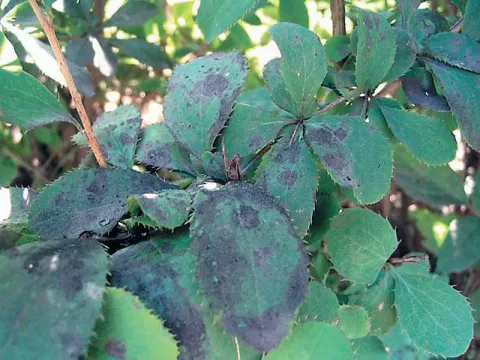
Sooty mold
Limacinia nivalis
The causative agent of this disease is a group of saprophytic fungi belonging to the Capnodiaceae family, specifically the species Limacinia nivalis. These microorganisms do not directly parasitize plant tissues but instead develop on superficial excretions.
What the section contains
Sooty mold
The disease type is classified as a superficial fungal infection. The mycelium spreads exclusively on the surface of plant organs without penetrating deep tissues; however, it is closely linked to the activity of sucking insects.
The primary food source for fungal spores is "honeydew" — the sweet, carbohydrate-rich excretions produced by aphids, mealybugs, scale insects, and whiteflies. Without these excretions, the development of fungal colonies on healthy tissues is virtually impossible.
The pathogen's biology involves active reproduction during the spring and summer. Fungal spores are easily carried by wind and water droplets, rapidly colonizing areas of leaves and shoots where insect excrement has already accumulated.
The spread of sooty mold often indicates a neglected garden, as the fungus acts as an indicator of mass outbreaks of sucking pests. While the fungus itself does not kill the tree, it significantly impairs its vital metabolic processes.
The key sign of infection is the appearance of a specific coating on leaves, fruits, and young shoots, resembling soot or coal dust. This coating is easily wiped off with a finger, revealing a healthy, though often sticky, leaf surface.
At the beginning of the disease, the coating appears as a thin grayish-brown film. As the mycelium grows, it darkens, becoming velvety and almost black due to the accumulation of melanin in the spores and hyphae.
Affected areas often become sticky to the touch even before the mold appears, as the pathogen always accompanies aphid honeydew. The sticky layer attracts dust, which further complicates the plant's ability to perform photosynthesis.
In cases of severe infestation, the mycelium can completely cover the leaf blade, leading to premature yellowing and leaf drop. Fruits covered with sooty mold lose their marketability, and their skin becomes rough and less resistant to storage.
Visual inspection under a magnifying glass or microscope reveals fine, intertwined mycelial threads. It is important to distinguish this coating from powdery mildew, which has a lighter shade and a specific powdery appearance.
Sooty mold thrives in conditions of high air humidity and moderate temperatures. Dense tree canopies, where ventilation is restricted, create an ideal microclimate for fungal spore reproduction.
A mandatory condition for the disease is the presence of sucking pest colonies (aphids, scale insects, whiteflies). Their waste products create a nutrient-rich environment necessary for mycelial growth.
Lack of proper garden maintenance, such as timely pruning, leads to the creation of shaded and damp areas inside the crown. This significantly increases the risk of local disease outbreaks in the lower and inner parts of the tree.
The spread of spores is facilitated by frequent rains and dew, which maintain the necessary moisture on the leaf surface. High plant planting density also makes it easier for the pathogen to travel from one specimen to another.
The fungus actively reproduces in the second half of summer when the population of insect pests reaches its peak. During this period, even short-term increases in humidity can lead to mass blackening of the foliage.
The primary harm lies in the blockage of the photosynthesis process. The dense layer of mold prevents sunlight from reaching leaf tissues, causing the plant to suffer from carbohydrate starvation.
Normal respiration and transpiration (water evaporation) are disrupted. Under the dense mold layer, leaf pores become clogged, leading to tissue overheating and water balance disorders, especially during hot periods of the year.
The visual quality of fruits and ornamental crops is severely affected. The market value of the harvest drops sharply as the mold is difficult to wash off, and infected fruits spoil faster and are more prone to rotting.
Sooty mold indirectly indicates a weakened plant state caused by pest activity. A tree covered with aphids and sooty mold spends all its energy fighting them, leading to reduced winter hardiness.
In the long term, without control, there is a slowdown in shoot growth, a reduction in fruit size, and a decrease in the plant's overall immunity, making it susceptible to other secondary diseases.
The most effective method of control is the elimination of sucking insects, the primary provocateurs of the disease. Controlling aphids, scale insects, and whiteflies automatically halts the development of sooty mold.
Regular sanitary pruning is recommended to improve crown ventilation. This reduces humidity levels and prevents the formation of a favorable environment for sooty mold spore development.
The use of copper-containing fungicides (Bordeaux mixture, copper oxychloride) effectively cleans the plant surface. These preparations suppress mycelial development without damaging the tree's tissues.
To prevent the spread of the disease, it is necessary to remove and burn heavily infected plant debris. Preventive spraying at the beginning of the season helps to reduce the spore load in the garden.
- Regular monitoring of plants for aphids.
- Timely insecticide treatment.
- Thinning out dense tree canopies.
- Washing off the mold with a strong water stream in case of minor infestations.
- Using biological preparations to strengthen plant immunity.