
Sirobasidiaceae
Sirobasidiaceae
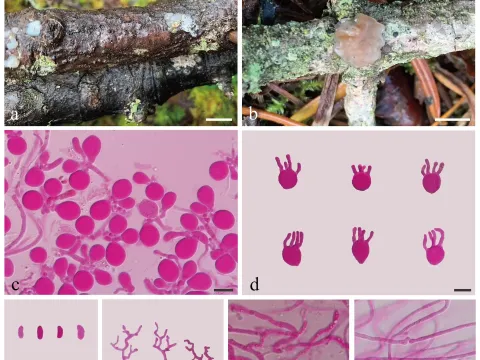
Sirobasidiaceae is a family of basidiomycete fungi belonging to the order Tremellales. These fungi are characterized by the production of specialized, club-like basidia, known as sirobasidia, which are involved in the sexual reproduction process of the organism.
What the section contains
Sirobasidiaceae
Most members of this family act as wood-decay fungi, primarily colonizing dead or dying organic matter. While they typically function as saprotrophs, they can opportunistically infect weakened live plants, particularly those with compromised bark or structural injuries.
The biological success of Sirobasidiaceae is largely attributed to their ability to form gelatinous or membrane-like fruit bodies. These structures allow the fungus to retain moisture effectively, enabling it to thrive in humid forest environments and damp orchards.
Reproduction is carried out through basidiospores that are dispersed by wind or rain splash. Once these spores land on an exposed wood surface, they germinate and develop a mycelial network that penetrates the wood to extract nutrients.
Current taxonomic research on Sirobasidiaceae continues to evolve, as traditional morphological classification is often supplemented by molecular sequencing to distinguish these fungi from other closely related gelatinous basidiomycetes found in similar ecological niches.
The development of Sirobasidiaceae is highly dependent on environmental moisture levels. They flourish in humid conditions, making them particularly prevalent in dense, poorly ventilated areas where moisture accumulates on the surface of tree limbs and trunks.
Warm temperatures further accelerate the growth of the fungal mycelium. While the fungi can survive cooler periods, the combination of high humidity and moderate heat provides the optimal conditions for rapid expansion and colonization of host plant tissues.
Mechanical injuries serve as the primary entry points for these pathogens. Wounds caused by pruning, frost cracking, sunscald, or insect damage expose the inner wood, allowing spores to bypass the tree's natural protective bark barrier.
Poor orchard sanitation contributes significantly to the spread of the disease. The presence of fallen branches, stumps, and dead wood in the vicinity creates a permanent reservoir of fungal spores that can easily infect healthy trees during periods of high humidity.
High planting density restricts airflow and light penetration, creating a microclimate that is conducive to the growth of various wood-decaying fungi. Proper spacing and thinning of tree canopies are essential to break the cycle of infection.
The primary harm caused by Sirobasidiaceae is the internal decay of wood. By secreting specific enzymes, the fungus breaks down the structural components of the tree, specifically lignin and cellulose, which eventually reduces the strength and stability of the branches or stems.
Affected trees often show signs of reduced vigor, such as chlorotic leaves, stunted growth, and the dieback of infected branches. As the decay spreads, the conductive tissues of the tree are impaired, leading to a diminished supply of water and nutrients.
In orchards, the presence of these fungi can lead to the formation of wood rots that severely limit the lifespan and productivity of the trees. Significant structural damage can lead to branch failure, posing a safety risk and reducing overall crop yield.
Furthermore, the colonization of wood by Sirobasidiaceae often facilitates secondary infections by other, more aggressive pathogens or wood-boring insects. This compounding effect drastically shortens the tree's life expectancy and increases management costs.
The economic impact is manifested through the loss of productive wood resources and the necessity of intensive labor to prune or remove irreversibly damaged trees, which is a major concern for both commercial forestry and fruit production.
Rigorous orchard sanitation is the most effective defense. Regularly removing dead or diseased wood and branches prevents the buildup of fungal spores and eliminates potential colonization sites for the fungus.
Protecting wounds on trees is crucial. All major pruning cuts or accidental injuries should be immediately treated with a suitable wound sealant or a copper-based fungicidal paste to prevent spore germination and fungal invasion.
Promoting good airflow is a key preventive measure. Pruning trees to open up the canopy reduces humidity around the trunk and branches, making the environment less favorable for the growth and survival of gelatinous fungi like Sirobasidiaceae.
Applying preventative fungicidal treatments, particularly copper-based sprays during the tree's dormant season, can help suppress spore populations on the bark and lower the risk of infection when environmental conditions become favorable for the fungus.
Maintaining high plant health through balanced fertilization and proper irrigation helps the tree maintain its natural defense systems. A healthy, vigorous tree is much better equipped to resist infection compared to a plant stressed by poor environmental conditions.