
Sinaloa tomato leaf curl virus
Sinaloa tomato
Sinaloa tomato leaf curl virus (STLCV) is a plant pathogenic virus belonging to the genus Begomovirus within the Geminiviridae family. It is a single-stranded DNA virus known for causing severe developmental issues in solanaceous plants.
What the section contains
Sinaloa tomato leaf curl virus
The primary vector responsible for the transmission of this virus is the tobacco whitefly (Bemisia tabaci). The virus is acquired by the insect through feeding and is transmitted in a persistent, circulative manner, meaning the vector remains infective for its entire lifespan.
Once introduced into the plant, the virus moves through the phloem, causing systemic infection. It interferes with the plant's metabolic processes and nutrient transport, leading to the characteristic visual symptoms observed in infected crops.
STLCV is highly capable of genetic recombination, which allows it to evolve and potentially overcome plant resistance genes. This adaptability poses a constant challenge for agricultural researchers and plant breeders worldwide.
Because the virus relies strictly on its insect vector for movement, it does not typically spread through mechanical contact or seed transmission, making whitefly management the cornerstone of viral control.
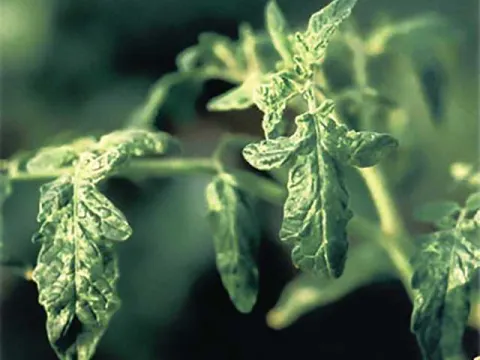
The most distinctive symptom of STLCV is the upward curling and rolling of leaf margins. Leaves often become leathery, thickened, and may exhibit interveinal chlorosis, severely reducing the plant's photosynthetic efficiency.
Infected plants display significant stunting, with shortened internodes and a bushy, rosette-like appearance of the top growth. This deformity is caused by the disruption of hormonal balance within the plant tissues.
Flowering is severely inhibited in symptomatic plants. Flowers that do form often fail to develop into fruits or fall prematurely, leading to a drastic reduction in yield potential for the affected crop.
Fruits that manage to mature on infected plants are usually small, deformed, and unevenly ripened. These defects make the produce commercially unviable and unsuitable for the fresh market.
The severity of symptoms can be influenced by the timing of the infection; early-stage infection during the seedling or vegetative stage usually results in the most catastrophic effects on plant growth.
The prevalence of STLCV is directly tied to the population dynamics of Bemisia tabaci. Environmental conditions that favor whitefly proliferation, such as warm temperatures and moderate humidity, lead to increased disease outbreaks.
The virus thrives in subtropical and tropical climates where whitefly populations can persist year-round. In greenhouse environments, poor ventilation and high temperatures create an ideal breeding ground for the vector.
Weed hosts, particularly those belonging to the Solanaceae family, act as crucial reservoirs for the virus. These weeds allow the pathogen to survive during periods when primary crops are not being cultivated.
Agricultural practices, such as excessive nitrogen fertilization, encourage the production of lush foliage, which attracts whiteflies. High-density planting without adequate spacing further facilitates the rapid movement of the virus through a field.
Continuous cropping of tomatoes and peppers without a rotation period creates a constant availability of host plants, sustaining the viral life cycle and ensuring high infection pressure throughout the season.
Sinaloa tomato leaf curl virus causes severe economic losses by devastating yields in tomato and pepper production. Infected fields may suffer from total crop failure if the infection occurs early in the growing season.
Peppers are particularly vulnerable, often showing severe mosaic patterns and fruit distortion in addition to typical curling. This degradation of quality makes the harvest unfit for standard retail requirements.
Plants weakened by the viral infection are significantly more susceptible to secondary pathogens, including bacterial spot and various fungal infections, which further complicates the health of the crop.
Beyond yield reduction, the costs associated with frequent insecticide applications to manage the whitefly vector place a heavy financial burden on growers, increasing the overall cost of production.
In regions where the virus is endemic, the risk to solanaceous vegetable production can be so high that farmers may be forced to switch to alternative crops to avoid consistent financial losses.
Management of STLCV requires a multi-faceted approach centered on whitefly control. Systemic insecticides are often employed to reduce vector populations, combined with biological control agents such as predatory mites.
Physical exclusion is highly effective in protected agriculture; using insect-proof screens on greenhouse vents prevents whiteflies from entering and spreading the virus among seedlings and mature plants.
Sanitation practices are essential, including the removal of infected plants showing early symptoms and the eradication of weeds near the production area that might host the virus or the vector.
Breeding and planting virus-resistant or tolerant cultivars is the most sustainable long-term strategy for managing the disease. Farmers should consult with local extension services to choose varieties suited to their region.
Spatial isolation between different stages of crop production helps prevent the spread of the virus from older, infected fields to newly planted, vulnerable young seedlings.