
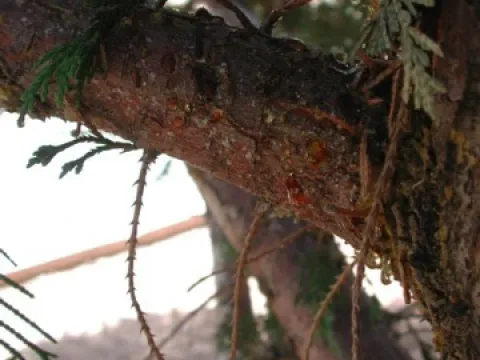
Seiridium canker
Seiridium cupressi
The causative agent of this disease is the fungus Seiridium cupressi (formerly Coryneum cardinale). It is a specialized fungal parasite that primarily affects the bark and cambium of cypress and other related conifer species.
What the section contains
Seiridium canker
The fungus invades the plant through wounds, frost cracks, pruning sites, or insect damage. Once inside, it colonizes the vascular tissue, effectively disrupting the flow of water and nutrients within the tree.
As the mycelium grows beneath the bark, it destroys the cambium layer. This activity eventually leads to the formation of cankers — sunken, dead areas on the stems or branches that can expand over time.
Reproductive structures known as pycnidia develop on the dead bark. These appear as small, dark dots and release spores (conidia) that are spread by rain splash, wind, and pruning tools to neighboring branches.
The fungus is highly resilient and can remain viable in infected woody tissue for extended periods, acting as a persistent source of inoculum for reinfection during favorable weather conditions.
The first noticeable symptoms include the yellowing (chlorosis) or browning of individual branches. This "flagging" often contrasts sharply with the green foliage of the rest of the tree.
Sunken, discolored cankers appear on the bark of stems and branches. These lesions often exhibit cracks or fissures and may change in color to deep brown or reddish-purple as the tissue dies.
Heavy resin exudation (bleeding) is a common symptom in infected areas. The sap flows from the cankered area, hardening on the bark surface and providing a clear visual cue of internal stress and infection.
If the bark is removed from an infected area, the wood beneath typically shows staining or discoloration, ranging from blue-grey to black. This confirms that the fungus has penetrated the deep woody tissues.
Progressive dieback is common; if the main trunk becomes girdled by the canker, the entire tree above that point will eventually wilt and die due to the total interruption of nutrient transport.
Seiridium canker thrives in warm, moist climates. High humidity and frequent rainfall are the primary drivers for spore germination and successful infection of new plant tissues.
Poor cultural practices, such as overcrowding, prevent adequate air circulation. Stagnant air keeps foliage wet for longer periods, providing the perfect environment for the fungus to establish itself.
Trees that are physiologically stressed due to improper irrigation, nutrient deficiencies, or soil compaction are significantly more susceptible to infection compared to vigorous, well-maintained specimens.
The use of contaminated pruning tools is the most common way the disease spreads within a landscape. Failing to sterilize equipment between trees allows the fungus to move from one host to another efficiently.
Environmental stressors such as drought, winter frost cracks, and sunscald create entry points for the pathogen. Protecting the bark from such damage is critical to preventing initial infection.
This pathogen affects a wide range of Cupressaceae species, including cypress, thuja, juniper, and false cypress. It is particularly devastating to trees used as ornamental hedges or privacy screens.
The primary damage is the death of branches, which leads to permanent thinning of the foliage. This destroys the aesthetic value of the tree and can make it look ragged or unbalanced.
If the canker reaches the main leader or trunk, it causes systemic failure. The disease is often irreversible at this stage, leading to the total loss of the specimen over several growing seasons.
The presence of infected trees poses a significant risk to nearby susceptible hosts. If left untreated, a single infected plant can lead to an outbreak that can devastate an entire neighborhood or public park.
Because the disease affects the structural and vascular integrity of the tree, it significantly shortens the lifespan of ornamental conifers, leading to costly removal and replacement efforts.
The cornerstone of management is rigorous sanitation. All infected branches must be pruned well back into healthy tissue, and the removed debris must be destroyed by burning or disposal far from the site.
Disinfecting pruning tools with alcohol or a bleach solution between every single cut is mandatory to prevent the transmission of fungal spores from infected to healthy branches.
Preventive fungicide sprays containing copper can be applied during cool, moist periods in spring and autumn to protect the bark from spore germination and entry.
Maintaining tree vigor is essential. Proper watering during dry spells, appropriate fertilization, and protection from winter damage (such as wrapping or shading trunks) keep the tree's natural defenses strong.
In cases of severe trunk infection, there is no chemical cure. The tree should be removed promptly to act as a barrier and protect the remaining healthy landscape from further infection.