
Seiridium canker of cypress
Seiridium neocupressi
Description
Symptoms
The first and most noticeable symptom of the disease is the yellowing, followed by the browning of individual branches or entire shoots on cypress trees. Gradually, the needles turn a grayish or reddish-brown hue, signaling a disruption in tissue nutrient supply.
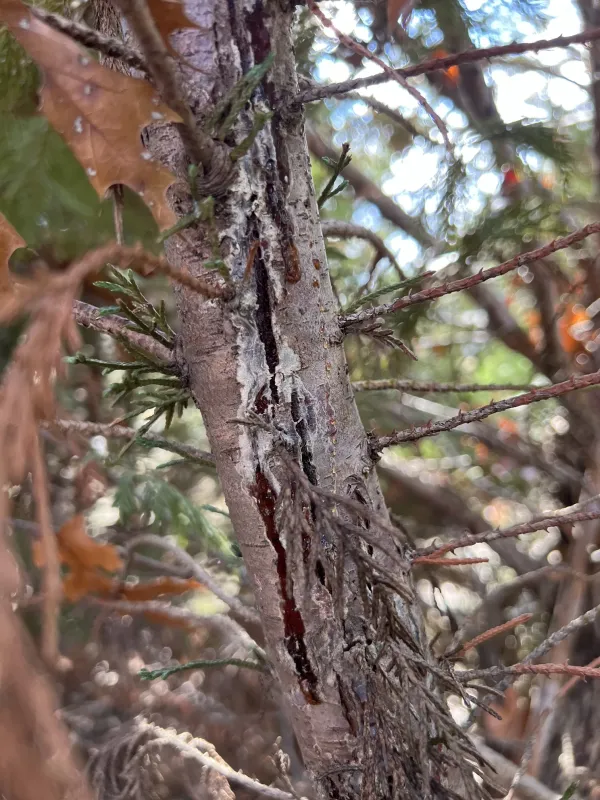
On the bark of affected branches, characteristic sunken necrotic spots or cankers form, which eventually crack. The bark in the affected areas may peel away, exposing the wood, which is a critical stage in the pathogen's development.
A typical sign is the heavy exudation of resin (gummosis) at the sites of cankers and cracks. This resin may harden into drops or streaks, clogging the plant's vascular system and accelerating the process of tissue death.
Small black fungal fruiting bodies (pycnidia) often form in the upper part of the cankers, which are clearly visible upon close inspection with a magnifying glass. These structures contain spores responsible for the further spread of the infection.
As the disease progresses, the canopy dries out, starting from the lower or older branches and moving toward the top. Ultimately, the tree can lose its ornamental value entirely and perish within one or two seasons.
Pathogen
The causal agent of the disease is the imperfect fungus Seiridium neocupressi (formerly known as Seiridium cardinale), belonging to the order Melanconiales. This pathogen is a specialized parasite that targets the bark and cambium tissues.
The fungus penetrates plant tissues through mechanical bark damage, frost cracks, pruning wounds, or injuries caused by pests. It thrives in the conductive tissues, destroying cells and obstructing normal sap flow.
Conditions for development
High air humidity and moderately warm temperatures, which stimulate spore production, facilitate the spread of the infection. Weakened trees suffering from nutrient deficiencies or drought stress are the most susceptible to attack.
Spore dissemination occurs primarily via rain splashes, wind currents, and contaminated gardening tools during pruning. Failure to disinfect pruners and saws is a major cause of the mass spread of the fungus in nurseries.
Why it matters
Seiridium canker poses a lethal threat to cypress, thuja, juniper, and other members of the Cupressaceae family. The disease is extremely difficult to treat, especially in late stages when the trunk is severely affected.
The main impact is the complete loss of the aesthetic value of coniferous plantings and their eventual death. The disease can rapidly spread to neighboring healthy plants, causing outbreaks of necrosis throughout an entire garden or nursery.
Protection
The primary control method is timely sanitary pruning of all affected branches, including a portion of healthy tissue. Tools must be disinfected with alcohol or a copper sulfate solution after every cut.
Prevention involves maintaining high plant immunity through proper irrigation, balanced fertilization, and pest protection. It is important to avoid overcrowding to ensure good air circulation within the canopy.
For chemical protection, copper-based fungicides or systemic products designed for bark necrosis are used. Treatments should be applied in spring and autumn as a preventive measure, as well as upon the first signs of the pathology.
Discussion
No discussions yet — be the first.