
Septobasidiaceae
Septobasidiaceae
Description
Symptoms
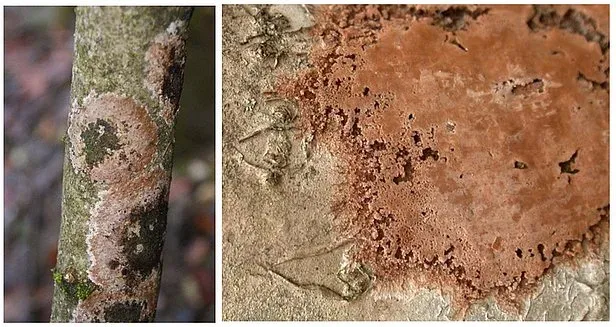
The primary symptom of infection is the presence of dense, felt-like, or leathery crusts on the bark of stems and branches. These growths can vary in color from light gray and tan to dark brown.
On close inspection, these fungal mats appear closely appressed to the bark, often covering it in patches. Unlike common epiphytic lichens, these growths are structurally associated with the presence of scale insect populations beneath the fungal layer.
Infected areas often show signs of stunted development in the underlying bark. The trapped scale insects may be dead or significantly impaired, and the bark itself may become darkened, brittle, or necrotic over time.
Early-stage infestations are frequently overlooked as they mimic the appearance of standard tree lichens. However, the unique texture and the presence of underlying insects are key diagnostic markers for identifying Septobasidiaceae.
As the colony expands, it can wrap around branches, leading to the gradual decline of the branch distal to the infection point. Severe infestations can cause branch dieback and an overall thinning of the canopy.
Pathogen
The Septobasidiaceae family comprises basidiomycetous fungi that live in a symbiotic, often parasitic, relationship with scale insects and other Coccoidea. The fungus forms a crust-like structure on the bark of trees, utilizing the insects as a food source.
The mycelium of these fungi spreads over the surface of branches and trunks, creating a leathery or corky covering. This structure serves as a protective habitat for scale insects, while the fungus derives nutrients from the host insects' secretions and sometimes their tissues.
The life cycle is closely linked to the lifecycle of the host insects. Spores are dispersed by wind or carried by mobile scale insect larvae to new branches, where they germinate and establish new colonies.
While they are not typically aggressive wood-rotting pathogens that decay heartwood, their persistent surface coverage creates physical barriers to gas exchange in the bark, significantly affecting the metabolic vitality of the host tree.
Different species within the Septobasidiaceae family show high host specificity, meaning they rely on particular types of insects. This ecological relationship governs their geographic distribution and the severity of symptoms observed on host plants.
Conditions for development
Septobasidiaceae thrive in environments with high humidity and moderate temperatures, typically found in tropical, subtropical, and warm temperate regions. These conditions favor mycelial growth and spore dispersal.
A crucial prerequisite for the development of these fungi is the presence of a substantial population of scale insects. The fungus requires these hosts for its nutritional requirements and colonization success.
Orchards and gardens with dense planting patterns, poor air circulation, and restricted sunlight exposure are more susceptible to infection. High humidity trapped within the canopy creates an ideal microclimate for the fungi.
Rainfall patterns play a significant role in the dissemination of spores. Splashing water and high humidity facilitate the movement of propagules from one part of the tree to another or to adjacent trees.
Lack of maintenance, such as failure to prune dead branches or neglect in managing insect populations, allows the fungal colonies to become established and eventually expand across the woody structure.
Why it matters
The main harm caused by Septobasidiaceae is the suppression of bark respiration and the physical impediment of nutrient transport in the phloem. This leads to localized stress and potential tissue death.
Trees affected by heavy colonization often exhibit reduced vigor, smaller leaves, and lower fruit production. Prolonged infection weakens the tree, making it more susceptible to drought and other environmental stresses.
The bark coverage creates an environment conducive to secondary infections. Opportunistic pathogens, including various bacteria and fungi, can penetrate the damaged bark layers, leading to deeper woody tissue decay.
In cases of systemic infection, the overall structure of the tree can be compromised, leading to premature branch drop or limb breakage, especially under extreme weather conditions.
Economic impact is primarily observed in citrus and other fruit-bearing plantations, where the cost of managing the infestation, combined with potential yield loss, affects the overall profitability of the cultivation.
Protection
Integrated pest management is the most effective approach. Because the fungus is dependent on scale insects, controlling these insect populations is essential to reducing the fungal colonies.
Regular sanitary pruning to remove and destroy heavily infested branches is a key practice. This physical removal limits the source of spores and prevents the spread of the fungus to healthier parts of the tree.
Improving air circulation within the canopy through proper thinning and pruning helps reduce the humidity levels that the fungi need to grow, effectively creating a less favorable environment.
Applications of copper-based fungicides or horticultural oils during the tree's dormant season can help suppress the growth of the fungal mats and provide protection against future colonization.
Maintaining tree health through proper fertilization and irrigation is vital. A healthy tree with a robust immune system is better equipped to resist the detrimental effects of fungal colonization and secondary stress factors.
Discussion
No discussions yet — be the first.