
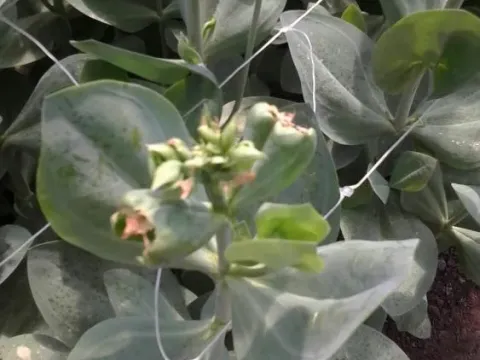
Sclerophoma leaf spot
Sclerophoma eustomatis
The causative agent of the disease is the imperfect fungus Sclerophoma eustomatis. This pathogen belongs to the Sphaeropsidales order, characterized by the formation of pycnidia within host tissues.
What the section contains
Sclerophoma leaf spot
The fungus survives as pycnidia in crop residues or the soil substrate. These structures produce numerous conidia, which serve as the primary inoculum for the spread of the infection during the growing season.
Sclerophoma eustomatis is highly aggressive toward Lisianthus (Eustoma). It can colonize various parts of the plant, including leaves, stems, and sometimes floral organs.
The pathogen utilizes enzymes to degrade plant cell walls, allowing the hyphae to penetrate deeper into the vascular system and parenchyma.
Environmental stress factors often trigger the transition of the pathogen from a latent phase to an active parasitic phase on the host plant.
Symptoms begin as small, circular, dark-colored lesions on the lower leaves. As the disease progresses, these spots expand, often developing a necrotic center.
The hallmark sign of the infection is the appearance of tiny, black, pimple-like structures (pycnidia) within the necrotic spots, which are visible to the naked eye.
Infected leaves gradually turn chlorotic, curl at the margins, and eventually wither and drop from the plant.
Stem infections appear as sunken lesions that can eventually girdle the stem, causing wilting of the upper parts of the plant due to restricted sap flow.
Under high humidity, the affected tissue may exhibit a faint greyish fungal growth, indicating the release of spores for further propagation.
The development of the disease is highly dependent on humidity. Relative humidity levels exceeding 80% are ideal for the germination of fungal conidia.
The optimal temperature range for the pathogen's activity is between 18°C and 24°C, which coincides with standard greenhouse cultivation conditions for Eustoma.
Stagnant air and lack of adequate ventilation create a favorable microclimate on the leaf surface, promoting rapid fungal colonization.
Water management is critical; splashing irrigation water or water condensation on foliage facilitates the transmission of spores from infected plant parts to healthy ones.
Overcrowded planting schemes reduce air circulation and increase the likelihood of rapid disease transmission throughout the greenhouse block.
Sclerophoma leaf spot significantly reduces the ornamental value of Eustoma, making the flowers unsalable and unsuitable for floral arrangements.
The pathogen can cause severe crop loss, especially in seedlings and young plants, leading to a substantial decrease in yield.
Systemic infections disrupt nutrient and water uptake, leading to stunted growth, deformed stems, and poor flower quality.
The presence of the fungus creates a persistent infection source, necessitating the removal and destruction of affected crops to protect healthy plants.
Management of the disease involves significant expenditure on fungicides and increased labor costs for sanitation and plant maintenance.
Rigorous sanitation practices are the first line of defense. Prompt removal and destruction of diseased plant parts significantly reduce the pathogen pressure.
Maintaining a dry leaf surface through proper ventilation and careful irrigation methods (drip irrigation) is essential for disease prevention.
Fungicides from the strobilurin or triazole classes can be used to manage the infection, provided they are applied before the disease becomes widespread.
- Use certified disease-free seeds and plant materials.
- Space plants to allow for proper air circulation.
- Implement strict greenhouse hygiene and surface disinfection.
- Ensure well-drained, high-quality growing substrates.
Integrated pest management, including balanced fertilization and regular monitoring for early symptoms, is the most effective approach to managing Sclerophoma leaf spot.