
Description
Symptoms
The initial symptom of the infection is the yellowing of the needles, which quickly progresses to reddish-brown, followed by premature needle drop.
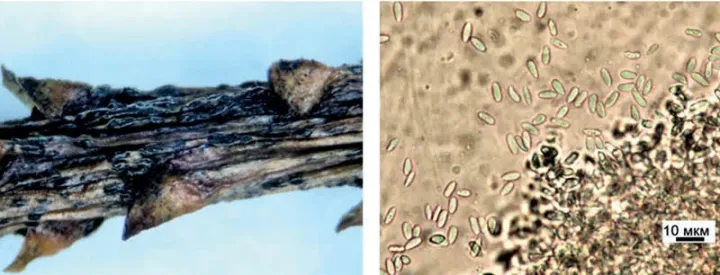
Characteristic small black structures, known as pycnidia, can be observed on the surface of the infected needles, often requiring a hand lens for clear identification.
Young shoots often exhibit curling, tip dieback, or distortion, which significantly impairs the growth trajectory of the affected tree or sapling.
In cases of severe infection, the foliage may appear sparse as the tree loses its primary photosynthetic organs, leading to overall plant stress.
Affected twigs may also show small necrotic lesions at the base of the needles, which eventually girdle the shoot and cause the distal part to wither.
Pathogen
The causative agent of the disease is the fungus Sydowia polyspora, which belongs to the Ascomycota phylum. This pathogen primarily acts as a fungus that infects various conifer species under specific conditions.
The life cycle of the pathogen involves the production of pycnidia within the needles and twigs of the host plant, where spores are generated and disseminated.
Sydowia polyspora has a versatile lifestyle, surviving as both a parasite on living tissue and a saprotroph on necrotic needles, allowing it to persist in the environment.
The fungus colonizes the needles and young shoots, producing mycelium that disrupts cellular structures and eventually leads to tissue death in the infected parts.
Spread is primarily driven by wind-borne spores and water splashes, which are particularly effective during periods of high humidity and rainfall.
Conditions for development
The development of Sydowia polyspora is highly dependent on moist conditions, with the fungus thriving during cool and rainy spring seasons.
Poor airflow, often caused by high planting density in nurseries, creates a favorable microclimate for spore germination and rapid fungal colonization.
Trees that are under physiological stress due to drought, poor soil nutrient status, or mechanical injury are significantly more susceptible to blight outbreaks.
Optimal temperatures for the fungus range between 15°C and 20°C, a period that often coincides with the most active growth phase of the conifer.
The presence of infested debris near the tree base creates a continuous source of inoculum, perpetuating the disease cycle year after year.
Why it matters
Douglas fir (Pseudotsuga menziesii) is notably susceptible to this blight, making it a critical concern for nurseries and young forest plantations.
The economic impact includes stunted growth rates and reduced timber quality, which are detrimental to the profitability of forestry and Christmas tree farms.
In ornamental horticulture, the disease causes severe defoliation, which destroys the aesthetic appeal and market value of the conifer specimens.
Prolonged defoliation weakens the host tree, making it susceptible to secondary attacks by wood-boring insects and other opportunistic plant pathogens.
If left unmanaged, the blight can lead to the mortality of entire cohorts of seedlings, representing a substantial loss of investment and biological resources.
Protection
Effective management begins with strict sanitation practices, including the removal and burning of infected twigs and fallen needles to reduce the inoculum level.
Improving site conditions, such as ensuring adequate spacing between trees, is vital to enhance air circulation and reduce the humidity around the canopy.
Application of fungicides during the periods of shoot expansion can effectively protect vulnerable growth from new infections by the pathogen.
- Utilizing copper-based or systemic fungicides as a preventative measure during spring.
- Implementing rigorous nursery hygiene to prevent the introduction of the fungus to healthy seedlings.
- Enhancing plant vigor through appropriate fertilization to improve natural resistance mechanisms.
Integrated disease management, combining chemical treatments with cultural practices, is the most successful approach to mitigating damage from this fungal blight.
Pathogens and affected parts
Affects crops · 1
Discussion
No discussions yet — be the first.