
Sclerophthora disease
Sclerophthora rayssiae
Description
Symptoms
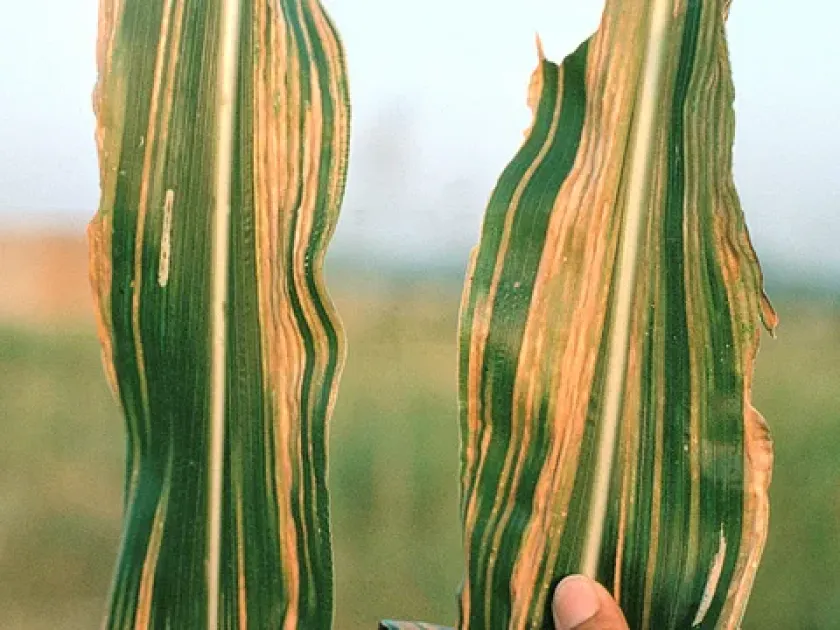
The primary visual sign of plant infection is the appearance of chlorotic spots on the leaves, which may eventually take on a yellowish or whitish hue.
As the disease progresses, a specific white or grayish coating often forms on the affected tissues, consisting of the pathogen's mycelium and spores.
Plants affected by this pathogen often show signs of severe suppression, manifesting as stunted growth and a general change in the bush's habit.
In later stages of the disease, deformation of the leaf blades and premature wilting of vegetative organs are observed, leading to plant exhaustion.
Necrotic lesions can occur on the roots and the basal part of the stem, disrupting the normal intake of nutrients and water from the soil.
Pathogen
The causative agent of the disease is Sclerophthora rayssiae, which belongs to the group of oomycetes — lower fungi closely linked to aquatic environments.
This pathogen has the ability to form zoospores that move in liquid moisture, ensuring active infection spread across the field.
The pathogen's life cycle includes a dormant oospore stage, which can persist in the soil or plant debris for extended periods.
The parasite primarily affects cereal crops, including wheat and barley, by infiltrating intercellular tissue spaces and absorbing host nutrients.
The biology of this oomycete requires high humidity for spore germination, making it highly dependent on the weather conditions of the growing season.
Conditions for development
The main factor triggering a disease outbreak is excessive soil moisture and prolonged periods of high atmospheric humidity.
Pathogen development is favored by heavy rainfall or dense fog, creating the necessary droplet moisture on leaf surfaces for zoospore movement.
The optimal temperature range for plant infection fluctuates within moderate limits typical of the spring period in cereal-growing regions.
Poorly drained field areas where water stagnates after precipitation become primary infection hotspots, from where the disease spreads across the crop.
Violation of crop rotation and leaving unharvested plant debris on the soil surface significantly increase the risk of infectious buildup in the agroecosystem.
Why it matters
Sclerophthora disease poses a serious threat to cereal yields as it affects the leaf assimilatory surface, reducing photosynthesis efficiency.
Massive crop infection leads to significant grain yield loss due to the disruption of filling processes and full ear formation.
The disease causes premature death of individual tillers, which contributes to stand thinning and a general reduction in agricultural crop productivity.
In addition to the direct reduction in grain weight, affected plants become more vulnerable to secondary infections, further exacerbating economic losses.
Infected fields often show uneven plant heights, which complicates mechanized harvesting and increases losses in the field.
Protection
To prevent the spread of infection, adhering to a correct crop rotation schedule excluding susceptible crops for several years is of crucial importance.
Deep plowing of plant debris is an effective practice that promotes the rapid degradation of the pathogen in the soil environment.
Careful selection of high-quality seed material and its pre-sowing treatment with specialized fungicides active against oomycetes are essential.
If necessary, spraying crops with contact or systemic fungicides during the growing season is applied, depending on the disease development forecast.
- Drainage of waterlogged field areas
- Elimination of weedy cereal grasses
- Use of disease-resistant varieties
- Timely application of phosphorus-potassium fertilizers
Discussion
No discussions yet — be the first.