
Sclerophora
Sclerophora
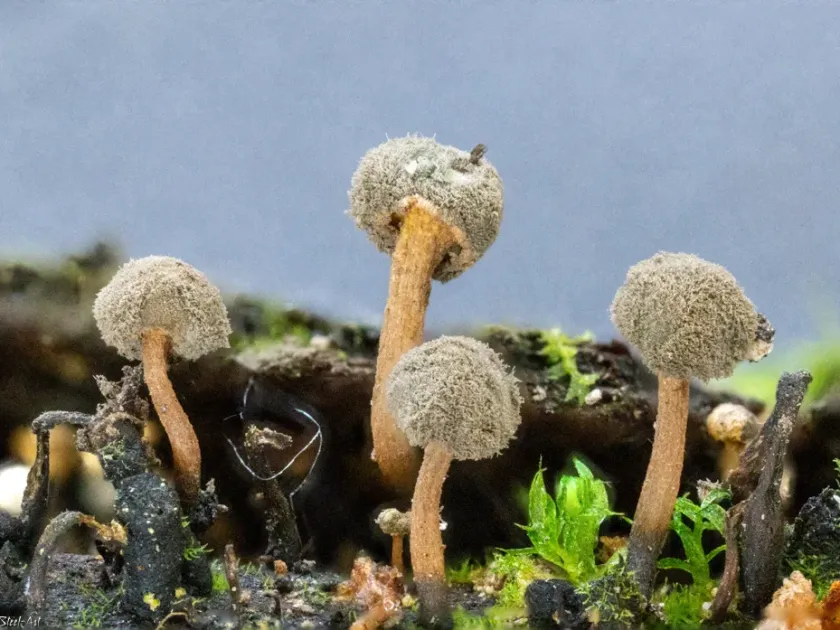
Description
Symptoms
The primary sign of a Sclerophora infection is the appearance of a characteristic powdery coating on tree bark, rocks, or decaying wood where these fungi reside. Visually, it manifests as a matte, dust-like mass, most commonly yellow, olive, or brownish in color.
Sclerophora does not form large fruiting bodies, which is why it is often mistaken for simple surface contamination or lichen. The coating consists of a mass of spores that easily become airborne upon mechanical disturbance or wind gusts.
Infection typically occurs in areas with high humidity, where the mycelium penetrates into the porous structures of the substrate. Unlike many pathogens, Sclerophora often inhabits decaying areas, but under favorable conditions, it can inhibit the vitality of weakened plants.
Diagnosis often requires microscopic analysis to confirm the species of the fungus. In the field, agronomists rely on the consistency of the spore powder and the change in substrate color beneath the fungal colony.
External signs of the disease can persist throughout the growing season, although they are most pronounced during periods of prolonged rainfall. Affected areas may eventually acquire a dark, almost black hue due to the deep penetration of hyphae.
Pathogen
The causative agent is a fungus from the genus Sclerophora, which belongs to the group of coniolichen fungi (lichenized fungi). Biologically, it is a specialized organism capable of existing as a saprotroph on woody debris.
A key stage in the life cycle is the formation of conidia. These spores are the primary agents of disease spread within agrocenoses and forest stands.
The fungus possesses a unique ability to survive for long periods in adverse conditions thanks to its thick-walled structures. It is not an obligate parasite, yet its presence negatively affects the bark microflora.
Sclerophora mycelium penetrates deep into the bark, gradually destroying its integrity. This creates entry points for secondary infections, which may be more harmful to the host plant itself.
The genetic variability of Sclerophora species complicates the development of a single universal agent for the complete eradication of colonies. Modern research highlights this genus as an ecosystem health marker indicating excessive humidity.
Conditions for development
The development of Sclerophora is directly dependent on relative humidity levels and the presence of constant moisture on the bark surface. The fungus prefers shaded, poorly ventilated areas in gardens or forests.
The optimal temperature range for mycelial growth is between +15 and +22 degrees Celsius. Higher temperatures combined with direct sunlight inhibit the development of colonies.
The presence of decaying wood, dead bark scales, and lichen remains creates an ideal substrate for colonization. Dense plantings contribute to stagnant moisture, which triggers the massive spread of spores.
Disease outbreaks are observed in years with abnormally frequent rainfall during the spring and summer. High humidity allows spores to germinate faster and form new infection centers.
The lack of sanitary pruning and timely trunk cleaning is the main anthropogenic factor promoting the fungus's multiplication. Well-maintained gardens with good air circulation are infected significantly less frequently.
Why it matters
The main damage consists of suppressing physiological processes within the tree bark. The infection leads to the clogging of lenticels, which impairs the gas exchange of the trunk tissues.
Sclerophora contributes to the premature death of bark, weakening the overall condition of the tree. A weakened plant becomes more vulnerable to attacks by wood-boring pests.
In ornamental and landscape gardening, the infection of trunks with Sclerophora reduces the marketability and visual appeal of trees and shrubs. This is unacceptable in high-end nurseries and parks.
The harm is manifested indirectly through changes in the microbiological composition of the bark surface. The constant presence of the fungus alters the environmental acidity, which hinders the growth of beneficial epiphytic organisms.
Prolonged infection can lead to localized bark necrosis, especially in young saplings. Although the fungus rarely causes the death of mature trees, it significantly lowers their immunity and longevity.
Protection
Prevention begins with ensuring proper horticultural practices: regular pruning and crown thinning to improve ventilation. Dead and damaged branches must be removed in a timely manner.
Cleaning trunks of old, decaying bark mechanically is an effective control method. Removed material must be burned to prevent the spread of spores.
The use of copper-based preparations (Bordeaux mixture, copper oxychloride) in early spring helps to limit the development of fungal colonies. Treatment should be carried out before bud break.
It is important to monitor the overall health of plants, providing them with sufficient nutrients to support natural immunity. A healthy tree can independently suppress the development of many epiphytic fungi.
In case of massive infection, it is recommended to use systemic fungicides approved for the protection of ornamental crops. Repeat treatments should be performed at 14-day intervals depending on weather conditions.
Discussion
No discussions yet — be the first.