
Sclerophthora
Sclerophthora
Description
Symptoms
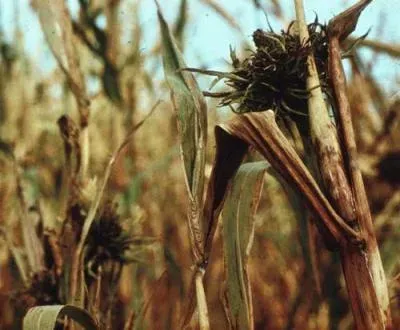
The primary symptom is known as "crazy top" or plant deformation. Affected cereals often exhibit excessive tillering, resulting in numerous underdeveloped side shoots.
Leaves of infected plants often appear short, wide, thickened, and rigid, taking on a light green or chlorotic color. Leaf rolling and premature wilting are also common.
In the reproductive phase, the underdevelopment of panicles or cobs is observed. Often, instead of normal inflorescences, a complex, distorted leaf-like structure forms, making pollination and grain set impossible.
Under high humidity, a faint whitish growth, representing the oomycete's sporulation, may be visible on the affected tissues, although this is not always observable to the naked eye.
The root system of infected plants often looks stunted, although the visible signs are mainly in the aerial parts. Eventually, the plant dies before flowering or remains completely sterile.
Pathogen
The causative agent of Sclerophthora is a genus of oomycetes known as Sclerophthora (specifically Sclerophthora macrospora). This parasitic disease primarily impacts cereal crops and belongs to the class of Oomycetes.
It acts as an obligate parasite closely tied to soil moisture conditions. The pathogen survives in the form of oospores within plant residues and the soil, making it extremely resilient to adverse environmental conditions.
The life cycle of the pathogen is dependent on free moisture. Zoospores produced in sporangia are capable of active movement in water films, ensuring the efficient spread of the infection to healthy plants.
This fungus-like organism penetrates host tissues, primarily infecting meristematic zones, which results in a systemic disease. Unlike many other pathogens, Sclerophthora induces deep physiological changes within the plant.
The mycelium spreads internally, disrupting the normal development of plant organs. This systemic nature is exactly why managing this disease is significantly more complex than standard fungal infections.
Conditions for development
A key condition for infection development is excessive soil moisture and the presence of free water on plant surfaces during early growth stages. Outbreaks frequently occur in low-lying areas where water stagnates.
The optimal temperature for oospore germination and plant infection ranges from +15 to +22 degrees Celsius. Fluctuations within this range accelerate the pathogen's metabolism.
Prolonged rainfall during the growing season creates an ideal microclimate for active sporulation. Spring waterlogging is a primary risk factor for corn and other cereal crops.
Inoculum accumulation in the soil occurs when susceptible crops are grown consecutively. Plant residues serve as the main reservoir for the infection, ensuring its survival during colder months.
Poor agricultural practices, such as inadequate field drainage and the use of contaminated seed material, significantly increase the risk of epiphytotics in agricultural areas.
Why it matters
Sclerophthora poses a serious threat to the yield of cereals, including corn, wheat, millet, and sorghum. Affected plants produce virtually no grain, leading to direct economic losses.
Damage is characterized by the complete sterility of infected individuals. Even if a plant reaches maturity, it fails to produce viable cobs or grain, reducing total harvest volume.
The disease triggers early seedling mortality, leading to thin crop stands and the necessity for replanting fields, which incurs additional costs for seeds and land preparation.
The hidden nature of the infection during the initial stages makes timely detection difficult. By the time symptoms become evident, the pathogen has already spread across the field.
Indirect damage occurs because plants weakened by the disease become more susceptible to other phytopathogens, including various root rot fungi and leaf spot diseases.
Protection
The primary prevention method is crop rotation, returning susceptible crops to the same land no sooner than every 3-4 years, which helps allow oospores to die off naturally in the soil.
Land reclamation work is necessary to improve field drainage and prevent water stagnation. Leveling the soil surface minimizes the risk of local waterlogging hotspots.
An important practice is the proper incorporation of crop residues into the soil. Deep autumn plowing helps reduce the infection reservoir through rapid mineralization of plant debris.
To combat Sclerophthora, modern systemic seed treatments containing phenylamide-group active ingredients are effective, as they show high activity against oomycetes.
Breeding and utilizing resistant hybrids and varieties remain the most reliable and economically viable method for long-term control of this disease in industrial farming.
Discussion
No discussions yet — be the first.