
Sclerophora pallida
Sclerophora pallida
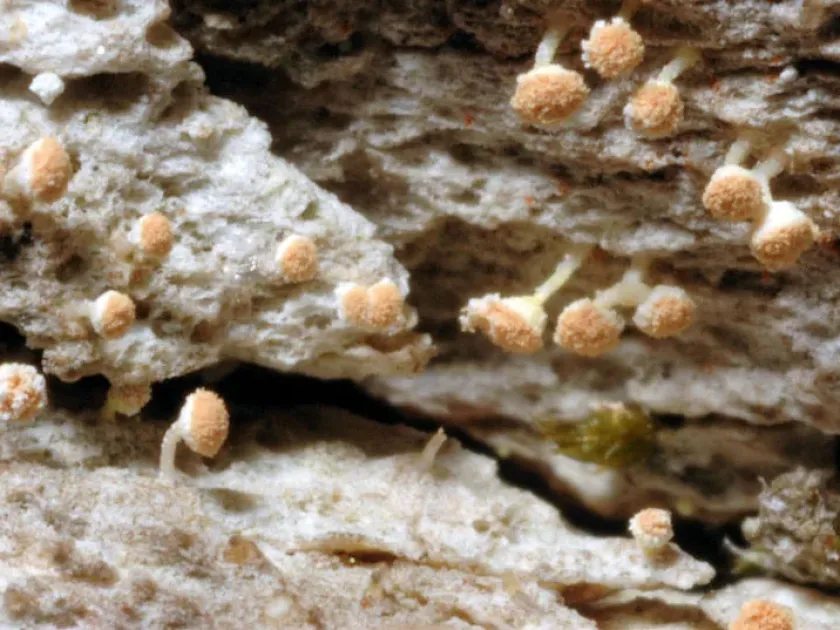
Description
Symptoms
The primary symptom of an infestation is the appearance of a pale, whitish, or greyish-white powdery coating on the bark. These patches may be localized or spread across significant portions of the trunk and branches.
Under magnification, one can observe the characteristic tiny, pale, and yellowish-white apothecia scattered across the bark surface. These are the reproductive structures of the fungus.
Affected bark often exhibits textural changes, such as brittleness or increased flaking. The surface may appear dull, and the normal coloration of the bark can be obscured by the fungal colony.
In cases of heavy colonization, the area beneath the lichenized growth may show signs of moisture retention, which can lead to localized darkening or softening of the bark tissue.
Symptoms are most visible during moist seasons, particularly in spring and autumn, when the fungal structures become saturated and more pronounced against the dry bark background.
Pathogen
Sclerophora pallida is a species of fungus belonging to the Sclerophoraceae family. Often described as a lichenized fungus, it typically colonizes the bark of trees, utilizing the surface as a substrate for its slow but steady development.
The pathogen produces small, pale, cup-shaped fruiting bodies known as apothecia. These structures are microscopic and usually appear as light-colored specks on the rough bark surfaces of various tree species.
Biologically, the organism relies on a symbiotic relationship with algae, allowing it to survive in environments where nutrients on the bark surface are limited. It primarily spreads through wind-dispersed spores that germinate in conditions of high humidity.
Within agronomy, this species is often viewed as an indicator organism. Its presence usually signals that a tree is either elderly or experiencing a decline in vitality due to environmental stressors or poor maintenance.
Unlike aggressive necrotrophic parasites, Sclerophora pallida is slow-growing and tends to inhabit the outer periderm of the bark, avoiding the vital internal phloem and xylem tissues of the host plant.
Conditions for development
The development of Sclerophora pallida is strictly dependent on moisture availability. Shady areas with limited sunlight and high humidity provide the ideal microclimate for its establishment and expansion.
Trees with rough or fissured bark are more susceptible to colonization, as these textures provide excellent micro-habitats for spores to settle and retain moisture after rainfall.
Air quality is a significant factor. Being a lichen-like organism, it is often sensitive to heavy pollutants, meaning its presence can sometimes indicate a cleaner, albeit humid, environment in the orchard or forest.
Inadequate airflow within the canopy, caused by lack of pruning or overcrowding of plantings, significantly increases the risk of the fungus spreading throughout the entire orchard.
Optimal temperatures for its growth generally range from temperate levels to cool, with the organism thriving in conditions where bark surfaces remain damp for extended periods.
Why it matters
While Sclerophora pallida is rarely lethal on its own, it causes harm by maintaining excessive moisture on the bark surface, which can promote the growth of other, more detrimental mold and fungal pathogens.
Dense colonies may interfere with the tree's gas exchange, partially blocking lenticels (pores on the bark), which are essential for the respiration of the woody tissues.
The aesthetic value of trees in landscaping and decorative gardening is significantly compromised when trunks become encrusted with widespread, unsightly pale fungal growths.
The moisture retention under the fungal mat can facilitate the breakdown of the protective periderm, creating entry points for secondary insect pests and wood-rotting pathogens.
Its presence acts as a cumulative stressor for the host, reducing the overall resilience of the plant and signaling to the agronomist that the tree requires improved care and management.
Protection
Sanitary pruning is the most effective cultural control method. Removing crowded or diseased branches improves light penetration and airflow, creating a hostile environment for the fungus.
Mechanical cleaning of the bark, using gentle scraping with non-metallic tools, can remove existing colonies. Care must be taken not to gouge the living layers of the tree during this process.
Early spring applications of copper-based fungicides (such as Bordeaux mixture) are effective at suppressing spore germination and reducing the population of fungal structures on the bark.
Whitewashing the trunk and main branches with a lime-based mixture acts as a physical barrier and a deterrent, preventing spores from attaching and establishing new colonies.
- Maintaining tree vigor through proper fertilization and watering.
- Monitoring for early signs of fungal colonization on the bark.
- Repairing any mechanical wounds or bark damage promptly to prevent infection.
Discussion
No discussions yet — be the first.