
Dothistroma needle blight
Scirrhia
The disease is caused by the ascomycete fungus Scirrhia pini, with Dothistroma septosporum serving as its well-known anamorph stage.
What the section contains
Dothistroma needle blight
This pathogen specifically targets the needles of pine trees, causing cellular death and severe disruption of the plant's metabolic functions.
The fungus persists in infected fallen needles and on living branches, where it can survive through unfavorable conditions for several seasons.
Biological activity of the pathogen is highly dependent on humidity, which triggers the release of conidia that are then dispersed by wind and rain splash.
Once the spores land on healthy needles, they penetrate through the stomata, leading to the development of mycelium inside the leaf tissue.
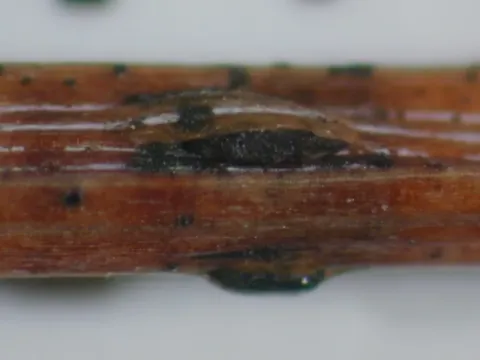
The earliest symptom is the appearance of small dark spots on the needles, which eventually develop into distinctive reddish-brown bands or lesions.
As the infection progresses, the needles turn yellow and then reddish-brown, often leading to the common name of red band needle blight.
Small black fruiting bodies, known as pycnidia, erupt through the surface of the infected needles, especially under damp conditions.
Premature needle cast is a hallmark of the disease, resulting in sparse, thin crowns starting from the lower branches and moving upwards.
Severe infestations cause stunted shoot growth and reduce the tree's overall vigor, making it susceptible to secondary stressors and pests.
Development of the fungus is highly favored by prolonged periods of high humidity and moderate temperatures during the growing season.
Dense, overcrowded plantations provide a microclimate that prevents needles from drying out, facilitating the germination and spread of fungal spores.
Frequent rainfall during spring and summer is critical for the secondary dispersal of spores within the forest or nursery environment.
Low-lying areas where mist and moisture linger often become centers of infection, as the fungus requires surface water to thrive.
Young, rapidly growing trees with succulent needles are often more vulnerable, especially when placed in high-density planting schemes.
Dothistroma needle blight causes significant economic losses in commercial forestry by severely reducing the annual timber increment of pine stands.
In forest nurseries, the disease can devastate seedling populations, leading to high mortality rates and the loss of valuable planting stock.
Defoliation leads to a weakened root system and reduced carbon storage, which lowers the tree's resilience against drought and frost events.
Aesthetically, the disease ruins the appearance of ornamental pine trees in landscape settings, rendering them unsuitable for public gardens.
Persistent outbreaks can lead to the complete decline and death of the host tree, necessitating large-scale sanitation operations to manage the site.
Sanitation is a primary management tool, involving the collection and destruction of infected fallen needles to reduce the inoculum level.
Improving air circulation through careful spacing and thinning of plantations helps maintain dry conditions on the foliage, discouraging infection.
Application of copper-based fungicides is the standard chemical control, usually applied as a protective measure during the peak spore release window.
Selecting and planting resistant pine species or provenances remains the most effective long-term strategy to combat the disease in susceptible regions.
- Thinning of dense stands to increase airflow.
- Sanitary pruning of lower, highly infected branches.
- Monitoring of infection levels during the growing season.
- Protective fungicide spraying in high-risk nurseries.