
Downy mildew
Peronospora
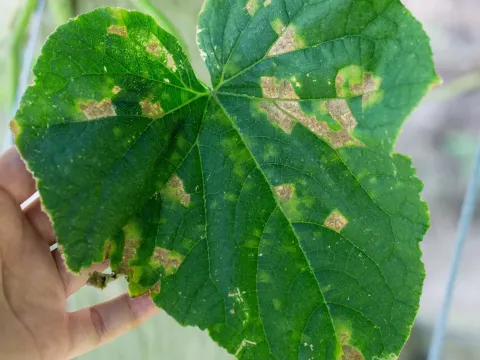
The primary symptom of downy mildew is the appearance of yellowish or light green spots on the upper side of the leaves, often constrained by leaf veins.
What the section contains
Downy mildew
Under humid conditions, a grayish or purplish downy growth becomes visible on the underside of the leaves, which consists of the pathogen's spores.
As the infection progresses, these affected areas turn brown and necrotic, leading to leaf death and significant premature defoliation of the plants.
In severe cases, the disease affects stems and petioles, resulting in dark lesions that may cause structural weakening and deformation of the plant tissues.
Fruits, flowers, and heads may also show symptoms like discoloration, stunted development, or decay, making the produce unsuitable for harvest or sale.
Downy mildew is caused by a group of obligate plant pathogens known as oomycetes, belonging to the Peronosporaceae family, specifically the genus Peronospora.
These pathogens function as parasites that penetrate the plant tissues, extracting essential nutrients through specialized structures called haustoria.
The disease persists in the soil through resilient structures known as oospores, which can remain viable in debris and soil for several seasons.
The spread of the pathogen is driven by sporangia and zoospores, which require water to germinate and infect new host tissue, often dispersed by wind or splashes.
The life cycle is highly specialized, allowing the pathogen to thrive by exploiting the metabolic processes of the host plant throughout the growing season.
Downy mildew development is heavily dependent on environmental conditions, particularly preferring cool temperatures between 15°C and 20°C.
Free moisture on the leaf surfaces, such as dew, fog, or rainfall, is a critical requirement for the germination of spores and successful infection.
High relative humidity levels, usually exceeding 80-90%, accelerate the production of spores and significantly reduce the time needed for the disease to spread.
Poor airflow, high plant density, and inadequate spacing within a crop create a microclimate that traps moisture and facilitates rapid disease outbreaks.
Prolonged periods of cloudy weather prevent rapid leaf drying, providing an extended window for the pathogen to establish and multiply within the field.
Downy mildew causes severe economic damage by disrupting the plant's ability to perform photosynthesis through the destruction of healthy leaf tissue.
Significant yield losses are common, as the disease reduces both the quantity of the harvested produce and its nutritional and aesthetic quality.
Heavily infected plants show stunted growth and weakened vigor, making them more susceptible to stress and additional secondary infections or pests.
In many cases, an epidemic of downy mildew can lead to the total loss of a crop if control measures are not implemented during the early stages.
The cost of intensive fungicide programs and the potential for crop rejection increase the overall financial burden on growers and agricultural businesses.
The most effective strategy involves the use of resistant or tolerant cultivars, which serve as the first line of defense against the pathogen.
Cultural practices are essential, including the removal of infected plant debris, practicing crop rotation, and ensuring adequate spacing between plants.
Application of fungicides, whether preventative contact or curative systemic products, is often necessary to manage outbreaks in high-risk areas.
- Utilizing copper-based contact fungicides.
- Applying systemic fungicides with different modes of action.
- Improving greenhouse ventilation to lower humidity.
- Implementing sub-surface or drip irrigation systems.
Regular field scouting and monitoring for early signs of infection are vital for making timely management decisions that can save the overall crop.