
Dothiorella wilt
Dothiorella dominicana
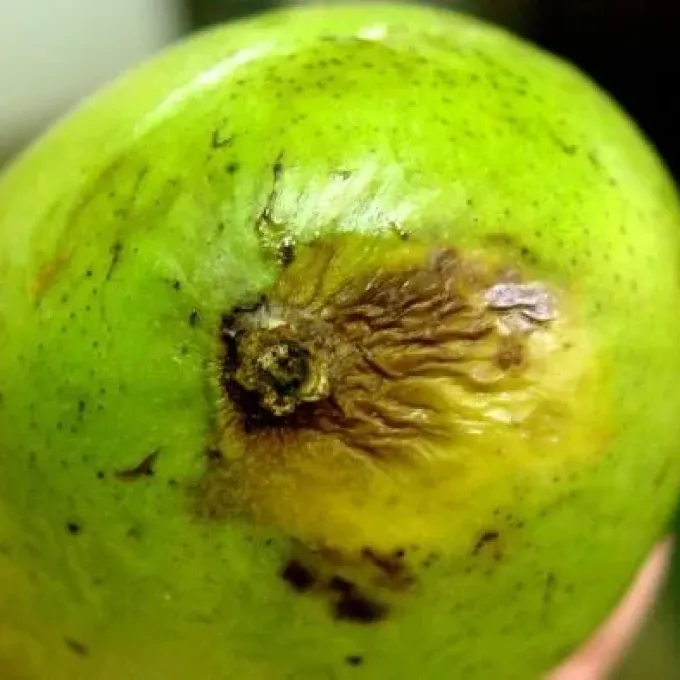
Description
Symptoms
The primary symptom is the rapid wilting of foliage on individual branches or throughout the crown. The leaves typically turn yellow or brown and stay attached to the tree long after they die.
Cankers and necrotic lesions develop on the branches and trunks. As the infection progresses, the bark in these areas may split, and sap or gum exudation is a common protective response.
Upon cross-sectioning an affected branch, gardeners will observe dark discoloration in the sapwood. This internal browning is a direct sign of the vascular system being compromised by the fungus.
During humid periods, small, raised black pustules—the pycnidia—emerge through the bark. These are critical for visual identification and represent the source of secondary inoculum.
Disease development can be patchy. Initially, it affects weakened parts of the canopy, but without intervention, the pathogen gradually spreads to larger limbs, leading to progressive dieback.
Pathogen
The disease is caused by the fungus Dothiorella dominicana (teleomorph: Botryosphaeria dothidea), a member of the Ascomycota phylum. This pathogen is known for its ability to colonize woody tissues in various plant species.
The mycelium of the fungus infects the vascular system of the host plant. By colonizing the xylem, the pathogen disrupts water and nutrient flow, leading to wilting symptoms that often appear quite suddenly.
Reproduction occurs via pycnidia, small fruiting bodies that develop on the bark of infected branches. These pycnidia produce conidia, which are disseminated by wind, splashing rain, and insect vectors.
The fungus can survive for long periods in dormant states within dead or dying wood. This enables the pathogen to persist in orchards or forests even when favorable host tissue is limited.
Research suggests that Dothiorella species are often opportunistic, taking advantage of stressed plants to establish an infection and transition from an endophytic to a pathogenic lifestyle.
Conditions for development
Dothiorella wilt development is heavily dependent on the host plant's physiological stress. Drought, extreme temperature fluctuations, and mechanical injury significantly predispose trees to infection.
The fungus thrives in warm, humid climates with temperatures generally between 20°C and 28°C. Frequent rainfall facilitates the spread of spores from the pycnidia to healthy parts of the plant.
Poor horticultural practices, such as improper pruning or inconsistent irrigation, can trigger disease outbreaks. Stress disrupts the tree's natural defense mechanisms, allowing the fungus to colonize.
Insects that bore into bark or feed on plant tissues serve as both a source of physical injury and a vector for fungal spores, drastically increasing the risk of transmission.
Spring and summer months with high humidity provide the ideal moisture levels for spores to germinate and invade host tissues, making these seasons critical for monitoring.
Why it matters
The economic impact of Dothiorella wilt is significant, as it leads to the permanent loss of limbs and can eventually result in the total death of the tree.
Fruit production is negatively impacted both in quality and quantity. Trees affected by wilt show reduced vigor, leading to stunted fruit growth and early harvest failures.
The presence of this pathogen in nurseries is highly detrimental, potentially causing the loss of entire batches of young plants and preventing the distribution of healthy stock.
In mature orchards, the loss of major scaffolds forces expensive renovation or removal of trees. The accumulation of inoculum in the environment poses a constant threat to nearby healthy plants.
Because the disease affects the internal vascular structure, once a branch is significantly infected, it is usually impossible to save, leading to permanent structural damage to the tree.
Protection
Sanitation is the most effective management strategy. All infected branches must be pruned away, ensuring the cuts are made well into healthy, white wood to remove all fungal mycelium.
Proper disposal of all infected wood debris is vital. Burning or deep burial of pruning waste prevents the remaining fungus from producing new spores that could re-infect the orchard.
Regular applications of copper-based fungicides can help protect the bark from infection, especially after pruning or during periods of wet weather that favor spore dispersal.
Maintaining optimal tree vigor through balanced fertilization and correct irrigation is essential. A healthy tree can better defend itself against initial fungal colonization attempts.
Effective pest management is crucial to minimize physical damage to the tree. By reducing the presence of boring insects, you minimize the number of entry points available to the fungus.
Discussion
No discussions yet — be the first.