
Downy mildew
Plasmopara
Description
Symptoms
The characteristic symptoms begin as translucent, yellowish spots on the upper side of the leaves, often referred to as "oil spots" due to their greasy appearance under specific lighting conditions.
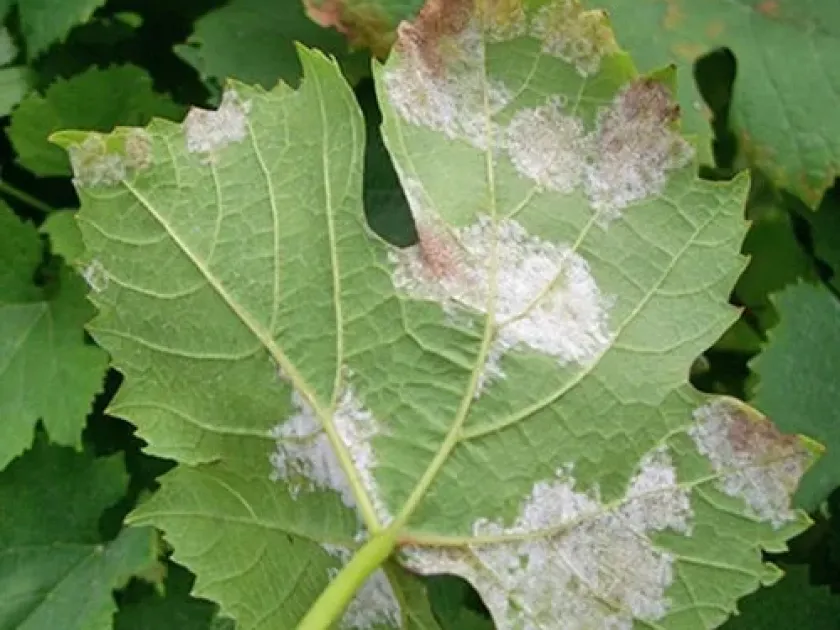
Under humid conditions, a white, downy fungal growth appears on the undersurface of these spots. This growth represents the sporangiophores and sporangia emerging through the stomata to release spores.
Young flower clusters and berries are highly susceptible; they can become distorted, turn gray, and eventually shrivel or drop off. In severe cases, the entire cluster may become covered in the white downy mold.
As the infection progresses, the oil spots turn brown and necrotic as the plant tissue dies. This often leads to premature leaf drop, which significantly impacts the photosynthetic capacity of the plant.
In mature leaves, the infection might be limited by leaf veins, creating an angular or mosaic-like appearance. Early leaf loss prevents the vine from accumulating sufficient carbohydrates for winter survival.
- Translucent "oil spots" on the upper leaf surface.
- White, downy growth on the underside of leaves.
- Necrosis and browning of infected leaf areas.
- Deformation and drying of inflorescences and berries.
- Premature defoliation affecting plant vigor.
Pathogen
The causative agent of the disease is Plasmopara viticola, an oomycete belonging to the Peronosporaceae family. It is an obligate biotrophic pathogen that requires living host tissue to complete its life cycle.
The pathogen colonizes plant tissues by penetrating through stomata and developing an intercellular mycelium. It extracts nutrients from the host cells using specialized structures called haustoria, which penetrate the cell walls.
The life cycle involves both sexual and asexual stages. Oospores, the thick-walled sexual spores, are responsible for overwintering in soil and decaying plant debris, acting as the primary inoculum in early spring.
The fungus is highly specialized, primarily affecting Vitis species. However, similar Plasmopara species can cause severe damage to other agricultural crops, such as sunflowers, leading to systemic infection.
Rapid spread during the growing season is facilitated by asexual zoosporangia, which release motile zoospores. These spores are highly dependent on external moisture to swim and infect new host tissues.
Conditions for development
Downy mildew development is heavily dependent on moisture. Rainfall or heavy dew is essential for the germination of zoospores, as they require a film of water to move across the plant surface.
Optimal temperatures for pathogen development range between +20 and +25 degrees Celsius. While infection can occur at temperatures as low as +10 degrees, the rate of disease progression is significantly slower.
Poor canopy ventilation creates a high-humidity microclimate within the plant structure. This persistent moisture significantly shortens the incubation period and facilitates rapid secondary infections.
The incubation period, which is the time between infection and the appearance of visible symptoms, can be as short as 4 to 6 days under highly favorable environmental conditions.
Primary infection usually occurs in early spring when temperatures rise and rain splashes oospores from the soil onto the low-hanging foliage of the host plants.
Why it matters
The disease is economically devastating, capable of causing complete crop failure if left unmanaged. It reduces yield quantity by destroying reproductive tissues and yield quality by hindering fruit ripening.
Defoliation caused by the pathogen leads to poor vine wood maturation. Immature shoots are highly susceptible to winter cold, resulting in significant frost damage and reduced bud break the following season.
Repeated fungal infections stress the plants, making them more susceptible to secondary pathogens and abiotic stressors. This leads to a long-term decline in the productivity of the vineyard.
Management of the disease requires intensive use of fungicides, which increases production costs. Frequent spraying also imposes environmental burdens on the ecosystem and increases chemical residues.
In plant nurseries, the disease can wipe out entire stocks of seedlings. This causes direct financial losses and delays in the establishment of new, productive agricultural plantations.
Protection
Proactive chemical control is the cornerstone of management. Applying protectant and systemic fungicides based on disease forecasting models is essential to prevent outbreaks before they become established.
Cultural practices focused on improving airflow are vital. Proper trellising, shoot thinning, and canopy management help reduce leaf wetness duration, making the environment less conducive for fungal growth.
Sanitation is key to reducing the primary inoculum. Removing and destroying fallen leaves during the dormant season helps eliminate the oospores that serve as the reservoir for next year's infection.
Selecting and planting resistant or tolerant cultivars can drastically reduce the dependency on chemical sprays. This strategy is the most sustainable approach for long-term disease management.
Monitoring local weather data allows growers to time fungicide applications precisely. By targeting periods of high infection risk, farmers can maximize the efficacy of control measures while minimizing chemical use.
Discussion
No discussions yet — be the first.