
Rice sheath rot
Sarocladium oryzae
The causal agent of rice sheath rot is the fungus Sarocladium oryzae. It is a filamentous fungus that significantly impacts rice production globally, particularly in humid tropical and subtropical regions.
What the section contains
Rice sheath rot
The pathogen survives in infected plant debris, soil, and contaminated seeds. It spreads primarily through conidia, which are easily disseminated by wind, rain splashes, and irrigation water during the rice growing season.
Once it encounters a host, the fungus penetrates through the stomata or through wounds caused by insects or other mechanical damage. It then colonizes the tissues of the leaf sheaths, focusing on the flag leaf.
The fungus exhibits both parasitic and saprophytic capabilities, allowing it to persist in the environment even when a susceptible host is temporarily unavailable. Its life cycle is closely tied to the plant's physiological development.
Multiple strains of this pathogen exist, and its virulence can vary depending on local environmental conditions and the specific variety of rice being cultivated.
Symptoms typically appear on the leaf sheaths of the flag leaf during the booting stage. The initial signs include oblong or irregularly shaped lesions with a gray or white center and a brown, necrotic border.
As the disease progresses, these lesions enlarge and coalesce, eventually covering large portions of the leaf sheath. This leads to the rotting of the sheath, which often takes on a dark, blighted appearance.
A diagnostic sign of this disease is the development of a white, powdery fungal growth on the inner surface of the infected sheath, representing the conidiophores and conidia of the fungus.
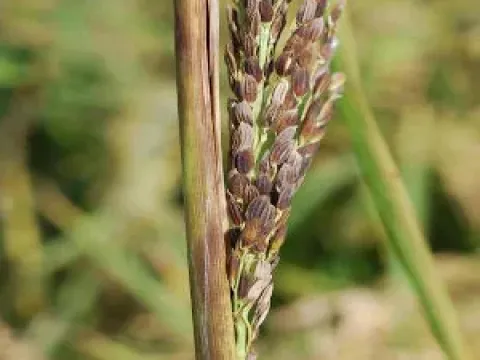
The most devastating symptom is the failure of the panicle to emerge completely from the flag leaf sheath. The panicle remains trapped, becomes colonized by the fungus, and turns brown or black.
The infected grains within the trapped panicle often become unfilled or shriveled, and the entire panicle may dry out prematurely, significantly impacting the overall health and appearance of the crop.
Sarocladium oryzae thrives under conditions of high relative humidity, typically exceeding 85%. Constant moisture is essential for the germination of its spores and the subsequent infection of host tissue.
Optimal temperatures for the development of rice sheath rot range from +25°C to +30°C. These temperatures accelerate the pathogen's metabolic rate and the production of inoculum.
Agronomic practices such as high-density planting and excessive nitrogen fertilization contribute significantly to disease development by creating a lush, dense canopy that traps humidity and limits air circulation.
Plant injury, particularly that caused by rice bugs or other insect pests, serves as an entry point for the fungus. Therefore, areas with high insect pressure are more prone to severe sheath rot outbreaks.
Poorly managed irrigation, leading to standing water in fields for longer than necessary during the ripening stage, can also promote the environmental conditions favored by the fungus.
Rice sheath rot causes substantial yield losses by directly damaging the panicles and preventing proper grain filling. This results in empty or lightweight grains that lack commercial value.
Beyond yield quantity, the disease significantly degrades the quality of the harvested rice. The infected grains are often discolored and prone to breaking during the milling process, reducing the yield of head rice.
The presence of the fungus in the seeds can also lead to poor germination rates and stunted seedling growth, which can impact the subsequent growing season if saved seeds are used.
In cases of severe epidemics, the disease can lead to widespread crop failure, forcing farmers to incur additional costs for fungicides and potentially causing significant economic hardship.
The overall marketability of the rice is compromised due to discoloration and lower nutritional quality, leading to lower prices for the affected produce at harvest.
The primary control strategy involves the use of resistant rice cultivars, which is the most sustainable and cost-effective method to minimize the impact of the disease.
Cultural practices are essential for disease management, including the use of balanced fertilization to avoid over-reliance on nitrogen, which makes the crop more susceptible.
- Treating seeds with appropriate fungicides before planting to prevent initial infection.
- Maintaining proper field sanitation by destroying or burying infected crop residues after harvest.
- Implementing appropriate spacing between plants to enhance airflow and reduce humidity levels.
- Scouting for early signs of disease and applying timely foliar fungicide treatments if necessary.
Integrated Pest Management (IPM) is critical, as controlling the insect vectors that damage rice tissues can drastically reduce the incidence of secondary fungal infections.
Crop rotation and field hygiene are fundamental to reducing the initial inoculum load in the soil, ensuring that the pathogen does not build up over successive planting seasons.