
Description
Symptoms
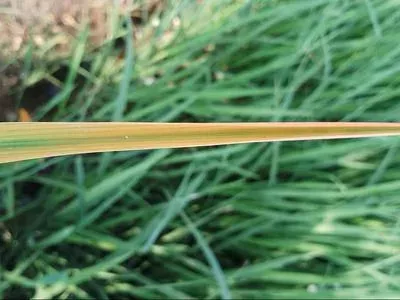
The most characteristic signs of tungro include yellowing or orange-yellow discoloration of leaves, starting from the leaf tips and spreading downwards.
Plants affected by the virus display marked stunting and reduced height compared to healthy plants, which is often observed in patches across the field.
Tiller production is significantly inhibited, resulting in sparse stands and a reduction in the overall number of productive shoots per hill.
Panicles are often delayed in emergence and may appear small, empty, or bear poorly filled, discolored grains at maturity.
Affected plants often have necrotic spots on their leaves, and the overall plant vigor is drastically lowered, making them susceptible to other secondary stresses.
Pathogen
Rice tungro is a severe viral disease caused by a complex interaction between two distinct viruses: the Rice tungro bacilliform virus (RTBV) and the Rice tungro spherical virus (RTSV).
These viruses are host-specific to rice and cannot survive independently in the soil, water, or through mechanical transmission between plants.
Infection is entirely dependent on insect vectors, primarily green leafhoppers (Nephotettix spp.), which acquire and transmit the virus while feeding on plant phloem.
The virus persists in weeds and regrowth from previous rice harvests, providing a year-round reservoir for new infections in tropical regions.
Understanding the molecular interaction between the two viruses is essential, as the presence of both typically leads to much more severe symptoms than the presence of either alone.
Conditions for development
The spread of Rice tungro is heavily influenced by the population density and movement of leafhopper vectors, which thrive in humid, tropical conditions.
High rainfall and warm temperatures support the rapid reproduction of these insects, increasing the risk of virus transmission throughout the growing season.
Imbalanced nitrogen fertilization can create lush, succulent vegetative growth that attracts leafhoppers and promotes their feeding behavior.
Continuous cropping systems, where rice is grown throughout the year with no fallow periods, facilitate the survival and spread of the virus.
The absence of synchrony in planting times across neighboring fields allows vectors to move from older, infected crops to young, vulnerable seedlings.
Why it matters
Rice tungro is considered one of the most economically damaging diseases in rice cultivation, capable of causing yield losses ranging from moderate to total destruction.
The virus disrupts the plant's metabolic processes, severely limiting photosynthesis and the transport of essential nutrients to the grain-filling stages.
Crop losses are magnified when infection occurs during the early seedling stage, often preventing the plant from entering the reproductive phase entirely.
Besides quantity, the quality of the harvested rice is significantly reduced, leading to lower market prices and potential loss of consumer appeal.
The cumulative impact on regional rice production can threaten food security, necessitating intensive management efforts in affected regions.
Protection
The most effective strategy for managing tungro is the deployment of rice varieties bred for resistance or tolerance to either the virus or the leafhopper vector.
Integrated Pest Management (IPM) practices, including the targeted use of insecticides to reduce leafhopper populations, are crucial during peak infection periods.
Cultural practices, such as synchronized planting and the removal of alternative weed hosts, are essential to break the infection cycle of the virus.
Implementing fallow periods and crop rotation disrupts the habitat and food supply for the leafhopper vectors, effectively reducing their local population.
Regular field scouting and prompt removal of early-infected plants can help limit the spread of the virus within a field, especially in the early stages of the crop.
Pathogens and affected parts
Affects crops · 1
Discussion
No discussions yet — be the first.