
Rickenella fibula
Rickenella fibula
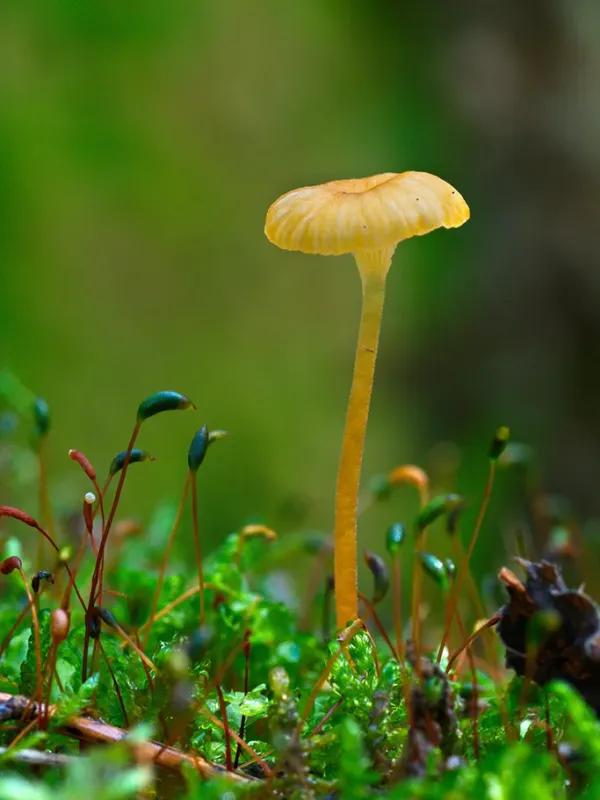
Description
Pathogen
Rickenella fibula is a small gilled mushroom belonging to the Hymenogastraceae family. It is crucial to note that this organism is not a plant pathogen.
It is classified as a saprotrophic fungus, meaning it derives its nutrition from decaying organic matter rather than living plant tissues.
The mycelium of this fungus actively colonizes soil surfaces, particularly those enriched with leaf litter or mosses, and plays a positive role in organic matter decomposition.
Farmers often mistakenly identify it as a threat when it appears near vegetable or flower beds. However, it does not attack roots, stems, or leaves of any crop.
As a result, Rickenella fibula does not require any classification as a disease-causing agent, as it has no negative impact on plant physiology or development.
Conditions for development
Rickenella fibula thrives in high-moisture environments, frequently appearing in areas where water drainage is poor or where humidity remains consistently high.
It favors acidic soil conditions and substrates rich in decomposing plant debris, including rotting grass, mosses, and fallen organic materials.
The optimal period for observing its fruiting bodies is during cool, wet seasons, typically appearing after heavy rains in autumn or spring.
A sufficient supply of moist organic debris is the primary factor limiting or promoting the colonization of a specific area by this fungus.
Temperatures ranging between 10°C and 18°C are most conducive to the rapid formation and emergence of these mushrooms on the surface.
Why it matters
There is no evidence that Rickenella fibula causes any harm to agricultural crops, as it possesses no mechanisms to infect living plant tissue.
The presence of this fungus is actually a sign of a biologically active soil that is efficiently recycling nutrients from decaying matter.
While dense mycelial mats can sometimes cover the soil surface, they do not inhibit water absorption or root nutrient intake to a measurable degree.
The only indirect concern associated with this fungus is its preference for consistently waterlogged soil, which can be detrimental to root health for other reasons.
Ultimately, the fungus acts merely as a decomposer, occupying the same space as the crops without interfering with their growth or health.
Protection
No chemical or biological control measures are necessary for Rickenella fibula because it poses no risk to agricultural plant production.
If its presence is undesirable for landscaping or gardening purposes, improving soil drainage should be the primary management strategy.
Reducing soil acidity through regular liming can also create an environment less favorable for the growth of this specific fungal species.
Routine cultivation and aeration of the topsoil layer can prevent the accumulation of moisture and organic matter that the fungus relies on.
Removing excess debris from the field or garden prevents the buildup of the substrate required for the fungus to establish its mycelial network.
Discussion
No discussions yet — be the first.