
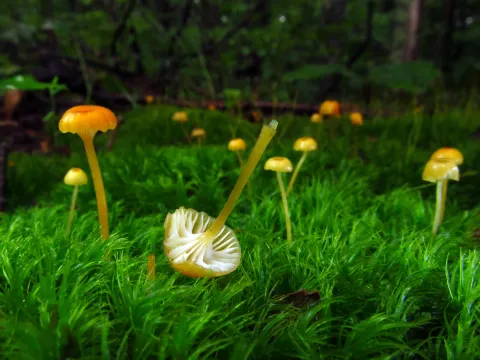
Rickenella
Rickenella
The genus Rickenella consists of small gilled mushrooms belonging to the Rickenellaceae family. It is crucial to clarify that these fungi are not plant pathogens and do not cause diseases in agricultural crops.
What the section contains
Rickenella
These mushrooms function primarily as saprotrophs, decomposing organic matter such as leaf litter and moss. They lack the biological capacity to infect or parasitize living plant tissues.
Morphologically, they are recognized by their small, often brightly colored caps and decurrent gills. Their close association with mosses often leads to the misconception that they are harmful to the plants they grow near.
Biologically, they maintain specific ecological niches often involving bryophytes. They thrive on decaying plant debris, contributing to nutrient cycling within the environment.
Consequently, Rickenella does not require any phytosanitary control measures, fungicides, or agricultural intervention as it poses no threat to plant health.
Rickenella species prefer moist and shaded environments. High humidity levels are the primary factor supporting their development and the appearance of fruit bodies.
In natural habitats, they are frequently found in moist woodlands, shaded forest edges, and areas with thick carpets of moss and decaying vegetable matter.
The optimal temperature range is moderate to cool, with active growth phases typically occurring during damp, temperate weather cycles in spring or autumn.
They are particularly sensitive to desiccation, requiring consistent moisture to sustain their mycelium and successfully produce fungal spores.
Soil conditions with high organic content and slightly acidic pH are ideal for the growth of this fungal genus in both forest and garden landscapes.
Rickenella does not cause any harm to cultivated plants. These fungi are not parasitic in nature and do not feed on live plant structures or root systems.
As active decomposers, they play a beneficial role in the ecosystem by breaking down organic matter, which ultimately helps improve soil quality and nutrient availability.
Their presence is a positive indicator of healthy soil moisture levels and a functional biological environment within your garden or agricultural site.
No agricultural damage is associated with these fungi; therefore, they should not be targeted by chemical control methods or habitat destruction.
They have no negative economic impact on crop production and are considered neutral or beneficial organisms within the context of soil ecology.