
Rigidoporus
Rigidoporus
The disease is caused by fungi belonging to the genus Rigidoporus, with Rigidoporus microporus being the most notorious species. These are basidiomycete fungi known for their ability to aggressively degrade lignified tissues.
What the section contains
Rigidoporus
This pathogen acts as a facultative parasite, surviving in dead organic material like stumps and debris before colonizing healthy living roots through direct contact.
The life cycle involves the production of tough, perennial basidiocarps (fruiting bodies) at the base of the infected plant, which release spores that can be dispersed by wind or splashing rain.
The fungus produces white rhizomorphs — specialized mycelial strands that grow through the soil, allowing the pathogen to bridge the gap between infected and healthy trees.
Rigidoporus excels at breaking down all major components of the plant cell wall, resulting in a characteristic bleaching of the wood, which becomes soft and fibrous.
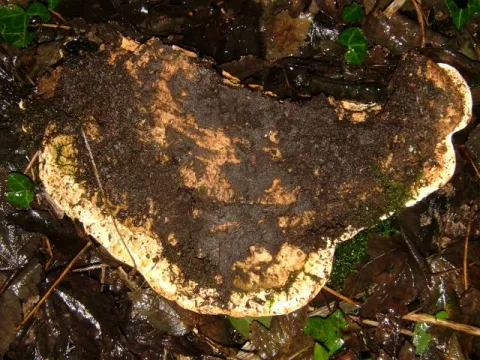
The most reliable field sign is the presence of the fungus's fruiting bodies, which appear as tough, bracket-like structures, often orange or reddish-brown, at the base of the tree or on major roots.
Above-ground symptoms often include a gradual decline in tree vigor, characterized by yellowing of the foliage, leaf wilting, and premature shedding, leading to a thinning canopy.
Under the bark near the root collar, one can often find white, fan-shaped mycelial mats, which are indicative of active colonization by the fungal threads.
In cross-sections of the wood, the advanced stage of decay presents as a light, bleached, spongy texture, often marked by distinct black "zone lines" that separate different growth areas of the fungus.
Infected trees often become unstable, leading to windfall or complete collapse, even if the upper part of the tree appears relatively green and functional until the final stages of decay.
High soil moisture and stagnant water in the root zone provide the primary environment for the fungal spores to germinate and for rhizomorphs to spread aggressively.
Poor soil aeration inhibits root growth and promotes physical stress, making trees significantly more susceptible to infection by the pathogen present in the soil.
The presence of woody debris, such as buried stumps from previous tree clearing, serves as a major reservoir of inoculum, allowing the fungus to maintain a population for decades.
Planting in dense, high-density configurations facilitates rapid transmission of the disease because the extensive root contact allows the mycelium to move easily from one plant to another.
Warm, humid conditions accelerate the maturation of fruiting bodies and increase the frequency of spore release, increasing the risk of wider disease spread during the growing season.
Rigidoporus causes severe economic damage in plantation forestry and orchard management by inducing widespread mortality among mature and productive trees.
The decay of the root system limits the tree's ability to absorb water and nutrients, leading to significantly reduced yields, poor fruit quality, and overall stunted growth.
The wood value is completely destroyed by the white rot process, rendering timber useless for commercial applications and requiring the removal and destruction of affected specimens.
Soil contamination is a persistent problem, as the fungus survives for years in the soil, preventing the replanting of susceptible host species on the same plot.
The management of an outbreak involves high costs associated with site sanitation, chemical soil treatments, and the loss of long-term investment in plantation development.
The most effective strategy is thorough site preparation, which includes the complete extraction of stumps and large root fragments to eliminate the primary sources of infection.
Implementing proper drainage systems is crucial to maintain soil aeration and reduce the environmental conditions that favor the rapid spread of the fungus.
Quarantine measures and strict sanitation of tools are essential to prevent moving infested soil or debris into healthy, disease-free zones during routine agricultural operations.
Biological control using beneficial microorganisms, such as Trichoderma species, can help suppress the pathogen's activity in the soil through competition for resources.
- Regular monitoring of root collars for signs of bracket fungi or mycelial growth.
- Using resistant rootstocks or plant varieties in highly prone regions.
- Applying physical barriers to prevent root contact between new and existing plantings.
- Avoiding mechanical damage to tree trunks and roots during cultivation.