
Rice stripe
Rice stripe
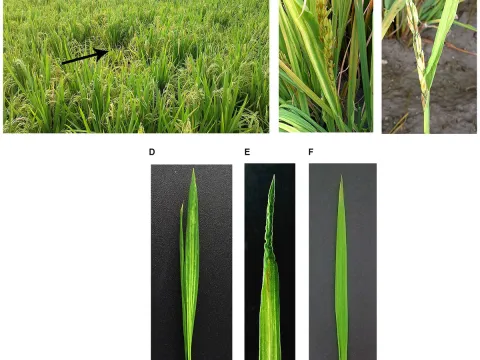
The primary symptom of the disease is the appearance of light-green or chlorotic stripes running parallel to the leaf veins of the plant.
What the section contains
Rice stripe
As the disease progresses, these stripes often turn white or yellowish, eventually causing the leaves to deform, twist, and become stunted in growth.
Plants affected at an early stage exhibit significant dwarfism and increased tillering, giving them a bushy and abnormal appearance.
The development of the panicle or ear is severely delayed, often resulting in sterile or underdeveloped reproductive organs that fail to produce viable grain.
In the final stages of the infection, leaf tissue shows premature yellowing and necrosis, which drastically reduces the plant's photosynthetic capacity.
The pathogen responsible is the Rice stripe virus (RSV), a member of the Tenuivirus genus known for its unique viral structure and systemic nature.
This virus has a broad host range, infecting not only rice but also major cereal crops like winter barley, winter wheat, and maize.
The virus is primarily transmitted by the small brown planthopper, Laodelphax striatellus, which exhibits transovarial transmission (passing the virus to offspring).
Once acquired, the planthopper remains infective throughout its life cycle, allowing it to efficiently spread the virus across agricultural fields.
The virus moves through the phloem of the host plant, disrupting metabolic processes and preventing normal nutrient translocation required for growth.
Warm and humid weather conditions are ideal for the disease, as they promote the rapid reproduction and migration of the planthopper vectors.
The most susceptible phase for cereal crops is the tillering stage, where young plants are highly vulnerable to viral inoculation by feeding insects.
Presence of reservoir hosts, including grassy weeds and cereal regrowth, significantly increases the risk of infection in subsequent cropping seasons.
Temperatures ranging from 20°C to 25°C are considered optimal for both viral replication within the plant and the activity of the insect vectors.
Poor agricultural practices, such as lack of crop rotation and failure to manage field margins, create favorable conditions for disease outbreaks.
The economic impact of Rice stripe virus is severe, as it causes significant yield losses, potentially leading to total crop failure in highly infected areas.
Infected winter wheat and barley crops suffer from reduced grain filling and poor grain quality, which diminishes their market value and processing potential.
Because the disease affects reproductive development, affected plants often fail to produce harvestable grain, directly impacting the final yield quantity.
Plants weakened by the virus become more susceptible to environmental stressors such as drought, frost, and secondary fungal or bacterial infections.
Management costs are high due to the constant need for insecticide applications to control vector populations, increasing the overall cost of production.
The most effective management strategy is the use of resistant or tolerant crop varieties that possess genetic defense mechanisms against the virus.
Integrated weed management is crucial to eliminate grassy weeds and crop volunteers that act as overwintering sites for the virus and the planthoppers.
Targeted application of insecticides to control the planthopper population during early growth stages is essential to limit the spread of the virus.
Adjusting planting dates to avoid the peak activity periods of the insect vectors can significantly reduce the incidence of primary infections.
- Regular monitoring of vector population density using sticky traps.
- Ensuring the use of certified virus-free seed material.
- Maintaining spatial isolation between susceptible and infected fields.
- Applying optimized fertilization to improve plant vigor and stress tolerance.