
Rice sheath rot
Sarocladium attenuatum
The disease is caused by the fungus Sarocladium attenuatum, an imperfect fungus that primarily infects the rice plant's leaf sheaths. It is often studied alongside Sarocladium oryzae, as they share similar infection mechanisms and environmental requirements.
What the section contains
Rice sheath rot
The pathogen survives in crop debris and the soil, acting as a primary inoculum reservoir. Under favorable conditions, the fungal spores are disseminated through wind, rain splashes, and irrigation water within the paddy field.
Once the spores land on the leaf sheath, they germinate and penetrate the tissue, eventually colonizing the internal surface. The fungus thrives by extracting nutrients from the host plant, disrupting its normal physiological functions.
Biological studies show that S. attenuatum produces toxins which contribute to the necrotic lesions observed on the plant. The pathogen's ability to persist in diverse environmental conditions makes it a persistent challenge for rice growers.
Research continues into the specific strains of this fungus to improve resistance breeding and diagnostic techniques, ensuring better crop protection strategies globally.
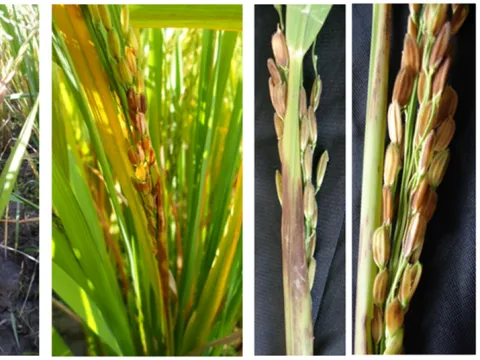
The primary symptom of rice sheath rot appears on the leaf sheaths that wrap around the emerging panicle. These lesions typically start as oblong or irregular spots with gray centers and dark brown margins.
As the disease progresses, the lesions expand and coalesce, eventually covering large portions of the sheath. A notable feature is the dense, white, cottony fungal growth visible inside the sheath, especially under high humidity.
The infection prevents the panicle from emerging properly from the boot leaf. This phenomenon, often called "incomplete panicle exsertion," leads to the panicle remaining trapped within the sheath, where it may rot or produce shriveled, sterile grains.
Plants affected by severe sheath rot exhibit yellowing and necrosis of the foliage. This premature senescence significantly reduces the photosynthetic area of the rice plant during the critical grain-filling phase.
When examined closely, the necrotic areas show characteristic discoloration that separates healthy tissue from infected parts, a key sign for accurate field diagnosis by agronomists.
High humidity and warm temperatures are the most critical factors driving the development of Sarocladium attenuatum. The disease is most prevalent in environments where relative humidity remains consistently above 85%.
Optimal temperatures for fungal growth range from 25 to 30 degrees Celsius. In these conditions, the incubation period is shortened, allowing for rapid secondary cycles of infection throughout the field.
Dense planting patterns significantly exacerbate the spread of sheath rot by reducing air movement and maintaining a constant moisture layer on the leaf surfaces. Good ventilation is essential to keep the disease in check.
The use of excessive nitrogen fertilizers is known to create lush, succulent tissue, which is highly susceptible to fungal invasion. Proper nutrient management is therefore a vital component of integrated disease control.
Physical injuries to the rice stalks, caused by insects or machinery, provide entry points for the pathogen. Therefore, managing secondary pests is often directly linked to reducing the incidence of sheath rot.
Rice sheath rot causes substantial economic loss by directly impacting grain yield and quality. The infection of the panicle results in partial or total sterility, leading to poor harvest yields.
Grain quality is severely compromised; affected kernels are often chalky, shriveled, and lighter than healthy ones. Such grain is frequently rejected or heavily discounted in commercial markets.
The disease contributes to lodging, which occurs when the stem and sheath tissue weaken under the fungal attack. Lodging makes harvesting extremely difficult and leads to significant yield losses during mechanical reaping.
In severe outbreaks, yield reductions of 20% to 50% have been reported. This makes it a major limiting factor for rice productivity in tropical and subtropical regions where environmental conditions favor the pathogen.
The presence of the fungus in the field after harvest ensures a high inoculum load for subsequent seasons, necessitating rigorous sanitation practices to break the infection cycle.
The most effective long-term strategy for managing rice sheath rot is the deployment of resistant or tolerant rice varieties. Ongoing breeding programs aim to incorporate robust defense mechanisms against the pathogen.
Good agricultural practices are foundational to control. This includes using optimal seed rates to avoid overcrowding, which ensures better airflow and lower humidity within the crop canopy.
Sanitation is critical; destroying or deep-plowing crop residues after harvest effectively reduces the amount of pathogen surviving in the field, thereby lowering the pressure for the next season.
- Crop rotation with non-host species to interrupt the fungus's lifecycle.
- Balanced NPK fertilization to ensure plants do not grow overly succulent tissue.
- Application of targeted fungicides during the booting stage if weather conditions favor the disease.
Monitoring fields during the panicle initiation phase is essential for early detection. Timely intervention with preventative measures can save a significant portion of the potential crop yield.