
Rice sheath rot
Sarocladium
The disease is caused by the fungus Sarocladium oryzae (formerly known as Acrocylindrium oryzae). This pathogen belongs to the group of hyphomycetes and primarily targets rice plants.
What the section contains
Rice sheath rot
The fungus penetrates the plant tissues through stomata or wounds caused by insects or other damage. It is capable of overwintering in soil, crop residues, and infected seeds, serving as a primary source of inoculum.
The life cycle involves the production of conidia, which spread rapidly through water droplets, wind, and insect activity. High humidity is essential for the germination of these spores on the host surface.
Sarocladium oryzae secretes phytotoxins that inhibit plant metabolic processes. These toxins weaken the plant immune system and lead to the degradation of the vascular tissues in the leaf sheaths.
Laboratory identification of the pathogen reveals characteristic branched hyphae and long, cylindrical conidia. The fungal culture forms a fluffy white or greyish colony on standard growth media.
The disease typically manifests as elongated lesions on the leaf sheaths enclosing the young panicle. These lesions feature a grey or brown border with a lighter center.
As the infection progresses, lesions coalesce and cover the entire flag leaf sheath. This process severely obstructs the emergence of the panicle, a symptom commonly referred to as panicle emergence failure.
A dense, white, or grayish cottony growth of fungal mycelium is often visible inside the infected leaf sheath. This growth physically prevents nutrient translocation to the developing panicle.
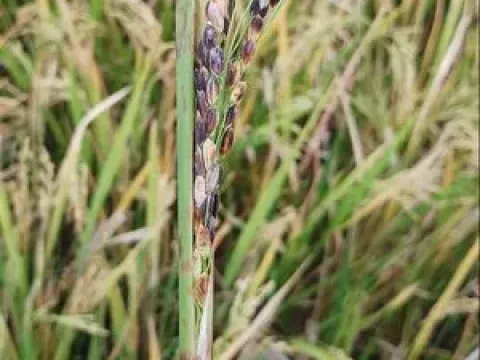
Panicles may fail to emerge completely or emerge partially, appearing deformed. The grains within these panicles often become sterile, discolored, or covered with fungal spores.
- Lesions on the flag leaf sheath.
- Panicle emergence failure.
- Cottony mycelial growth inside sheaths.
- Grain sterility and discoloration.
- Deformed or stunted panicle development.
Sheath rot development is favored by high relative humidity (above 85%) and warm temperatures, typically between 25 and 30 degrees Celsius. These conditions are ideal for the rapid spread of the fungus.
Dense planting patterns create a stagnant microclimate within the canopy, facilitating the accumulation of moisture and promoting fungal infection.
Excessive nitrogen fertilization promotes succulent, fast-growing tissues, which are more susceptible to pathogen colonization. This practice significantly increases the severity of the disease.
Insects like rice bugs cause mechanical injuries that serve as entry points for the pathogen. Furthermore, these insects act as vectors, transporting fungal spores from plant to plant.
Continuous cropping and the use of infected seeds ensure a constant presence of the pathogen in the environment, creating a high risk of outbreaks in susceptible rice cultivars.
The primary economic impact of sheath rot is the reduction in grain yield. By interfering with panicle development, the disease leads to a high percentage of empty, shriveled, or sterile grains.
The quality of the harvested grain is significantly degraded, as infected grains have lower test weight and poor milling characteristics. This results in reduced market value.
Infected seeds serve as a vehicle for the pathogen, leading to poor germination rates and stunted seedling growth in subsequent planting seasons.
Severe infestations can lead to total crop loss in localized areas, especially under conditions favorable to the pathogen. The damage is often compounded by secondary bacterial or fungal infections.
In addition to direct losses, growers incur extra costs due to the need for fungicide applications and enhanced seed cleaning processes to remove damaged materials.
The most critical control measure is the use of disease-free, certified seeds. Seed treatment with systemic fungicides is recommended to eliminate seed-borne inoculum.
Agronomic practices, such as crop rotation and the destruction of rice stubble and crop residues, help to significantly reduce the pathogen population in the field.
Balanced application of fertilizers, specifically avoiding nitrogen over-application, helps maintain plant vigor and increases resistance to fungal colonization.
Integrated pest management targeting insect vectors is essential to limit the spread of the disease within the rice field during the critical vegetative and reproductive phases.
Timely application of systemic fungicides during the early stages of disease development is highly effective. Growers should follow local recommendations regarding chemical application timing and dosage.