
Sarcogyne regularis
Sarcogyne regularis
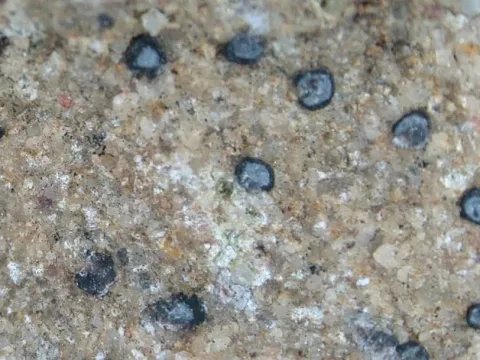
Sarcogyne regularis is a crustose lichen characterized by the formation of minute apothecia, typically up to 1 mm in diameter. These fruit bodies are reddish-brown to almost black and often surrounded by a light-colored margin.
What the section contains
Sarcogyne regularis
Visually, the organism appears as small dark discs scattered on a mineral substrate. The main part of the thallus is often endolithic, meaning it is embedded within the stone and difficult to see with the naked eye.
This species does not produce symptoms typical of plant diseases, such as spots, blights, wilting, or decay on the vegetative parts of cultivated plants.
Identification is primarily performed in a laboratory setting by analyzing the microscopic structure of spores, which are diagnostic for the Acarosporaceae family.
It is crucial to clarify that this lichen is not a pathogen; any association with agricultural crop damage is factually incorrect.
Sarcogyne regularis is a lichen-forming fungus that lives in symbiosis with algae. It is classified as an epilithic lichen specialized for growth on calcareous rock and concrete.
The organism is not a plant pathogen. It lacks the biological machinery to infect living plant tissue, feed on plant sap, or produce toxins that affect crops.
Its biological function is related to the weathering of inorganic substrates. It operates entirely independently of plant life and does not interact with the physiological processes of vascular plants.
In the field of agronomy, this organism is not considered a causative agent of any disease, and therefore it is not subject to phytopathological regulations.
The life cycle of this lichen is adapted to growth on non-organic surfaces rather than symbiotic or parasitic relationships with agricultural flora.
Sarcogyne regularis thrives on calcareous substrates, including concrete structures, construction stone, and limestone cliffs. It prefers well-lit, open environments.
The lichen exhibits high resilience to extreme temperature fluctuations and prolonged periods of drought, which allows it to colonize exposed surfaces effectively.
Dispersal occurs via spores, which are carried by air currents over long distances and germinate on suitable mineral foundations.
In agricultural settings, it may be found on concrete irrigation infrastructure, fence posts, or building foundations where moisture facilitates the development of apothecia.
The species shows moderate tolerance to urban and environmental pollution, which explains its prevalence in human-influenced landscapes.
Sarcogyne regularis does not cause harm to agricultural crops. The concept of harmfulness is not applicable to this species in an agronomic context as it does not infect plants.
While some lichens can participate in the slow bio-weathering of concrete, this is a construction-related issue rather than an agricultural concern.
As the lichen does not interact with vascular plants, it is ecologically harmless to fields, orchards, and gardens.
Damage to fruits, roots, or leaves is biologically impossible, as the organism lacks the enzymes required to degrade living plant tissues.
Therefore, Sarcogyne regularis is not considered a factor in reducing crop productivity and does not require monitoring for agricultural purposes.
Protection measures against Sarcogyne regularis are not required. The use of fungicides or other pesticides against this lichen is unjustified and environmentally harmful.
If the removal of lichens from infrastructure is desired for aesthetic reasons, simple mechanical cleaning is sufficient, requiring no chemicals.
Preventive measures in crop production are unnecessary because the lichen is not a pathogen and presents no risk to the health or yield of agricultural crops.
Agronomists should focus efforts on managing genuine pests and pathogens rather than addressing harmless epilithic organisms.
Sarcogyne regularis is a part of the natural environment that requires no control or eradication within the framework of agricultural management.